
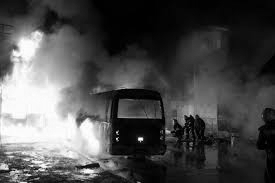
Syria declares Ceasefire after 3 days of fierce clashes in Aleppo
Syria’s Defence Ministry announced a ceasefire early Friday following three days of intense fighting between government forces and Kurdish fighters in the northern city of Aleppo, clashes that have displaced an estimated 142,000 people and left dozens dead or wounded.
The ceasefire took effect at 3 am in the contested neighbourhoods of Sheikh Maqsoud, Achrafieh and Bani Zaid , areas that witnessed heavy exchanges of shelling and drone strikes since violence erupted on Tuesday. Under the terms announced by Damascus, armed groups were given six hours to withdraw from the neighbourhoods, with assurances they would be allowed to carry personal light weapons and be escorted safely to Syria’s northeast, an area controlled by the Kurdish-led Syrian Democratic Forces (SDF).
Aleppo Governor Azzam al-Gharib toured the affected neighbourhoods overnight under heavy security, signalling the government’s intent to stabilise the area following days of escalating violence.
There was no immediate public response from the SDF, and it remained unclear whether Kurdish forces in Aleppo had formally agreed to the ceasefire. However, diplomatic sources indicated the truce would require compliance from both sides to prevent a renewed outbreak of fighting in the densely populated city.
The United States welcomed the announcement. US envoy to Syria Tom Barrack said Washington was working with all parties to extend the ceasefire beyond the initial six-hour window, describing the pause as a “vital” step toward preventing further civilian suffering. Barrack expressed gratitude to the Syrian government, the SDF, local authorities and community leaders for showing restraint that made the ceasefire possible.
The clashes marked one of the most serious flare-ups in Aleppo in recent years and underscored the fragile security situation amid stalled political negotiations between Damascus and the Kurdish-led administration. Both sides accused each other of initiating the violence and of deliberately targeting civilian neighbourhoods and infrastructure, including hospitals and ambulance crews.
Kurdish officials said at least 12 civilians were killed in Kurdish-majority areas, while government authorities reported at least nine civilian deaths in nearby government-controlled districts. Dozens more civilians on both sides were wounded, though the number of fighters killed has not been confirmed.
The fighting comes amid a broader political impasse between the central government and the SDF. In March last year, Syria’s interim President Ahmad al-Sharaa signed an agreement with the SDF to integrate its forces into the Syrian army by the end of 2025, but disagreements over implementation have stalled progress.
Complicating the situation further, several factions within the newly formed Syrian army created after the fall of former President Bashar Assad during a rebel offensive in December 2024 include groups previously backed by Turkiye, many of which have a long history of conflict with Kurdish forces.
While the SDF has been a key US ally in the fight against the Islamic State group, Turkiye considers it a terrorist organisation due to its links to the Kurdistan Workers’ Party (PKK). Despite this, the United States has in recent months strengthened ties with Damascus and pressed Kurdish leaders to adhere to the integration deal, even as efforts to revive peace talks in the region continue.