
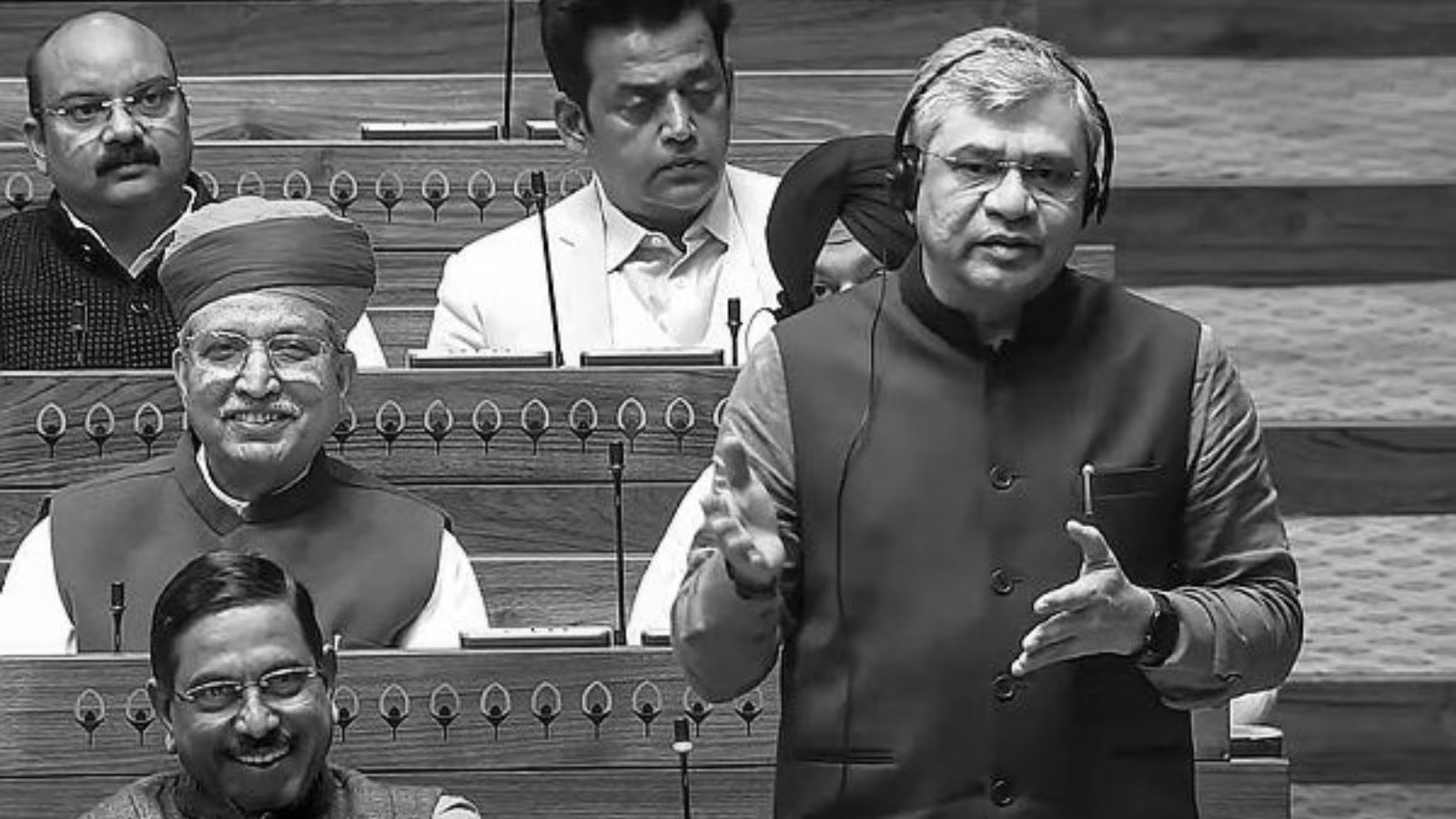
Switching to electric power has saved Railways Rs 6,000 crore: Vaishnaw in Lok Sabha
Indian Railways has saved around Rs 6,000 crore by shifting from diesel to electric traction, Railway Minister Ashwini Vaishnaw told the Lok Sabha, asserting that the transition is significantly reducing operational costs.
“Energy is the second-largest expenditure after staff cost, and the shift to electric traction has resulted in major savings,” Vaishnaw said while replying to a debate on the demands for grants of the Railway Ministry. However, analysts note that while such savings are substantial, the move has involved high upfront capital investment , and long-term gains depend on power tariffs and network utilisation.
The minister said diesel locomotives would gradually be phased out. “In the coming years, diesel locomotives will fade away and electric locomotives will take over,” he stated. Experts, however, caution that diesel engines may still be required for last-mile connectivity, backup operations and in partially electrified sections.
Highlighting progress, Vaishnaw said, “ About 27,000 km has been electrified and nearly the entire broad-gauge network is now covered, ” adding that the transition has led to a 62 per cent reduction in diesel consumption , saving about 178 crore litres compared to 2016–17 levels . While this has lowered fuel costs and import dependence, critics point out that India’s electricity mix remains largely coal-based , which may limit environmental gains unless renewable sourcing increases.
On infrastructure expansion, he said, “Since 2014, about 35,000 km of railway tracks have been laid,” under the government led by Narendra Modi. He also noted, “ Indian Railways has become the second-largest cargo carrier in the world, ” with freight loading crossing 1.46 billion tonnes in FY2025 . Experts, however, underline that Railways continue to face intense competition from road transport , particularly in terms of speed and last-mile delivery.
Referring to financial reforms, Vaishnaw said, “The decision to merge the Railway Budget with the general budget has increased allocations and ensured projects are executed throughout the year.” He added that a record allocation of about Rs 2.78 lakh crore for 2026–27 has been made for modernisation and expansion. Some economists, however, argue that the merger has made it harder to independently assess the Railways’ financial performance , including key metrics such as operating ratios.
Emphasising governance, the minister said, “There is now greater transparency, and financial health is being monitored through IT systems by the Finance Ministry and other agencies.” Experts add that operational bottlenecks such as congestion, delays and capacity constraints must be addressed alongside electrification to fully realise efficiency gains.
The discussion in the Lok Sabha lasted two days and saw participation from 210 Members of Parliament , with Vaishnaw stating that “ politics of performance has replaced politics of vote ” in driving reforms in the national transporter.