
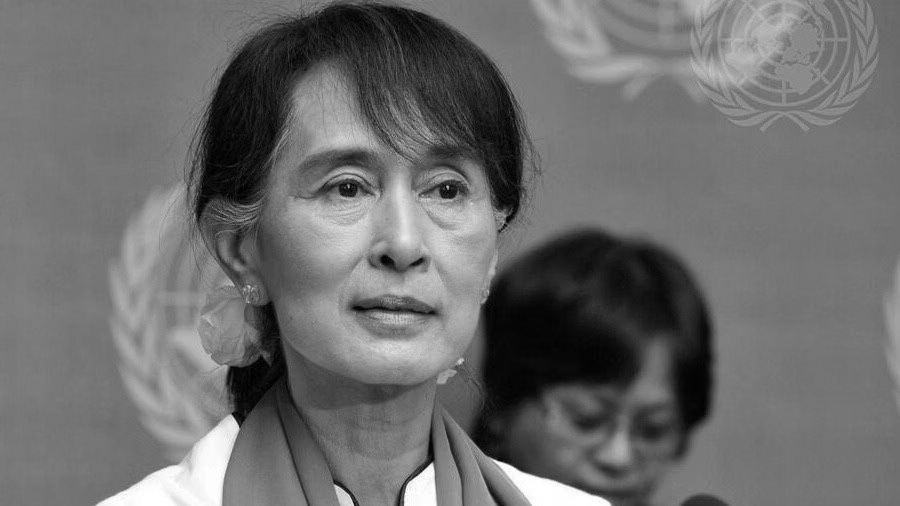
Suu Kyi Shifted to House Arrest Amid Ongoing Political Uncertainty in Myanmar
Myanmar’s detained former civilian leader Aung San Suu Kyi has been moved from prison to house arrest, according to an announcement by state television, marking a significant development in the country’s prolonged political crisis.
A photograph released alongside the announcement showed the 80-year-old Nobel laureate seated indoors, interacting with two officials, in what appears to be her first public image since 2021. She has remained in detention since the Myanmar military coup of 2021, when the military ousted her elected government and assumed control of the country.
A “civilian leader” refers to a democratically elected political figure who is not part of the armed forces. Suu Kyi, leader of the National League for Democracy (NLD), rose to power through elections and symbolised Myanmar’s transition from decades of military rule to a quasi-democratic system.
Following the coup, she faced a series of legal cases brought by the military administration. These included corruption allegations, violations of official secrets laws, election-related charges, and breaches of COVID-19 restrictions. In 2022, she was sentenced to a cumulative term of more than three decades in prison. Her supporters and several international organisations have consistently argued that these charges were politically motivated, aimed at sidelining her and legitimising military rule.
The military’s decision to detain and prosecute Suu Kyi is widely seen as an effort to consolidate power and prevent her return to politics, given her enduring popularity among the public. Her continued detention has also been viewed as a means to control dissent and weaken pro-democracy movements within the country.
The recent move to house arrest, however, may indicate a calibrated shift in approach. Analysts suggest it could be driven by a combination of factors, including her advanced age, international pressure on Myanmar’s military leadership, and a possible attempt to project a softer stance without granting full freedom.
Suu Kyi, daughter of independence hero Aung San, has long been a central figure in Myanmar’s political landscape. She was awarded the Nobel Peace Prize for her non-violent struggle for democracy and spent years under house arrest during earlier periods of military rule.
Despite her global recognition, her reputation faced criticism over her handling of the Rohingya crisis during her tenure in government. Nevertheless, she remains a key symbol of democratic resistance in Myanmar.
While her transfer to house arrest suggests a slight easing of conditions, she remains under strict control, with no indication of release or return to political life in the near future.