
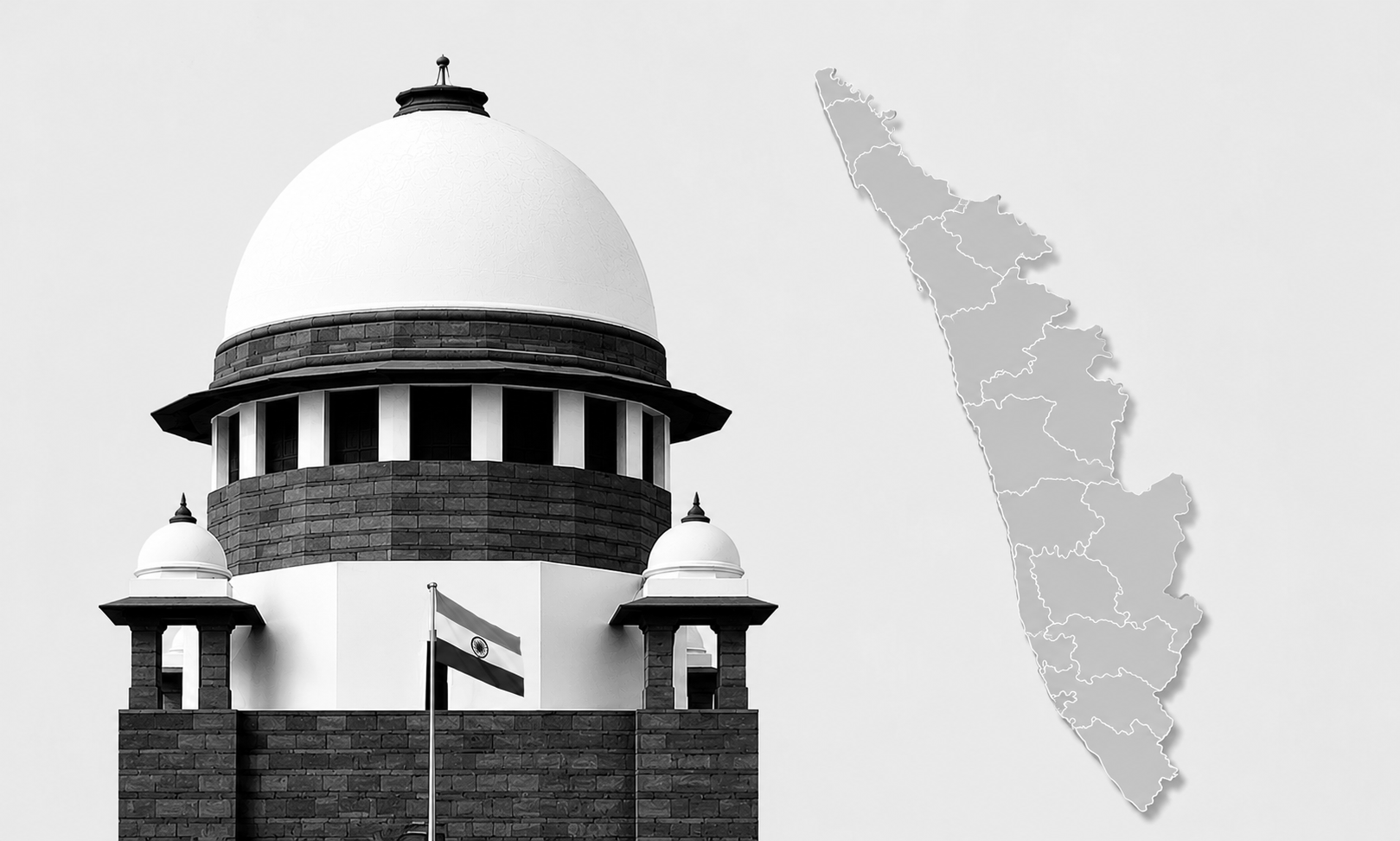
Supreme Court Takes Up Kerala Waqf Board Challenge on July 20
The Supreme Court will hear on July 20 a plea filed by the Kerala State Waqf Board challenging an interim order of the Kerala High Court that has curtailed the Board's powers by preventing it from taking major decisions without prior judicial approval. A Bench comprising Chief Justice Surya Kant , Justice Joymalya Bagchi , and Justice V. Mohana agreed to urgently list the matter after the Board sought immediate intervention, setting the stage for a significant legal examination of the extent to which courts can restrict the functioning of statutory bodies.
The dispute arose after the Kerala High Court , in an interim order passed on July 15 , restrained the Waqf Board from taking any major administrative or policy decision , incurring capital expenditure , or implementing key policy measures without obtaining the court's express permission. The High Court also directed the Kerala Government to appoint its representative to the Board in accordance with the United Waqf Management, Empowerment, Efficiency and Development (UWMEED) Act , while ordering that the Board function under the supervision of the Joint Secretary handling Waqf affairs until further orders.
The directions were issued while hearing a batch of Public Interest Litigations (PILs) , including one filed by BJP leader Shone George , challenging the legality of the Board's present composition. The petitioners argued that the Board had not been constituted in accordance with Section 14 of the UWMEED Act , alleging the absence of two non-Muslim members and a Shia representative , as required under the amended law. The High Court observed that the Board's constitution appeared, at least prima facie, to be inconsistent with statutory provisions and imposed temporary restrictions to preserve the status quo until the matter is decided.
The case has attracted national attention as it is among the first major judicial disputes linked to the implementation of the UWMEED Act , which replaced and amended the Waqf Act, 1995 . The legislation introduced significant reforms to Waqf administration, including changes to the composition of State Waqf Boards by providing for representation of non-Muslim members , Muslim women , government nominees , and members from different Muslim sects. It also seeks to strengthen transparency, financial accountability and government oversight in the management of Waqf properties.
Challenging the High Court's interim order, the Kerala State Waqf Board has argued before the apex court that the restrictions have effectively paralysed its statutory responsibilities. The Board maintains that it administers thousands of Waqf properties across the state and that the inability to approve development works, sanction expenditure, make administrative appointments or implement welfare measures could adversely affect the functioning of religious and charitable institutions under its jurisdiction.
While hearing the matter, the Supreme Court is not expected to examine the constitutional validity of the UWMEED Act , which is already under challenge in a separate batch of petitions before the apex court. Instead, it is likely to focus on whether the Kerala High Court was justified in imposing interim restrictions on the Board's powers before deciding the legality of its constitution. The High Court has meanwhile scheduled the next hearing in the PILs for July 22 , making the Supreme Court's decision on July 20 crucial in determining whether the Board regains its decision-making authority or continues to function under judicial supervision.