
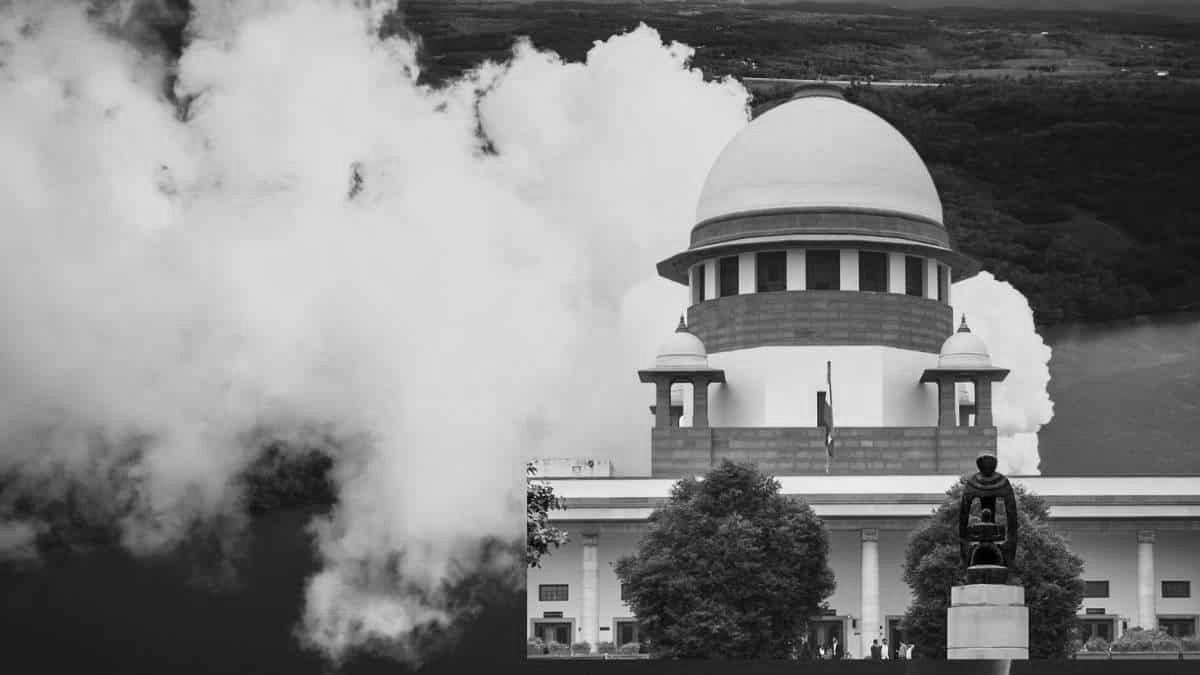
Supreme Court closes historic 1985 pollution PIL, orders fresh case on NCR air crisis
The Supreme Court on Thursday disposed of a landmark public interest litigation filed by environmentalist M C Mehta in 1985, directing the registry to register a fresh suo motu case titled "Re: Issues of Air Pollution in National Capital Region" to continue judicial oversight of pollution in Delhi-NCR.
A bench comprising Chief Justice Surya Kant and Justices Joymalya Bagchi and Vipul M Pancholi passed the order after parties to the petition suggested the original PIL had fulfilled its historic purpose and that future issues would be better addressed through separate, focused proceedings.
The 1985 petition is widely regarded as the most impactful environmental litigation in Indian legal history, having produced over 300 judicial orders over four decades . Among its most significant outcomes were the conversion of Delhi's public transport fleet to CNG, the relocation or closure of thousands of polluting industries in and around the capital, and the introduction of stricter fuel and emission standards.
The court noted that over time, hundreds of interlocutory applications had accumulated within the original petition, making proceedings increasingly complex and difficult to manage. All pending applications linked to the PIL will now be converted into independent writ petitions, each assigned a separate case number.
The decision comes against a grim backdrop. Delhi-NCR, home to over 46 million people, consistently ranks among the world's most polluted regions. Studies estimate that toxic air cuts the average Delhi resident's life short by over a decade. As recently as December, the Supreme Court described the region's annual pollution crisis as an "annual feature," calling for more pragmatic and lasting solutions.
Environmental lawyers have welcomed the restructuring but flagged concerns. The old PIL carried institutional memory, decades of orders and precedents that fresh proceedings will need to account for. "The concern," said one advocate, "is that restructuring can sometimes be a polite way of slowing things down."
Mehta, whose petition transformed India's environmental jurisprudence, has not publicly commented on its closure.