
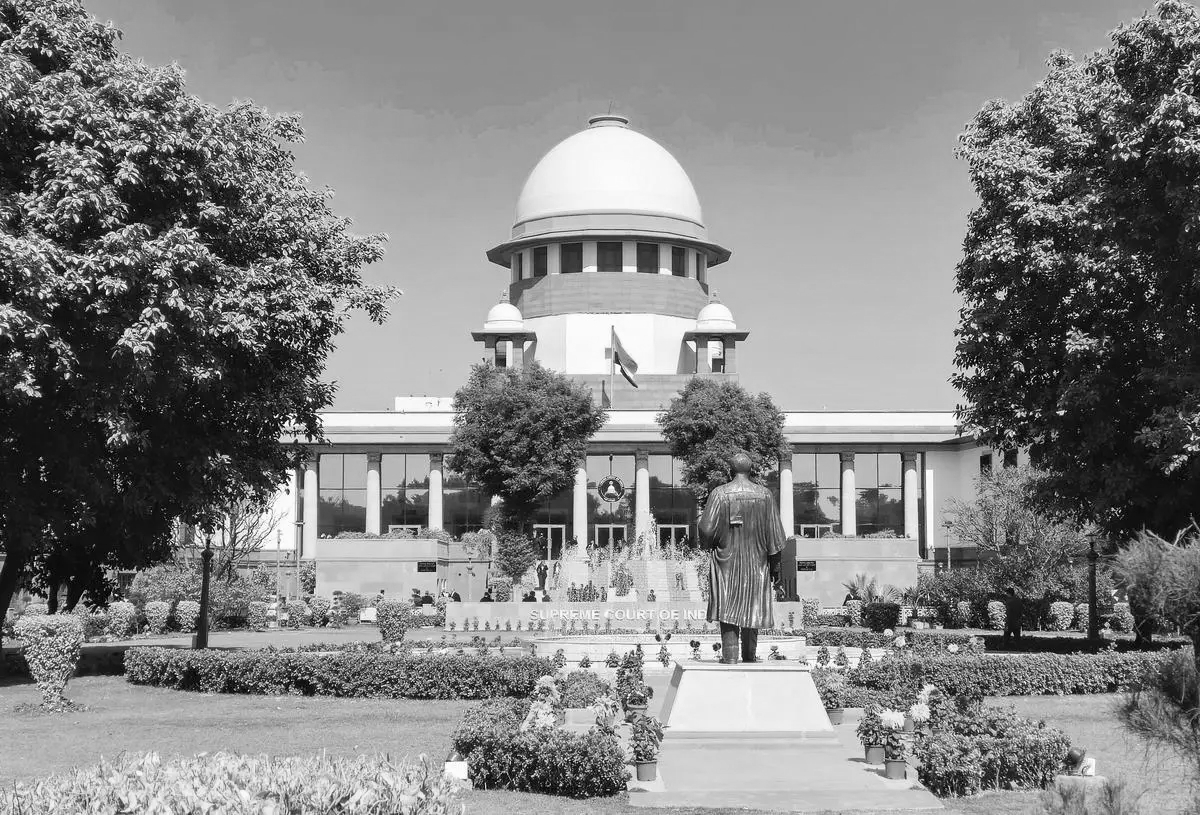
Supreme Court Bars Nominated Municipal Members from Voting in MLC Polls
The Supreme Court has reaffirmed the primacy of democratic representation in India's electoral system, ruling that nominated members of municipalities and town panchayats are not entitled to vote in Legislative Council elections from Local Authorities' Constituencies. The landmark judgment, which could influence electoral practices in several states with bicameral legislatures, came as the apex court dismissed an appeal filed by BJP Karnataka Legislative Council (KLC) member Pranesh M K challenging the recounting of votes in the 2021 Karnataka Legislative Council election .
A Bench comprising Chief Justice Surya Kant , Justice Joymalya Bagchi , and Justice Vipul M. Pancholi held that 12 nominated members appointed under Section 352(1)(b) of the Karnataka Municipalities Act, 1964 were constitutionally ineligible to vote and should not have been included in the electoral roll. The Court upheld the Karnataka High Court's rulings of January 3, 2022 , and April 20, 2023 , observing that their inclusion was contrary to the constitutional scheme.
The dispute arose from the 2021 election to the 12-Chikkamagaluru Local Authorities' Constituency , where Pranesh M K secured 1,188 votes , while Congress candidate A. V. Gayathri received 1,182 votes , giving the BJP leader victory by just six votes . Of the 2,410 votes polled , 2,371 were declared valid . The 12 disputed votes were cast by nominated members from the town panchayats of Koppa, Mudigere, Sringeri and Narasimharajapura . Following the High Court's order in January 2025 , election authorities were directed to open the ballot boxes, segregate the disputed ballots and recount the votes after excluding them.
Explaining its reasoning, the Supreme Court said Article 171(3)(a) of the Constitution, which provides for the election of one-third of Legislative Council members by local authorities, must be interpreted in harmony with Article 243R , introduced through the 74th Constitutional Amendment . While Article 243R permits the nomination of persons with special knowledge or experience to municipalities, it explicitly denies them voting rights in municipal meetings.
The Bench observed that allowing nominated members to elect legislators despite their inability to vote on municipal affairs would create a constitutional inconsistency and dilute the democratic character of the electoral process. It stressed that the objective of Article 171 is to ensure representation of democratically elected local self-governing bodies , not government-appointed nominees.
Rejecting the argument that the electoral roll had attained finality, the Court held that constitutional eligibility overrides procedural finality , and administrative errors cannot legitimise the participation of constitutionally ineligible persons in elections.
The ruling also reinforces the spirit of the 73rd and 74th Constitutional Amendments , which sought to strengthen grassroots democracy by empowering elected local bodies. Since states such as Andhra Pradesh, Bihar, Karnataka, Maharashtra, Telangana and Uttar Pradesh elect Members of the Legislative Council through Local Authorities' Constituencies, the judgment is expected to guide future electoral roll preparation and ensure that only elected representatives form the electoral college, thereby preserving the integrity of India's democratic institutions.