
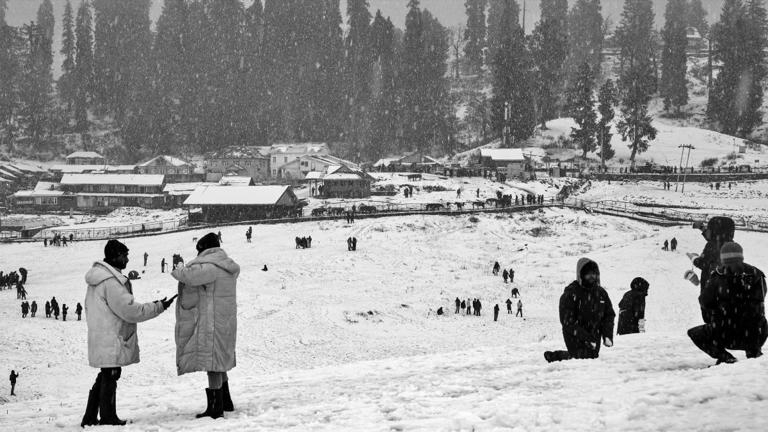
Sub zero temperatures grip Himalayan regions, reviving winter tourism at Ski destinations
Several high-altitude regions of Himachal Pradesh and Jammu and Kashmir recorded their coldest nights of the season as temperatures dipped close to 10 degrees below freezing, officials said on Monday. Tabo in Himachal Pradesh’s Lahaul and Spiti district and Gulmarg, the iconic ski resort in north Kashmir, were among the coldest locations, as a sharp cold wave tightened its grip across northern India.
Fresh snowfall was reported in parts of Himachal Pradesh, with Koksar receiving around two centimetres of snow , while Kalpa and Gondla witnessed light snowfall. Higher reaches of Lahaul and Spiti continued to receive snow, and some areas of Pangi in Chamba district have remained under a thin snow cover since the New Year. In the absence of official data from remote tribal belts, authorities estimate that minimum temperatures in several inaccessible areas may have plunged 10 to 12 degrees below freezing, leading to the freezing of lakes, springs and snow-fed streams.
In Jammu and Kashmir, Gulmarg in Baramulla district recorded a minimum temperature of around minus 8.8 degrees Celsius following another spell of snowfall. The resort has remained below freezing for consecutive nights, while Srinagar and Pahalgam also recorded sub-zero minimum temperatures. The region is currently observing Chilla-e-Kalan, the harshest 40-day winter period, traditionally marked by intense cold and frequent snowfall, although the plains of the Kashmir Valley are yet to see snow this season.
Gulmarg, one of India’s most prominent ski and winter sports destinations, has benefited from the fresh snowfall and sustained cold. The snow-covered slopes have revived skiing, snowboarding and other winter activities, leading to increased tourist footfall. Local tourism operators say the current weather has significantly improved conditions for winter sports, offering a much-needed boost to hotels, ski schools and ancillary services after an uncertain start to the season.
This year’s colder spell stands in contrast to last winter, when unusually mild temperatures and delayed snowfall affected ski operations in Gulmarg and other Himalayan resorts. Last season saw extended dry spells and reduced snow accumulation, raising concerns among tourism stakeholders and locals dependent on winter travel.
Climate experts caution that while episodic cold waves still occur, long-term trends point to rising average winter temperatures and increasingly erratic snowfall patterns in the Himalayas. Such variability, attributed to climate change, has made winter seasons less predictable, impacting tourism, water resources and fragile mountain ecosystems.
Meanwhile, the India Meteorological Department has forecast light rain or snowfall at isolated places in higher Himalayan regions over the coming days, along with fog advisories in parts of Himachal Pradesh, Punjab, Haryana and Delhi. As temperatures continue to fluctuate, authorities have urged travellers and residents to exercise caution, particularly in snow-bound and frost-prone areas.