
Strait of Hormuz: The Strategic Oil Lifeline at the Centre of West Asia Conflict
Rising tensions in West Asia have once again drawn global attention to the Strait of Hormuz , one of the most strategically important maritime corridors in the world. The narrow passage, which connects the Persian Gulf with the Gulf of Oman , plays a decisive role in global energy supply, carrying a significant share of the world’s oil and gas shipments. As geopolitical tensions escalate in the region, concerns are growing that disruptions in this vital sea route could send shockwaves through the global economy.
The issue has resurfaced amid the ongoing conflict involving Iran, Israel and the United States . Iran has repeatedly warned that if its oil exports are blocked or if military action against it intensifies, closing the Strait of Hormuz could become a strategic option. Following recent developments in the conflict, the situation around the waterway has become increasingly uncertain.
Security warnings from Iran’s Islamic Revolutionary Guard Corps (IRGC) have reportedly made commercial vessels cautious about navigating the strait. Several international shipping companies have reduced or suspended operations through the route, leading to a sharp decline in maritime traffic. According to industry reports, ship movement through the corridor has dropped significantly in recent days, with several oil tankers remaining stranded in the Gulf region.
The disruption has also affected cargo shipments from Asia. Some vessels that had departed from Indian ports including Visakhapatnam were reportedly forced to turn back after security risks increased in the region. Port officials say such reversals of commercial ships are rare and could create logistical challenges, including storage issues at ports if shipments continue to return.
Global energy markets have already begun reacting to the uncertainty. Since nearly one-fifth of the world’s oil supply passes through the Strait of Hormuz, even the possibility of disruption can push crude prices upward. International benchmark Brent crude has shown signs of rising as traders assess the risks of supply interruptions. In addition, insurance companies have raised or withdrawn war-risk coverage for vessels operating in the region, further discouraging shipping activity.
Despite Iran not officially declaring a complete closure of the strait, analysts suggest that the security environment has created a “de facto disruption” of traffic, with many ships avoiding the route due to potential threats.
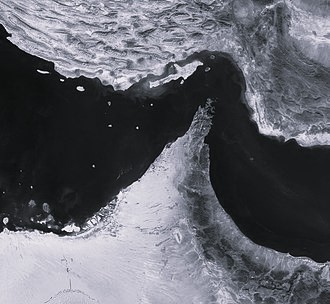
Geographically, the Strait of Hormuz lies between Iran to the north and Oman and the United Arab Emirates to the south . Though it stretches about 167 kilometres in length , its navigable lanes are relatively narrow in several sections, making it highly sensitive to military activity or blockades. Yet despite its limited width, the strait handles a massive volume of global energy trade.
Major oil-producing countries in the Persian Gulf including Saudi Arabia, Iraq, Iran, Kuwait, Qatar and the UAE depend heavily on this route to export crude oil and natural gas to global markets. On average, more than 20 million barrels of oil per day pass through the strait, representing roughly 20 percent of global oil consumption . A significant portion of the world’s liquefied natural gas (LNG) shipments also travel through this corridor, with Qatar relying on it almost entirely for gas exports.
Asian economies are particularly dependent on this supply chain. Countries such as China, India, Japan and South Korea receive the majority of their imported crude from Gulf producers through this passage. Any prolonged disruption in the strait could therefore have direct consequences for fuel prices, energy security and economic stability across the region.
The Strait of Hormuz has a long history of military tensions. During the Iran–Iraq War in the 1980s , attacks on oil tankers in the region led to what became known as the “Tanker War.” In 1988, the United States launched Operation Praying Mantis against Iranian naval assets following a mine attack on an American warship. That same year, a tragic incident occurred when the US Navy mistakenly shot down Iran Air Flight 655 , killing all 290 passengers and crew on board.
Even in recent decades, the region has witnessed frequent confrontations between Iranian forces and Western naval vessels. Periodic standoffs, including incidents involving Iranian speedboats approaching US warships, have kept the waterway under constant strategic scrutiny.
Recognizing the risks associated with dependence on the Strait of Hormuz, some Gulf countries have developed alternative export routes. Saudi Arabia operates pipelines that transport oil to ports on the Red Sea , while the United Arab Emirates has built the Habshan–Fujairah pipeline , allowing part of its crude exports to bypass the strait.
However, these alternatives can only handle a limited portion of the region’s total exports. As a result, the Strait of Hormuz remains the primary gateway for energy shipments from the Gulf to global markets.
Experts warn that if tensions escalate further, disruptions in this critical corridor could have far-reaching consequences from rising oil and gas prices to increased transportation costs and volatility in global financial markets. For many countries, especially energy-importing nations, stability in the Strait of Hormuz is therefore not just a regional concern but a matter of global economic security.
In essence, this relatively narrow stretch of water carries enormous geopolitical weight. While only a few dozen kilometres wide at certain points, the Strait of Hormuz remains one of the world’s most powerful strategic chokepoints capable of influencing energy markets, trade flows and international politics.