
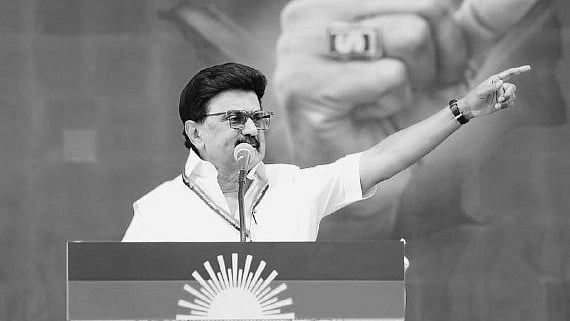
Stalin Questions Centre’s Caste Census Method, Seeks Standardised Categories
DMK president M K Stalin on Sunday expressed strong disappointment over the Union government’s proposed open-ended format for recording caste details in the upcoming Census 2027, warning that the methodology could lead to significant discrepancies in the data.
Stalin urged the Tamil Nadu government to pass a special resolution in the ongoing Assembly session to reflect public sentiment and put pressure on the Centre to adopt an accurate and error-free caste enumeration process.
In a statement, the former Tamil Nadu chief minister criticised the decision to allow enumerators to manually enter caste names without a standardised, pre-determined list. He argued that such a system could undermine the primary objective of conducting a caste-based census.
Stalin rejected the Centre’s explanation that the Other Backward Classes (OBC) list consists of classes rather than individual castes, calling the justification unacceptable. He urged the Union government to consult state governments and obtain their official lists of Backward Classes (BC) and Most Backward Classes (MBC) for integration into the census system.
According to Stalin, allowing respondents to select their caste from an established list would ensure greater consistency and accuracy. He claimed that an open-ended system could produce chaotic results, potentially creating an impression of 46 lakh distinct castes across the country.
Stalin said the principal purpose of a caste census was to establish the population and socio-economic and educational status of OBC communities, similar to the information collected for Scheduled Castes and Scheduled Tribes.
Such data, he said, would enable governments to formulate more effective reservation policies and welfare schemes.
Warning against proceeding with what he termed a flawed methodology, Stalin said the exercise could waste nearly Rs 12,000 crore in public funds and the efforts of lakhs of government employees.
He called for immediate corrective measures, stressing that the social justice rights of backward and most backward communities must be protected.