
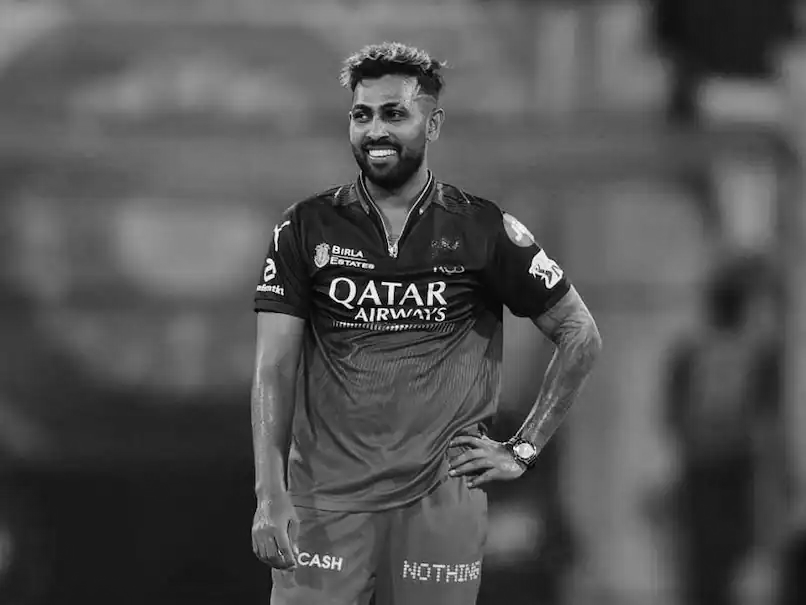
Sri Lankan pacer Thushara moves court to play IPL as Sri Lanka Cricket blocks NOC over fitness
Sri Lankan fast bowler Nuwan Thushara has turned to the Colombo District Court in an attempt to secure his participation in the ongoing Indian Premier League (IPL) after the Sri Lanka Cricket (SLC) board refused to issue him a No Objection Certificate (NOC), citing failure to meet the board’s new fitness standards .
The 31‑year‑old, who is contracted to Royal Challengers Bengaluru (RCB), has filed a petition asking the court to order SLC to grant the NOC, a mandatory clearance for overseas players to take part in the IPL. The hearing is scheduled for April 9 .
SLC introduced strict physical performance tests this year for players seeking NOCs to join franchise leagues like the IPL. The move comes in the wake of Sri Lanka’s disappointing performances in recent global events, where fitness levels were widely criticised as a factor affecting results. Under the new policy, players must pass benchmarks such as sprint and body composition assessments before being cleared to play abroad.
While some Sri Lankan cricketers have already passed these tests and received their NOCs, others – including Thushara and a handful of his peers – reportedly did not meet the board’s prescribed standards and were denied clearance.
Thushara has argued in his legal plea that his central contract with SLC had ended on March 31 and that he had already informed the board of his intention to retire from international duties . He contends that, since he no longer has national obligations, denying the NOC on fitness grounds is unjustified and should be set aside. The pacer also maintains that his fitness levels have historically been sufficient and have not prevented him from playing professional cricket.
RCB had retained Thushara for ₹1.6 crore ahead of the 2026 season, but his availability for the tournament remains uncertain. The fitness‑test requirement has sparked debate, with supporters arguing that it aims to raise professional standards, while critics say it could unfairly limit players’ opportunities to compete in global franchise leagues.