
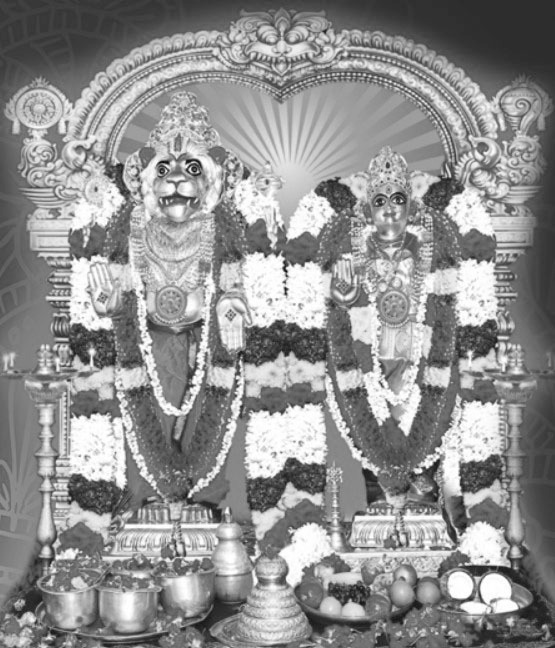
Sri Lakshmi Narasimha Swamy Divine Abode - Yadagirigutta
On one side, the mesmerizing artistry of black granite sculptures that captivate the mind; on the other, Sri Lakshmi Narasimha Swamy, the wish-fulfilling divine treasure for devotees. The harmonious blend of these two is Yadagirigutta. For city dwellers leading fast-paced lives, this sacred shrine offers a perfect one-day spiritual retreat that provides both devotional fulfillment and serene joy. It is an ideal destination where faith and tranquility come together in a short span of time.
Due to its close proximity to Hyderabad, devotees can start early in the morning, have the darshan of the Lord, admire the architectural marvels within the temple complex, and return by evening. Built as a prestigious project by the Telangana government, this “Mini Tirupati” is not only a pilgrimage center for devotees but also a remarkable destination for tourists who admire Indian culture and sculpture. The panoramic natural views from the hilltop, the majestic gopurams, and the spiritual ambience rejuvenate the mind and soul. Let us explore the unique features of this sacred Yadagiri (Yadadri).
Yadagirigutta stands foremost among the most sacred and renowned pilgrimage centers in Telangana. Situated atop a lofty hill in Yadadri Bhuvanagiri district, this temple shines as a divine refuge for devotees. Lord Narasimha, an incarnation of Lord Vishnu, manifested here as a Swayambhu (self-manifested deity), earning the shrine the revered title of “Telangana Tirupati.” Located about 60 kilometers from Hyderabad, the temple is enveloped by a serene atmosphere and spiritual grandeur. Following extensive reconstruction undertaken by the Telangana government, the shrine has transformed into a world-class spiritual tourism destination and an extraordinary masterpiece of black granite architecture.
Mythological Origins and History
Yadagirigutta has a profound mythological background. During the Treta Yuga, Sage Yada (son of Rishyashringa Maharshi), a great devotee, performed intense penance at this site to attain the direct vision of Lord Narasimha. Guided by Lord Hanuman, who was pleased with his devotion, Lord Narasimha appeared before the sage in five distinct forms:
Sri Jwala Narasimha - the fierce form blazing like flames
Sri Yogananda Narasimha - the calm and meditative yogic form
Sri Gandabherunda Narasimha - the powerful bird-like form
Sri Ugra Narasimha - the ferocious form that slayed Hiranyakashipu
Sri Lakshmi Narasimha - the peaceful form seated with Goddess Lakshmi
As these five forms are enshrined here, the temple is revered as a Pancha Narasimha Kshetra . At the sage’s request, the Lord manifested permanently at this location. Hence, the hill came to be known as Yadagiri (Yada + Giri, meaning “the hill of Yada”).
Mention in the Skanda Purana
The greatness of this sacred shrine is described in the Skanda Purana , one of the eighteen major Puranas. For centuries, the temple served as a primary deity of worship for tribal communities in the region. Though the deity is believed to have remained hidden for a period, legends narrate that the Lord revealed His presence through devotees’ dreams, reaffirming His divine existence.
Historical Significance and Royal Patronage
The temple boasts a history spanning several thousand years.
Tribhuvana Malla (1148 CE)
According to Kolanupaka inscriptions, Kalyani Chalukya king Tribhuvana Malla visited the shrine and offered donations during the construction of the Bhuvanagiri Fort.
Sri Krishnadevaraya
The Vijayanagara emperor Sri Krishnadevaraya is believed to have visited Yadagirigutta during his military campaigns. Historical accounts suggest that he achieved victories and was blessed with progeny after seeking the Lord’s grace.
Architectural Grandeur
After reconstruction, Yadagirigutta has evolved beyond a temple into a living symbol of India’s sculptural excellence. Under the leadership of Chief Minister K. Chandrashekar Rao, the temple was rebuilt entirely using black granite stone. The architecture represents a fusion of Kakatiya, Chola, Dravidian, and Pallava styles. Notably, no cement was used, only a traditional mixture of lime, jaggery, and karakkaya (myrobalan) was employed to bind the stones.
The temple features five majestic Rajagopurams . The main gopuram rises to about 82 feet and gleams with golden kalashas . The walls of the temple corridors are adorned with exquisite sculptures depicting the Dashavatara of Lord Vishnu, the story of Prahlada, and the divine exploits of Lord Narasimha. A three-foot golden Sudarshana Chakra atop the sanctum tower stands as a major attraction and is visible from nearly six kilometers away. Devotees believe that this chakra once rotated on its own.
Rituals and Agama Practices
All rituals at Yadagirigutta are conducted strictly according to the Pancharatra Agama Shastra . Daily worship begins with Suprabhata Seva and continues with Ashtottara Archana , Abhishekam , and Nitya Kalyanam . Special rituals such as Shashwata Pujas , Laksha Tulasi Puja , Sudarshana Narasimha Homam , and Gandabherunda Puja draw large numbers of devotees. The Suprabhatam and hymns composed by the late Sri Vangipuram Narasimha Acharya resonate through the temple even today, enhancing the spiritual atmosphere.
Annual Brahmotsavams
The annual Brahmotsavams of Sri Lakshmi Narasimha Swamy are celebrated with grand splendor. These festivities take place every year during the Phalguna month (February - March), spanning 11 days from Shuddha Vidiya to Dwadashi .
Major Highlights of the Brahmotsavams:
Ankurarpana and Dhwajarohana:
The festival begins with the hoisting of the Garuda flag, symbolically inviting all deities to participate.
Vahana Sevas:
The Lord gives darshan every morning and evening on various vahanas, including Hamsa, Simha, Pedda Shesha, Garuda, and Hanumantha vahanas.
Edurukolu Utsavam:
A ceremonial dialogue between the priests representing the Lord and the Goddess, symbolizing a pre-wedding ritual.
Tirukalyana Mahotsavam:
The most significant event, witnessing the divine wedding of the Lord and Goddess. Lakhs of devotees attend, and dignitaries offer silk garments and pearl talambralu . Following the wedding, the Lord parades through the streets on a chariot, pulled by thousands of devotees.
Chakratheertham and Purnahuti:
The festival concludes with the sacred bath of the Sudarshana Chakra, marking the completion of the Brahmotsavams. During these eleven days, Yadagirigutta resembles Vaikuntha itself. Participation in these rituals is believed to absolve sins and bestow health and longevity.
Devotees’ Beliefs - “Vaidya Narasimha”
Devotees lovingly refer to the Lord here as “Vaidya Narasimha” (The Divine Healer) . People suffering from life-threatening illnesses or mental distress observe a 40-day Mandala Deeksha and circumambulation, believing that the Lord grants healing. Many devotees share experiences of the Lord appearing in their dreams and performing divine treatments or surgeries. Special rituals are also performed to remove astrological afflictions and negative influences.
Tourism and Transport Facilities
Due to its proximity to Hyderabad, weekend footfall often exceeds 50,000 devotees. Direct bus services are available from Uppal, Hyderabad. The nearest railway station is Raigiri (now Yadadri station), with easy access from Bhongir town via buses and autos. Accommodation facilities include luxury rooms, choultries, and VIP guest houses both on the hilltop and at the foothills. The temple administration conducts free daily annadanam , serving thousands of devotees every day.
Yadagirigutta is not merely a temple, it is a symbol of Telangana’s spiritual pride and devotion. The grand reconstruction has transformed it into a sculptural marvel that will convey India’s cultural legacy to future generations. A visit to this sacred shrine, where devotion, peace, and natural beauty blend seamlessly, offers an unforgettable spiritual experience. The sacred hills continue to resonate with the divine chant:
“Om Sri Lakshmi Narasimhaya Namah.”
From the mythological era to the modern age, Yadagirigutta represents an extraordinary journey. From a humble cave shrine rooted in the devotion of Sage Yada to a global spiritual landmark built with black granite at a cost of thousands of crores, its transformation stands as a testament to India’s enduring faith and cultural evolution.