
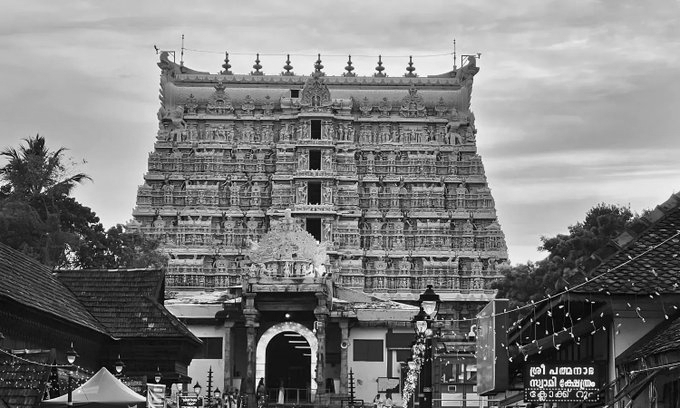
Sree Padmanabhaswamy Temple Committee Rejects Police Report on Missing Valuables
The administrative committee of the Sree Padmanabhaswamy Temple on Friday rejected a police report alleging missing valuables and security lapses at the historic shrine, stating that an internal verification found the claims to be baseless.
In a statement, the committee said the diamond ornament described as "missing" in the police report was safely stored inside the sanctum sanctorum. It further asserted that gold coins, gold bars, and other offerings made by devotees were securely preserved and properly accounted for through regular audits and inventory checks.
The committee also dismissed allegations that certain individuals had entered the temple without undergoing security screening. According to the statement, access through the restricted Chembakathinmoodu pathway is limited to temple priests and members of the royal family, while all devotees, staff, and guests are subject to security checks conducted by the Kerala Police wing stationed at the shrine.
Accusing the officers concerned of submitting a "factually incorrect report" without consulting temple authorities or conducting a proper inquiry, the committee said the allegations had damaged the reputation of both the temple administration and the governing body. It has decided to seek action from the Kerala government against those responsible for preparing the report.
The controversy emerged after media reports cited a police communication alleging that around 78 grams of gold bars and coins offered by devotees were missing and highlighting alleged security concerns.
The Sree Padmanabhaswamy Temple, one of India's wealthiest and most prominent temples , has remained under close public scrutiny since the discovery of vast treasures in its underground vaults following a Supreme Court-directed inventory in 2011.
The episode highlights the continuing tension between faith, transparency, and institutional governance , as authorities seek to balance public accountability with the management of religious institutions that hold immense cultural, spiritual, and material significance.