
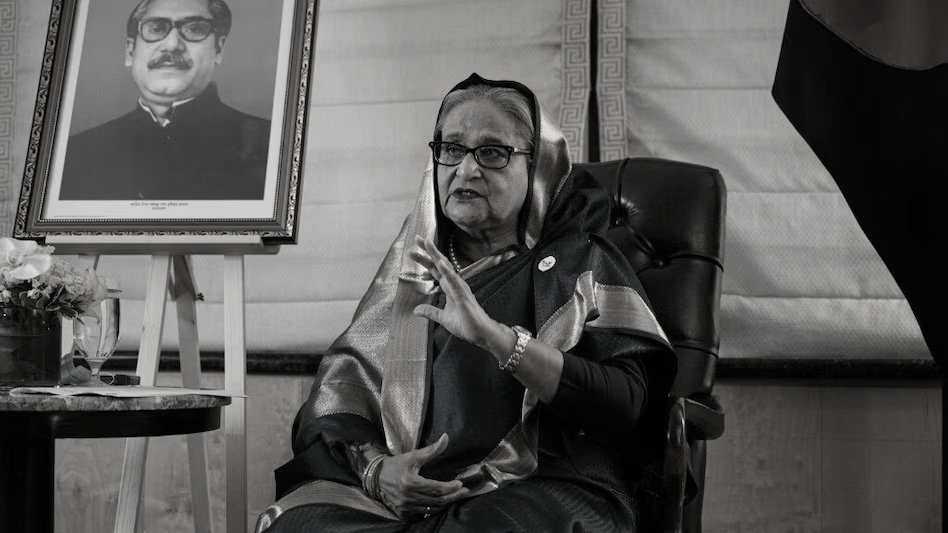
Special Bangladeshi Tribunal to deliver verdict against Hasina on November 17
Bangladesh’s interim government, headed by Nobel laureate Muhammad Yunus as Chief Adviser, is bracing for heightened political tension as the International Crimes Tribunal (ICT-BD) announced it will deliver its verdict against deposed Prime Minister Sheikh Hasina on November 17 in a case involving alleged crimes against humanity .
The ruling comes at a crucial time for the South Asian nation, with general elections scheduled for February–March 2026, as the Yunus-led caretaker administration works to restore order and credibility following months of unrest and the collapse of Hasina’s Awami League government in mid-2024.
“The three-judge tribunal set November 17 for delivering the verdict,” a journalist attending the tightly secured special court in Dhaka confirmed. Security has been intensified across the capital, with intelligence agencies placed on high alert ahead of the announcement.
Hasina, along with her former Home Minister Asaduzzaman Khan Kamal and then Inspector General of Police Chowdhury Abdullah Al-Mamun, faced trial over allegations stemming from the July 2024 student-led uprising that ultimately triggered her government’s downfall. Hasina and Kamal were tried in absentia, while Al-Mamun appeared in court and reportedly cooperated with investigators.
According to the prosecution, the charges include murder, torture, and other inhuman acts committed during the violent suppression of the 2024 uprising, when thousands of students and civilians took to the streets demanding government reform and accountability. Prosecutors allege that the Hasina administration ordered or condoned the use of lethal force against unarmed demonstrators, resulting in multiple deaths and injuries across major cities such as Dhaka, Chittagong, and Rajshahi.
The “July 2024 Uprising”, which began as a protest against the government job quota system, rapidly escalated into a mass anti-government movement accusing the Awami League of corruption, authoritarian rule, and human-rights abuses. Human-rights organizations documented extrajudicial killings, arbitrary detentions, and enforced disappearances, prompting international condemnation and calls for accountability.
The ICT-BD prosecution has demanded the death penalty for Hasina, calling her the “chief architect of the crackdown.” The defense, however, maintains that the case is politically motivated, arguing it seeks to discredit the former leader and the Awami League ahead of the national polls.
Political observers say the verdict’s timing just months before the elections and under an interim administration could have far-reaching implications for Bangladesh’s political stability. Analysts warn that an adverse judgment may ignite unrest or deepen divisions in a nation already navigating a delicate democratic transition.
The verdict on November 17 is expected to be one of the most consequential rulings in Bangladesh’s history, as a former prime minister faces judgment under charges of crimes against humanity a case that will test both the credibility of the country’s judicial institutions and the resilience of its democracy.