
Spain’s King Seeks ‘Good Faith’ From Morocco During First Visit To Ceuta After Migration Crisis
Spain’s King Felipe VI called for “good faith” from Morocco during his first visit to Ceuta, a Spanish territory in North Africa, on Tuesday, as a migration crisis involving nearly 80,000 people strained relations between the neighbours and left at least 140 migrants dead in July.
Accompanied by Queen Letizia, Felipe reaffirmed Spain’s sovereignty over the city, home to around 84,000 residents, declaring that Ceuta is an integral part of Spain and that its frontier is a European Union border. “Any threat to it is a threat to the European Union,” he said, drawing loud applause.
Although Spain has praised Morocco for helping return most of the migrants who crossed into Ceuta, police officers and some lawmakers have questioned whether Rabat could have been unaware of the mass movement. Ceuta’s mayor, Juan Jesus Vivas, described the crossing as an “invasion”.
Felipe said Spain and the EU wanted healthy relations with Morocco, but stressed that these must be based on trust, mutual respect and good faith to promote regional stability, peace and security. Morocco does not recognise Spanish sovereignty over Ceuta and Melilla, another Spanish exclave in North Africa.
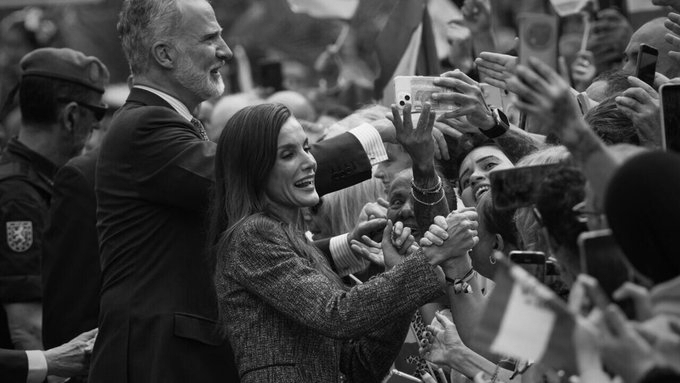
The royal couple received a warm welcome at Ceuta’s Plaza de Africa, where crowds waved Spanish flags and chanted patriotic slogans. Vivas presented Felipe with the key to the city and urged the expulsion of migrants who remained after the crossing.
The royals also visited the Sidi Embarek cemetery, accompanied by representatives of Catholicism, Islam, Judaism and Hinduism, to pay their respects to unidentified migrants who died during the crisis. Felipe expressed sympathy for those who lost their lives and called for the estimated 15,000 migrants still in Ceuta to be treated with dignity.
Many migrants, including minors, have reportedly been living on the streets or in poor conditions. Spain is investigating allegations of mistreatment and torture by soldiers detailed in an Amnesty International report. The crisis has also heightened tensions between Ceuta’s Christian and Muslim communities and become a political issue ahead of Spain’s November elections.
The royal visit marks the first time a Spanish monarch has travelled to Ceuta and Melilla since Felipe’s father, Juan Carlos I, visited both cities in 2007. That trip triggered a diplomatic crisis, prompting Morocco to recall its ambassador and sparking protests.
Spanish government spokesperson Elma Saiz said communication with Morocco remained “fluid” during the latest crisis. However, analysts believe Rabat may have been aware of the buildup of migrants encouraged by social media. A Spanish Defence Ministry intelligence report issued on July 30 described Moroccan forces as passive and negligent in preventing the crossings.
Felipe and Letizia will travel to Melilla on Wednesday. Observers are watching closely for Morocco’s response to the visit, which signals Spain’s willingness to assert its sovereignty over the two territories despite the risk of diplomatic tensions.