
Southwest Monsoon Ends with 12.6% Deficit, El Niño Raises Concerns
The southwest monsoon has withdrawn from the entire country, bringing an end to India's principal rainy season, even as the northeast monsoon has begun over parts of southern India. The India Meteorological Department (IMD) has forecast a wet spell, including isolated heavy rainfall, across several parts of the southern peninsula until October 21, raising concerns over agriculture, water security and livelihoods in the informal sector.
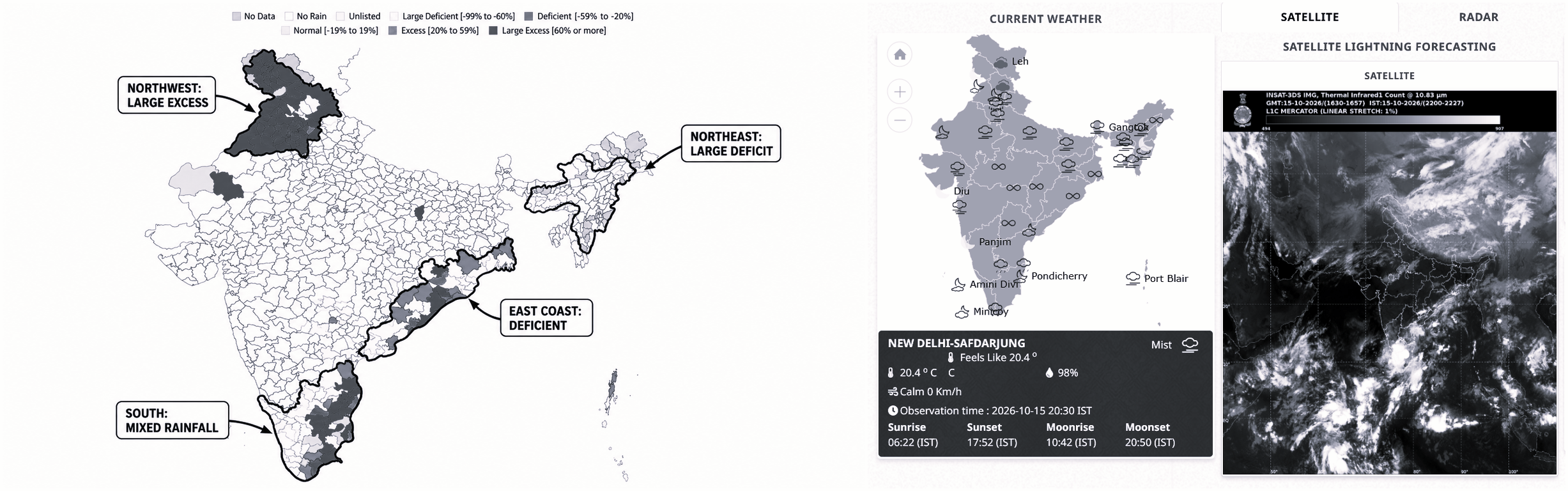
Tamil Nadu, Puducherry, Karaikal, coastal Andhra Pradesh, Rayalaseema, south interior Karnataka, Kerala and Mahe have reported northeast monsoon activity. India received 759.4 mm of southwest monsoon rainfall, 12.6 per cent below the normal of 868.6 mm. Strengthening El Niño conditions over the tropical Pacific have been identified as a factor contributing to the rainfall deficit.
October is a transition month between the southwest and northeast monsoons, explaining why rain continues despite falling temperatures in parts of India. As seasonal winds reverse, moisture-laden easterlies carry moisture from the Bay of Bengal towards southern India. Low-pressure systems, easterly waves and cyclonic disturbances can trigger heavy showers, particularly along the southeastern coast.
The northeast monsoon, which generally lasts from October to December, is crucial for Tamil Nadu and also supports agriculture and water replenishment in coastal Andhra Pradesh and Rayalaseema. However, the distribution of rainfall remains critical, as intense downpours can cause flooding while prolonged dry spells affect cultivation.
Rainfall-departure maps supplied alongside the weather report show contrasting classifications across districts, ranging from large deficient rainfall, 60 to 99 per cent below normal, to large excess rainfall, 60 per cent or more above normal. Other categories include deficient rainfall, excess rainfall and normal conditions. However, the maps' reporting period is not visible, preventing confirmation that they represent the entire monsoon season.
The weather outlook also has economic implications for informal workers, including construction labourers, street vendors, agricultural workers, delivery personnel and transport operators. Heavy rain can halt construction, reduce customer footfall, damage perishable goods and disrupt commuting, resulting in lost daily wages. For a worker earning ₹600 daily, losing four working days would mean ₹2,400 in gross income, excluding additional expenses.
Meanwhile, the World Meteorological Organization has warned that El Niño could peak around December 2026 and persist through February 2027, potentially influencing rainfall patterns and temperatures. Although El Niño increases the risk of deficient southwest monsoon rainfall, it does not guarantee drought or poor northeast monsoon performance everywhere.
Authorities must monitor reservoir storage, groundwater levels, crop conditions and district-level forecasts while preparing for flooding and water shortages. The coming months will be crucial for southern India's agricultural prospects and water security, with rainfall distribution and protection of vulnerable livelihoods emerging as central concerns.