
Southern India Emerges as India’s Fastest-Drying Region: Study
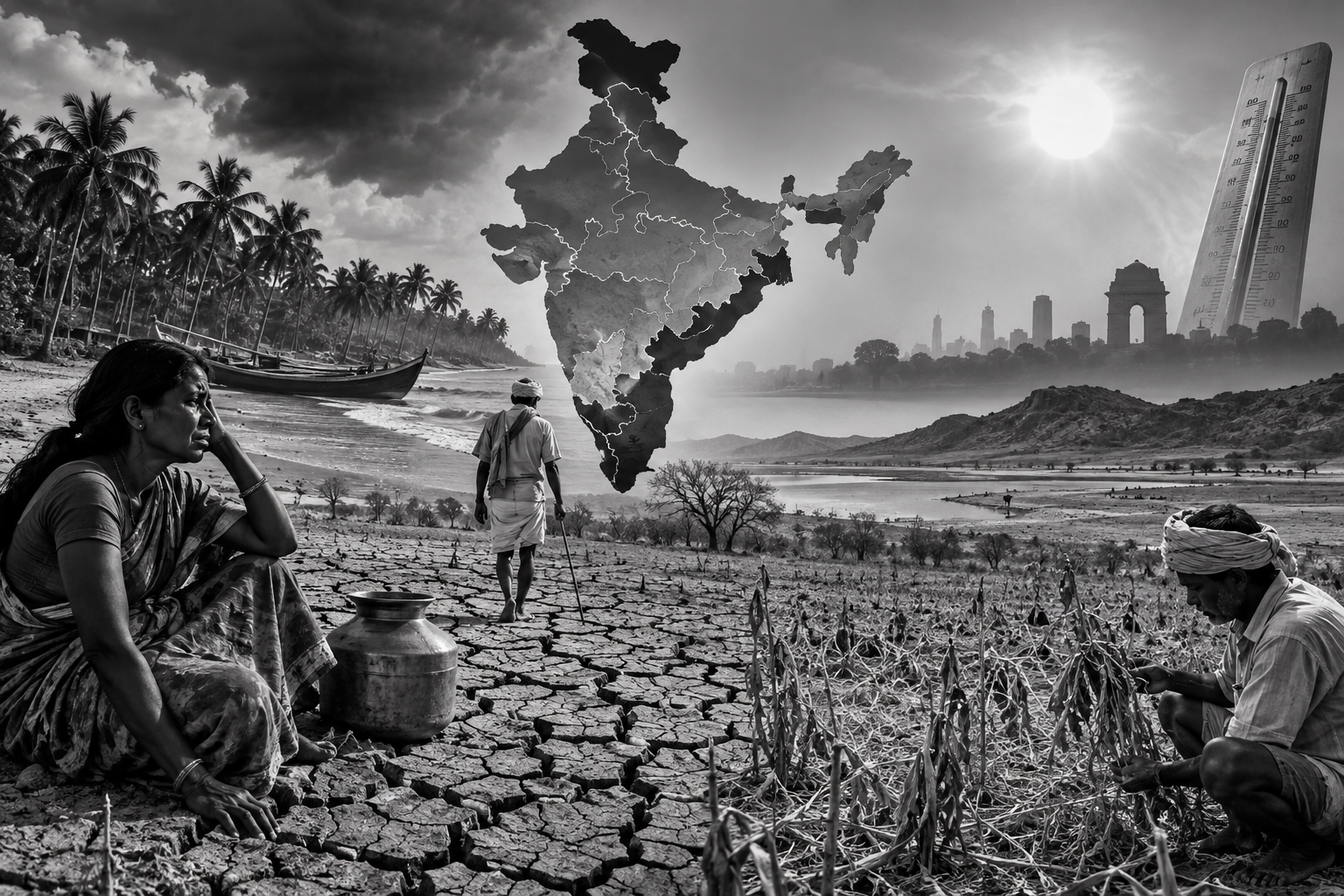
Southern India is emerging as India’s fastest-drying region, with drought-related extremes showing the strongest long-term increase across South Peninsular India and persistent drought hotspots emerging along parts of the eastern coast, according to a new study covering more than five decades of weather observations. At the same time, northwestern India has emerged as the country’s principal heat hotspot, highlighting how climate risks are increasingly developing in distinct regional patterns rather than following a single nationwide trend.
The study, “Evolution of Climate Extremes Over the Indian Subcontinent Using a Revised CEI,” published in the peer-reviewed International Journal of Climatology, analysed daily rainfall and temperature data from 1971 to 2022. Researchers from the India Meteorological Department (IMD), Atria University, Bengaluru, and NCMRWF developed a revised India Climate Extremes Index combining seven indicators, including maximum and minimum temperatures, consecutive dry days, heavy rainfall, SPEI, Heat Index and Excess Heat Factor.
South Peninsular India recorded marked increases in SPEI and consecutive dry days, indicating greater drought stress and longer rainfall gaps. Several years since the 2000s saw more than 40% of the region affected by drought, while drought-affected areas in eastern coastal states were around 20%–30% higher during 2011–2021 than in the 1980s. Andhra Pradesh, Odisha and Tamil Nadu emerged among states showing pronounced drought trends.
The study's “drying” finding does not mean annual rainfall is continuously declining across southern India. Instead, it points to increasing drought-related stress driven by prolonged dry spells and rising atmospheric moisture demand. This is significant because higher temperatures can increase evaporation even when rainfall totals remain relatively stable.
The wider evidence reinforces the concern. India's 2024 annual mean temperature was 0.65°C above the 1991–2020 average, making it the warmest year since 1901, even though annual rainfall reached 104% of the 1971–2020 average. A separate 2026 study found an 86% increase in heatwave frequency and expansion of compound drought-and-heatwave events from about 10% to 35% of India's area between 1951 and 2016. Extreme compound events increased 25-fold, while high-intensity events were associated with a 12.1% decline in national rice yields.
Meanwhile, temperature-extreme areas across central and northwestern India expanded by 20%–40% per decade between 1971 and 2022. M Rajeevan, co-author and former Earth Sciences Secretary, said the key concern is that heat and drought extremes are spreading from isolated pockets into larger, connected regions, creating a new level of risk for climate planning.