
South Korea, Japan Expand Energy and Security Partnership Amid Iran War, Trump Uncertainty
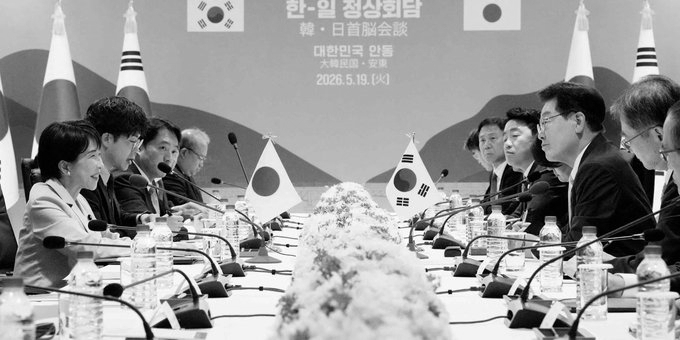
South Korean President Lee Jae Myung and Japanese Prime Minister Sanae Takaichi agreed to deepen cooperation on energy security, defence coordination and supply chains during a summit in the South Korean city of Andong on Tuesday, as both countries confront growing geopolitical instability and uncertainty surrounding US policy.
The meeting, held in Lee’s hometown, was the leaders’ fourth summit in about six months and the latest step in their “ shuttle diplomacy ” initiative aimed at strengthening ties between the two historical rivals. Earlier this year, the two met in Takaichi’s hometown of Nara, marking the first reciprocal hometown visits by sitting leaders of the two nations.
A major outcome of the summit was a new framework for energy cooperation . Seoul and Tokyo agreed to coordinate on crude oil and LNG supplies, including possible joint stockpiling, petroleum swap arrangements and emergency energy reserves, amid fears of disruption caused by the ongoing Iran war and instability in Gulf shipping routes. Both countries are heavily dependent on Middle East energy imports.
In a joint statement, Lee said recent turmoil in energy markets highlighted the need for closer coordination, while Takaichi announced a bilateral initiative to strengthen Indo-Pacific energy resilience.
The leaders also reaffirmed stronger trilateral cooperation with the United States on North Korea, regional security and supply-chain protection. Officials said discussions covered artificial intelligence, critical technologies and economic security.
Analysts say the improving relationship is increasingly driven by concerns over Donald Trump’s America-first policies , tariff pressures and Washington’s more transactional approach to alliances. Both Seoul and Tokyo have pledged hundreds of billions of dollars in US investments while trying to shield their export-driven economies from trade disruptions.
Relations between the two countries had long been strained over Japan’s 35-year colonial rule of Korea and disputes involving wartime forced labourers and sex slaves . While those issues remain unresolved, both governments are currently prioritising strategic cooperation over historical tensions.