
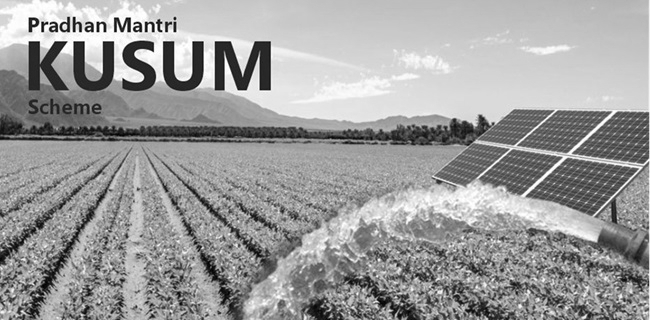
Solar irrigation push falters: PM-KUSUM Phase One falls short of goals
India’s ambitious effort to bring solar energy into agriculture has hit an early hurdle. The first phase of the Pradhan Mantri Kisan Urja Suraksha & Utthaan Mahabhiyan (PM-KUSUM) scheme, one of the country’s flagship renewable energy initiatives for farmers, has fallen significantly short of its targets , according to a new analysis released this week.
Launched in 2019 , the PM-KUSUM scheme was designed to transform irrigation by replacing conventional power with solar-based energy systems , while also helping farmers generate additional income by producing electricity.
However, a joint report titled “Scaling Solar Power for Irrigation in India: Lessons from PM-KUSUM” by the Council on Energy, Environment and Water (CEEW), the Center for Study of Science, Technology and Policy (CSTEP), and the International Institute for Sustainable Development (IISD) reveals that the programme struggled to gain momentum during its first phase, which concluded on March 31, 2026 .
The study examined progress under two key components of the scheme.
Under Component A , which encourages farmers to install small grid-connected solar plants on their land , the deployment reached only 8.4 per cent of the 10,000 MW target . The component was designed to allow farmers to sell surplus electricity to the grid and earn a steady income.
Meanwhile, Component C-FLS , aimed at solarising agricultural electricity feeders to power irrigation pumps, also underperformed. Of the 35.6 lakh pumps sanctioned , only 38.2 per cent have been solarised so far.
Experts say several factors slowed progress. These include low awareness among farmers, challenges in acquiring suitable land, difficulties in tariff viability, limitations in grid infrastructure, and broader institutional and financial hurdles.
The scheme was also intended to reduce the burden on state power distribution companies (DISCOMs) , which often spend heavily on subsidised electricity for agriculture.
Commenting on the findings, Anas Rahman, Senior Policy Advisor at IISD , said the next phase of the programme must focus on strengthening the fundamentals.
“As the scheme moves forward, states should prioritise better tariff structures, improved grid readiness, and reliable payment systems to make solar irrigation financially sustainable for both farmers and utilities,” Rahman said.
Despite the slow start, experts believe the scheme still holds immense potential if implementation challenges are addressed. With agriculture accounting for a large share of electricity consumption in India, solar-powered irrigation could play a critical role in reducing subsidies, cutting emissions, and boosting farmers’ incomes in the long run.