
Smarter Roads, Faster Journeys: India's FASTag Revolution
A routine highway journey in India once meant long queues at toll plazas, cash payments, delays, and wasted fuel. During festive seasons and peak travel hours, motorists often spent more time waiting at toll booths than driving on the highway itself. A decade later, that picture has changed dramatically. The introduction of FASTag, followed by the government's latest push towards Multi-Lane Free Flow (MLFF) tolling, marks one of the most significant digital transformations in India's transport infrastructure.
The latest figures released by the Ministry of Road Transport & Highways underscore the scale of this transformation. More than 77 lakh FASTag Annual Passes have already been issued, facilitating nearly 63 crore transactions by June 2026. Today, over 98% of toll collections on National Highways are made electronically through FASTag, making India one of the world's largest digital toll collection ecosystems.
Why India Needed FASTag
The journey began with a simple objective eliminate inefficiencies in toll collection. Before FASTag, India's highways relied heavily on manual cash payments. Vehicles queued for several minutes at every toll plaza, resulting in fuel wastage, higher vehicle emissions, traffic congestion and revenue leakages. The lack of digital records also made monitoring collections difficult.
To address these challenges, the government launched the National Electronic Toll Collection (NETC) programme using Radio Frequency Identification (RFID) technology. FASTag, introduced on a wider scale in 2016, enabled toll payments through prepaid RFID stickers fixed on vehicle windshields. As adoption increased and the government made FASTag mandatory for most vehicles, toll collection underwent a complete transformation.
A Digital Revolution on India's Highways
The impact has been remarkable. The number of FASTag users has grown from just a few lakh in the initial years to well over eight crore tags in circulation today. Digital toll collections have also risen sharply as India's National Highway network expanded and electronic compliance improved. NHAI's annual toll revenues have more than doubled over the past few years, reflecting both increased highway usage and greater efficiency in collection.
Unlike traditional cash payments, every FASTag transaction passes through a secure digital ecosystem involving the toll operator, acquiring bank, the National Payments Corporation of India (NPCI) and the FASTag issuing bank. This multi-layered verification process minimizes fraudulent deductions while providing motorists with instant transaction alerts and a transparent audit trail. According to the government, no FASTag transaction can be completed without participation from all these stakeholders, ensuring accountability at every stage.
Annual Pass Makes Highway Travel Easier
Another major milestone was the introduction of the FASTag Annual Pass for non-commercial cars, jeeps and vans. Effective from 15 August 2025, the pass costs ₹3,075 for 2026-27 and allows travel through National Highway and Expressway toll plazas for one year or up to 200 crossings, whichever comes first.
The scheme has quickly gained traction among regular highway users. Around 33% of all electronic toll transactions by private cars, jeeps and vans are now made using the Annual Pass, reflecting growing public acceptance of digital tolling.
The Next Step: Barrier-Less Tolling
While FASTag eliminated cash transactions, it did not completely remove congestion. Vehicles still needed to slow down and pass through designated toll lanes. Recognising this limitation, the government has now moved to the next phase of highway digitisation Multi-Lane Free Flow (MLFF) tolling.
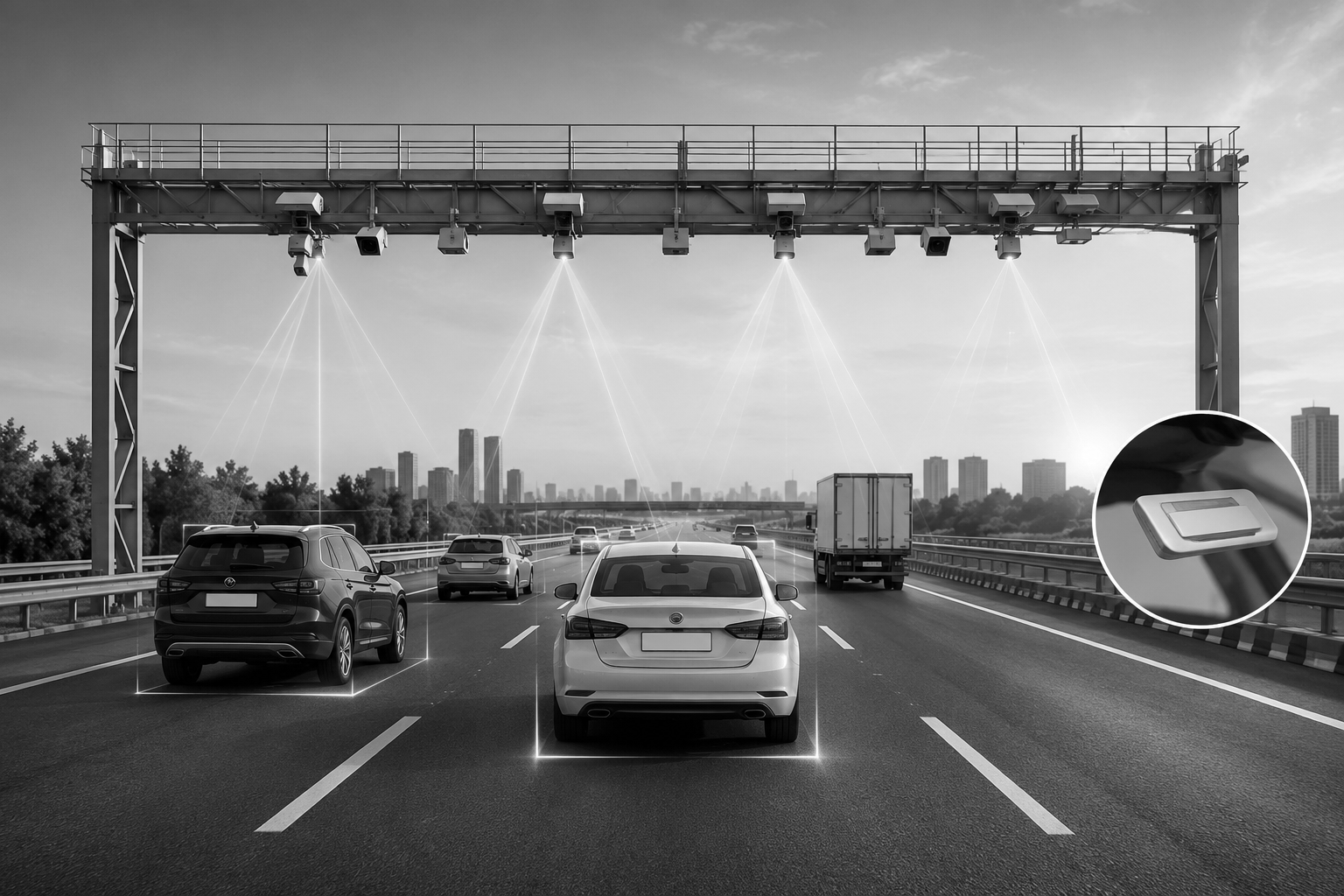
Under the MLFF system, vehicles continue moving at normal highway speeds while overhead gantries equipped with Automatic Number Plate Recognition (ANPR) cameras, Artificial Intelligence (AI) analytics and FASTag RFID readers identify the vehicle and automatically deduct the toll. The technology promises shorter travel times, smoother traffic flow, lower fuel consumption and reduced carbon emissions.
Why GPS-Based Tolling Was Put on Hold
The government had earlier explored GPS-based tolling, where motorists would pay according to the exact distance travelled. However, expert committees comprising members from industry and academia recommended further deliberations due to concerns over privacy, cybersecurity, operational control and implementation challenges.
Instead of immediately adopting GPS technology, the Centre decided to implement the more practical FASTag plus ANPR model, which builds on the already established FASTag infrastructure while delivering many of the same benefits.
Nationwide Rollout Begins
The rollout of barrier-less tolling has already started. Contracts have been awarded for 17 toll plazas across India, while five locations - Choryasi (Gujarat), Mundka (Delhi), Gharaunda (Haryana), and Manoharpura and Daulatpura (Rajasthan) are already operational.
The government has also invited bids for 104 additional toll plazas, signalling a phased nationwide expansion of the new technology.
Andhra Pradesh Among Early Beneficiaries
For Andhra Pradesh, the development is particularly significant. Three toll plazas on NH-44 Kasepalli, Amakthadu, and Marur have been selected among the first 17 locations for MLFF implementation. Their inclusion places the state among the earliest adopters of India's next-generation digital tolling system.
Who Pays for the Transformation?
Despite the scale of the programme, the Centre has not announced a dedicated budget exclusively for FASTag or MLFF implementation. Instead, the initiative has been developed through the combined efforts of NHAI, Indian Highways Management Company Limited (IHMCL), NPCI, banks and private toll concessionaires.
The technology costs are integrated into highway development and modernization projects rather than financed under a separate scheme, allowing the government to expand digital tolling alongside National Highway construction.
Building Trust Through Transparency
The digital ecosystem has also strengthened accountability. Motorists can report incorrect deductions or other toll-related issues through the National Highways Helpline 1033, the RajmargYatra App, FASTag issuer bank helplines and the official grievance email system, making dispute resolution faster and more transparent.
More Than Just a Toll Collection System
FASTag has become a key pillar of Digital India. Beyond making toll payments cashless, it has reduced congestion, improved revenue transparency, lowered logistics costs and enhanced freight efficiency across the country. Reliable digital toll data has also strengthened highway asset monetisation by providing investors with accurate traffic and revenue estimates.
As India rapidly expands its expressway network under programmes such as Bharatmala Pariyojana, the transition from manual toll booths to intelligent, barrier-less highways is expected to redefine road transport over the coming decade.
FASTag solved the problem of digital payments. MLFF aims to eliminate physical bottlenecks altogether. Together, they represent far more than a technological upgrade; they signal a structural transformation of India's highway infrastructure, paving the way for faster, smarter and more sustainable road travel for millions of citizens.