
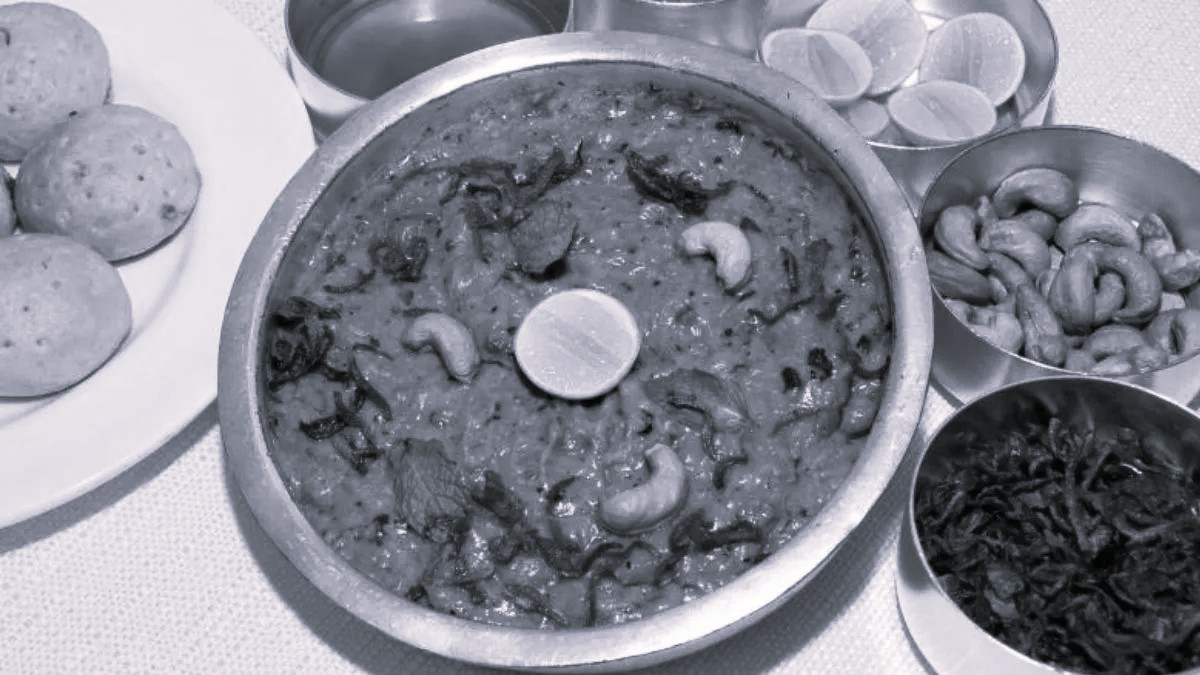
Slow-Cooked, Deeply Loved: The Haleem Phenomenon
As dusk settles over Hyderabad during the holy month of Ramzan , the city begins to transform. The golden glow of mosque minarets lights up the skyline, markets overflow with life, and a festive rhythm takes over the streets. But above all the sights and sounds, there is one element that defines this transformation the rich, irresistible aroma of haleem simmering slowly in giant cauldrons.
In those moments leading up to iftar , Hyderabad feels united by a single craving. Haleem is not just a dish here it is a ritual, a memory, and a celebration served in a bowl.
A Journey Across Continents
The story of haleem does not begin in Hyderabad. Its roots trace back to the Middle East, where a dish called harees was a staple for centuries. Made with wheat and meat, it was simple, nourishing, and deeply satisfying. As Arab traders and soldiers travelled across regions, they carried this dish with them, eventually bringing it to the Deccan.
In Hyderabad, during the era of the Nizams , harees found fertile ground for transformation. Arab soldiers, known locally as the Chaush community , introduced the dish to the region. But Hyderabad, known for blending cultures effortlessly, did not just adopt harees it reinvented it.
The royal kitchens of the Nizams became laboratories of culinary innovation. Local spices, generous use of ghee, and refined cooking techniques elevated the dish into something richer and more complex. Over time, harees evolved into haleem—a dish that carried both foreign roots and a distinctly Hyderabadi soul.
From Royal Delicacy to People’s Favourite
Initially prepared in royal kitchens, haleem was once a delicacy reserved for the elite. However, as Hyderabad grew into a melting pot of cultures, the dish gradually moved beyond palace walls.
Historical accounts suggest that influential figures such as Sultan Saif Nawaz Jung Bahadur played a key role in popularising haleem among the masses. Local cooks began experimenting further, adding dry fruits, enhancing spice blends, and perfecting the slow-cooking method.
What followed was remarkable. Haleem became a dish for everyone—cutting across class, community, and background. Today, it is impossible to imagine Ramzan in Hyderabad without it.
The Art of Slow Cooking
What makes haleem truly special is not just its ingredients, but the way it is prepared. Cooking haleem is a process that demands patience, skill, and dedication.
In massive iron cauldrons, a mixture of wheat, lentils, meat, and spices is cooked over a low flame for up to 12 hours . Throughout this time, it is continuously stirred using long wooden paddles. This constant motion ensures that the ingredients break down and blend seamlessly into a smooth, thick consistency.
By the end of the process, the dish transforms into a rich, velvety paste—deeply aromatic and full of flavor. Garnished with fried onions, coriander, lemon juice, boiled eggs, and a generous topping of dry fruits, haleem becomes an indulgence that is hard to resist.
For many, watching haleem being prepared is as fascinating as eating it. The rhythmic stirring, the rising steam, and the gradual thickening of the mixture turn cooking into a spectacle.
The Perfect Iftar Companion
After a long day of fasting, the body craves nourishment that is both quick and sustaining. Haleem fits this role perfectly.
It is packed with carbohydrates from wheat and lentils, protein from meat, and energy-rich fats from ghee and dry fruits. This combination makes it a powerhouse of nutrition, capable of restoring energy almost instantly.
But beyond its nutritional value, haleem offers comfort. It is warm, filling, and deeply satisfying a dish that feels like a reward after a day of discipline.
Ramzan Nights and the Haleem Craze
During Ramzan, haleem takes over Hyderabad’s streets in a way few other foods can. From iconic restaurants to temporary roadside stalls, the city turns into a vast network of haleem kitchens.
Places like Pista House , Shah Ghouse , Cafe 555 , and Hotel Shadab become pilgrimage sites for food lovers. Long queues stretch outside these establishments every evening, with people willing to wait just to get a taste of authentic haleem.
For many Hyderabadis, this ritual is an inseparable part of Ramzan. The wait, the anticipation, and the first spoonful all of it adds to the experience.
Global Recognition and Rising Fame
Over the years, Hyderabadi haleem has moved beyond local fame to gain national and international recognition .
A defining moment came in 2010 , when it was awarded the Geographical Indication (GI) tag making it the first meat-based dish in India to receive this honor. This recognition not only protected its authenticity but also elevated its status on the global culinary map.
The GI tag ensures that only haleem prepared following traditional Hyderabadi methods can be marketed under its name. It stands as a testament to the dish’s heritage and uniqueness.
Haleem’s popularity has also crossed borders. Today, it is exported to countries across the Middle East, Europe, and North America , catering to the global Indian diaspora. During Ramzan, Hyderabad-based brands ship thousands of servings worldwide, allowing people far from home to reconnect with familiar flavors.
In recent years, Hyderabadi haleem has also received accolades in food festivals and culinary platforms, often being listed among India’s most iconic traditional dishes . Its reputation as a seasonal delicacy with deep cultural roots has made it a subject of global culinary interest.
A Symbol of Cultural Harmony
Perhaps the most remarkable aspect of haleem is what it represents.
Hyderabad has always been a city of diverse influences Persian, Turkish, Arab, and Indian. Haleem embodies this diversity perfectly. It is a dish born in Arabia, refined in royal kitchens, and embraced by people of all backgrounds.
During Ramzan, haleem becomes a shared experience that transcends differences. People from various communities come together to enjoy it, making it a symbol of unity and cultural harmony.
More Than Food - A Living Legacy
As night deepens and the city continues to buzz with life, haleem remains at the center of it all. Families gather around steaming bowls, friends meet after long days, and conversations flow effortlessly.
And in these moments, haleem becomes more than just food. It becomes a connection to history, to culture, and to one another.
From its humble origins as harees to its status as a globally celebrated dish, haleem’s journey is a story of transformation, resilience, and identity. It carries within it the spirit of Hyderabad a city that embraces influences, enriches them, and makes them its own.
The Taste That Lives On
Every Ramzan, as the aroma of haleem fills the air, Hyderabad tells its story once again. A story of tradition, innovation, and togetherness.
Because haleem is not just something you eat.
It is something you wait for.
It is something you share.
It is something you remember.
And in every spoonful, it reminds the world why Hyderabadi haleem is not just a dish it is a legacy that continues to live, season after season, generation after generation.