
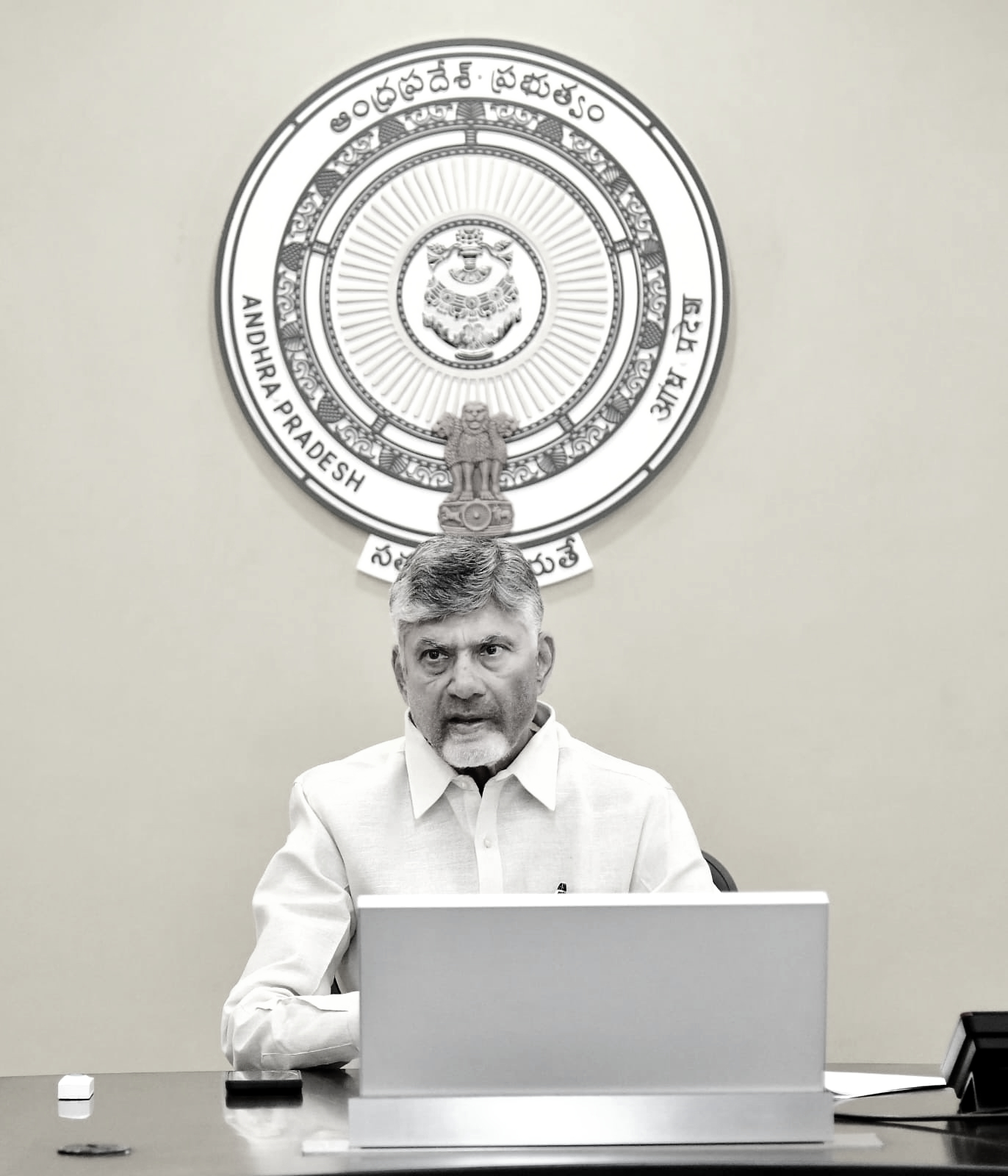
Skill development portal to serve as gateway to Jobs: AP CM Chandrababu
The performance of the Skill Development Department and the State Skill Portal was reviewed by Andhra Pradesh Chief Minister N. Chandrababu Naidu on Tuesday. The portal, which has been designed as a gateway to employment opportunities for the youth, is being positioned as a key platform under the government’s skill and job creation initiative.
During the meeting, officials from the Andhra Pradesh State Skill Development Corporation (APSSDC) briefed the Chief Minister on the implementation of the NipunYam programme, under which students are being trained, tested, and certified across various technical and service-oriented disciplines. It was stated that every constituency in the State would host a job fair every month, aimed at linking trained candidates directly with industries and companies seeking skilled manpower.
It was also reported that students who complete certified training under NipunYam are being assisted in job placements based on their qualifications and skill categories. The Chief Minister directed officials to integrate the portal with industry job demand data to ensure real-time matching of candidates and vacancies. He further emphasized that the Real-Time Governance and Technology Hub (RTH) would be used to explore innovations developed by students and to connect them with startup and research opportunities.
Officials explained that along with skill training, support for higher education is being provided so that students can upgrade their qualifications while acquiring employable skills. Skill testing mechanisms have been standardized, and certificates are being issued digitally to ensure credibility for employers.
According to official data, most jobs offered under skill development placements fall in the salary range of ₹15,000 to ₹45,000 per month, depending on the qualification and industry sector. However, economic analysts noted that these earnings are adequate only in rural and semi-urban areas. In urban centres such as Vijayawada, Visakhapatnam, and Hyderabad, the cost of living for a four-member family has been estimated at ₹40,000–₹55,000 per month, especially when children study in private schools. Consequently, such salaries are considered insufficient for full family sustenance unless there is an additional income source.
Experts have pointed out that wages remain low because training is not always linked with industry-certified skill levels and employers often hesitate to raise pay due to cost constraints. It was suggested that a “Skill-Linked Wage Growth Model” could be implemented to ensure fair and sustainable incomes for skilled youth.
Under this model, a Skill Grade Wage Ladder would be introduced, with clear pay bands based on certification levels and work experience. For instance, a Grade 1 worker with basic skills could earn between ₹20,000 and ₹25,000, while a Grade 3 worker with industry certification could earn ₹40,000–₹60,000 or more.
It was also proposed that a Public–Private Wage Support Scheme could be adopted, wherein the government would reimburse 15–20% of salaries for certified workers in key sectors for the first two years. This approach has already been observed to improve retention and productivity in states such as Tamil Nadu and Gujarat.
In addition, a District-Level Living Wage Index (DLWI) has been recommended by policy experts to adjust wages in accordance with inflation and local cost of living. This would ensure that workers in high-cost urban districts receive proportionally higher pay. The Labour Department could review this index annually to maintain wage parity.
To control the impact of market inflation, it was further suggested that strict enforcement of Legal Metrology rules be ensured to prevent overpricing and MRP violations in urban shops. Affordable fair-price markets or “Janata Bazaars” were also recommended in cities to reduce the financial burden on working families.
If such reforms are adopted effectively, average monthly earnings for skilled workers in Andhra Pradesh could rise from ₹25,000 to ₹40,000 or more within the next five years. Economic experts believe this would improve youth satisfaction, reduce migration, and strengthen the State’s domestic consumption base by 3–4%, contributing to higher GDP growth.
The Chief Minister is reported to have directed the Skill Development Department to study these policy recommendations and to submit a comprehensive action plan linking skill certification, job placement, and income growth to the State’s long-term employment strategy.