
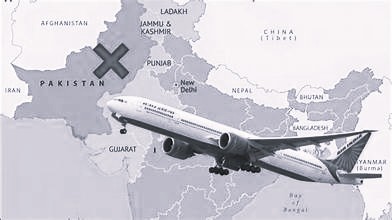
Skies Sealed: India extends Airspace ban on Pakistan
India on Tuesday extended its airspace closure for Pakistan’s civilian and military aircraft until October 24, a decision mirrored by Islamabad, which has also prolonged restrictions for Indian planes. The reciprocal lockdown on skies, first imposed in April this year after the deadly Pahalgam terror attack, is now set to stretch into its sixth month, with no clear indication of when the restrictions may be lifted.
The Pahalgam attack on April 22 claimed 26 lives and triggered immediate retaliatory measures, including India’s decision to block access to its airspace for all Pakistan-registered aircraft and those operated, owned, or leased by Pakistani airlines or military operators. The ban formally took effect on April 30. Pakistan, in response, closed its own airspace to Indian planes, effectively halting cross-border overflights.
Both countries have since issued successive Notices to Airmen (NOTAMs), each time extending the curbs. The latest NOTAM, issued on September 23, specifies that Indian airspace will remain shut to Pakistani aircraft until 2359 UTC on October 23 (0530 IST on October 24).
The closures carry tangible operational costs. Airlines from both nations are forced to take longer routes, adding fuel expenses and flight time. For India, the closure particularly impacts connectivity with Central Asia and parts of Europe, as detours through the Middle East or over international waters become necessary.
Diplomatic and aviation sources suggest there are currently no formal timelines or negotiations underway between the two countries on reopening airspace. The continued freeze underscores the broader chill in India-Pakistan relations following April’s violence.
Aviation experts note that while temporary airspace closures are not uncommon during crises, the sustained restrictions are unusual and highlight the enduring tension between New Delhi and Islamabad. “Such prolonged closures affect not just bilateral flights but also international carriers that rely on these routes,” one official said.
With no breakthrough on the horizon, both Indian and Pakistani skies remain locked against each other, a stark reminder of how geopolitical flashpoints spill over into everyday aviation.