
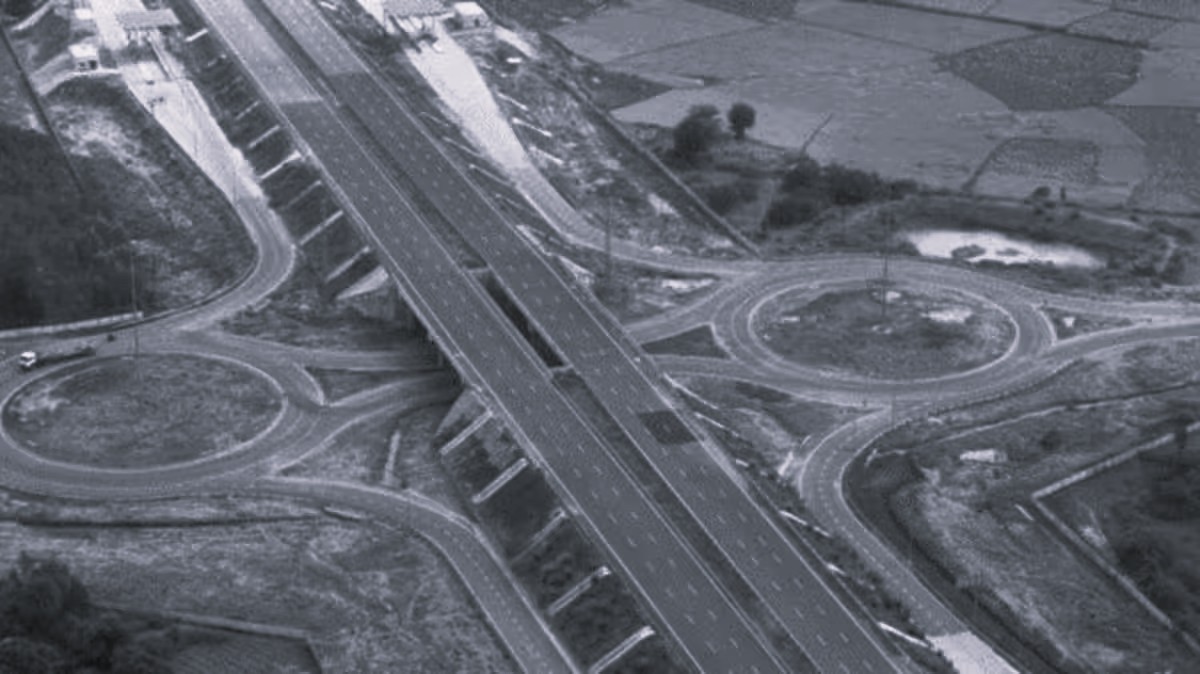
Six-lane Raipur-Visakhapatnam economic corridor to cut travel time and boost regional growth
The Raipur - Visakhapatnam Economic Corridor, a major six-lane greenfield expressway conceived under Phase-I of the Bharatmala Pariyojana, is rapidly taking shape as one of India’s most transformative infrastructure projects. Designed to directly connect central India with the Visakhapatnam Port on the eastern coast, the 464-km access-controlled expressway is expected to significantly accelerate industrial expansion, export logistics and regional connectivity across Chhattisgarh, Odisha and Andhra Pradesh. Developed at an estimated cost of nearly ₹20,000 crore under the Hybrid Annuity Model (HAM), the project is being executed by the National Highways Authority of India (NHAI) through 19 construction packages, allowing parallel work across multiple regions.
The new corridor will drastically reduce the existing Raipur–Visakhapatnam distance from around 600 km to about 464 km, cutting travel time from nearly 12–14 hours to just 5–6 hours. This reduction is already benefiting transporters who note that stretches opened to traffic have improved travel reliability, lowered fuel consumption and reduced wear and tear on heavy vehicles. The expressway begins near Abhanpur–Kurud in Raipur district and runs through Dhamtari, Kanker and Kondagaon in Chhattisgarh, before entering Odisha through Nabarangpur and Koraput districts, and finally descending through the hilly regions of Araku and Vizianagaram to terminate near Sabbavaram close to Visakhapatnam. This alignment opens up several tribal and economically underdeveloped belts to industrial markets, port access and new job opportunities.
Engineering complexity is a defining feature of this corridor. Major tunnels, including a state-of-the-art 3.43-km tunnel between Baraja and Kandili in Odisha’s Koraput district, have already been completed with advanced lighting, surveillance and ventilation systems. Another 2.87-km tunnel between Kurli and Ampavalli is expected to be finished by late 2025. The project also incorporates wildlife corridors, noise barriers and ecological safeguards to minimise environmental impact across forest and hill zones. Intelligent Transport Systems (ITS), CCTV-enabled incident response units, crash barriers and access-controlled entry points are being integrated to support safe speeds of up to 100 kmph.
Economic benefits are expected to be far-reaching. The expressway provides a fast and direct route for industries in Chhattisgarh and Odisha including coal, mineral, metal and power sectors to reach Visakhapatnam Port for exports. This will reduce turnaround time for industrial cargo and strengthen supply chain efficiency along the east coast. Tourism too stands to gain, as improved connectivity will attract more visitors to Araku Valley, tribal circuits, waterfalls and scenic Eastern Ghats destinations. NHAI is also developing wayside amenities every 50 km offering fuel stations, EV charging points, food courts, rest areas and emergency facilities improving long-distance travel comfort for truck drivers and passengers.
The project is also triggering visible socio-economic changes in rural areas along its route. Land values have surged dramatically, with prices in some villages rising from about ₹15 lakh per acre to over ₹1 crore per acre. Many farmers who parted with land have received fair compensation and now benefit from increased valuation of their remaining property. This has led to new opportunities for roadside commerce, logistics hubs, warehousing and real-estate development in previously remote villages. While progress is strong, challenges remain particularly in land acquisition in parts of Vizianagaram district, where projects worth about ₹9,500 crore have encountered delays. Environmental clearances and community consultations in forest areas have also required careful handling, prompting authorities to focus on tunnel-based alignments and wildlife protection measures.
The corridor was first conceptualised in 2014 and approved by the central government in 2017, with major tenders issued after the detailed project report (DPR) was finalised in 2021. Prime Minister Narendra Modi laid the foundation stone in November 2022, marking the start of full-scale construction. Recent updates indicate that the Koraput and Nabarangpur stretches are nearing completion, and most sections aim to be operational by 2025–26. Once fully completed, the Raipur–Visakhapatnam journey could see a total reduction of nearly seven hours, offering enormous advantages for trade, logistics, tourism and industrial connectivity across three states.
In the long term, planners intend to integrate the expressway with extended highway networks toward Jaipur, Gwalior, Hisar and Bathinda, forming a continuous north–south–east logistics spine. It is also expected to link with the Eastern Economic Corridor from Raxaul in Bihar to Odisha, thereby connecting India–Nepal border regions with major ports. Ultimately, the Raipur–Visakhapatnam Economic Corridor is poised to become a major backbone of India’s national logistics grid and a powerful catalyst for inclusive regional development, industrial competitiveness and economic upliftment across central and eastern India.