
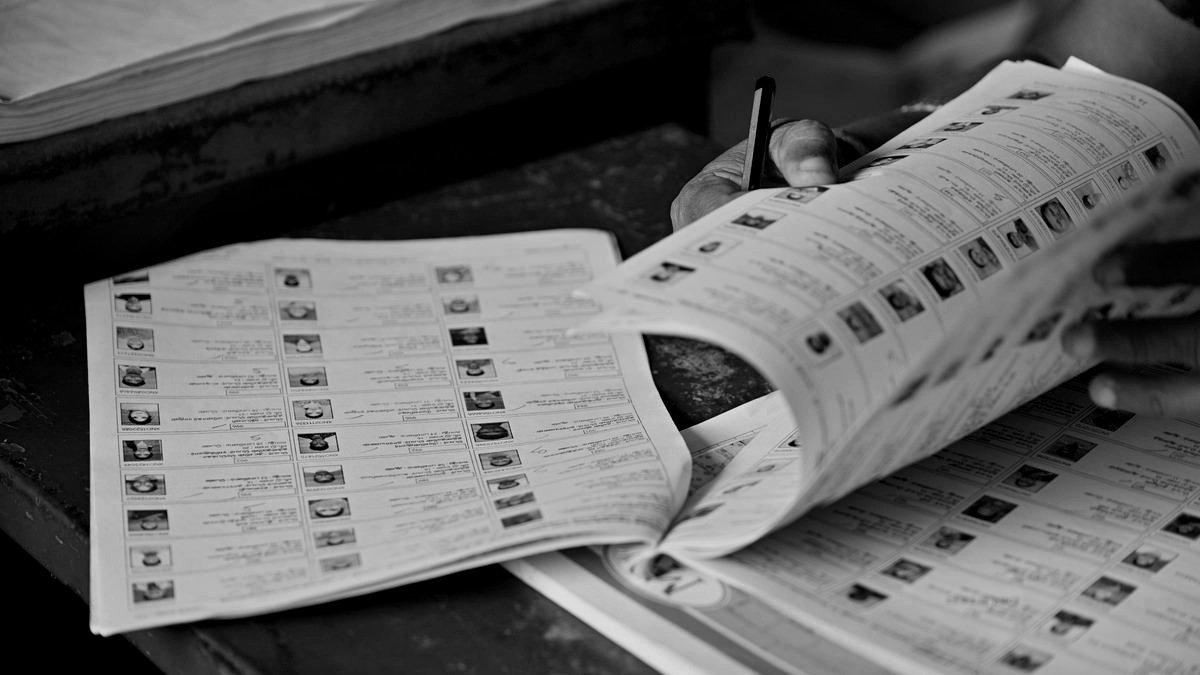
SIR Trims Tamil Nadu’s Voter Rolls by 97 Lakh, or 15%, Could Lift Turnout Despite Fewer Names
The Election Commission of India’s Special Intensive Revision (SIR) has resulted in the deletion of nearly 97 lakh voters around 15 per cent of the electorate from Tamil Nadu’s electoral rolls , the steepest reduction recorded in any state so far under the ongoing nationwide clean-up. The scale of deletions has triggered political debate, but election officials maintain that the exercise is a long-overdue correction of ageing rolls, aimed at removing deceased voters, migrants, and duplicate registrations.
In comparative terms, Tamil Nadu stands out sharply. Gujarat saw about 73.7 lakh names removed , amounting to roughly 14.5 per cent of its electorate, while Bihar recorded deletions of about 65 lakh voters , or 8.2 per cent . West Bengal and Rajasthan witnessed similar corrections in the 7.5–8 per cent range , while smaller states and Union Territories such as Goa , Puducherry , and Lakshadweep recorded modest absolute numbers but comparable proportional clean-ups. The figures underscore that Tamil Nadu’s roll correction is not only the largest in absolute terms but also the deepest proportionally.
State-wise voter deletions under SIR (Draft Rolls)
The Election Commission has repeatedly clarified that SIR is not an election-year exercise , but a once-in-two-decades deep verification that goes far beyond the annual Special Summary Revision (SSR). States such as Gujarat, Rajasthan and Goa were included despite not facing elections in 2026 because of high migration intensity, duplication risks, and voter databases that have not undergone an intensive check since the early 2000s . Tamil Nadu and West Bengal, which face Assembly elections next year, were prioritised both because of election proximity and because they combine high urban churn with long-pending roll purification.
Turnout context: fewer names, higher percentages?
An important side-effect of the SIR deletions could be an increase in reported voter turnout percentages , even if the absolute number of votes cast remains broadly similar. Tamil Nadu’s turnout has already shown a mild decline in recent years. In the 2019 Lok Sabha elections , the state recorded a turnout of 72.44 per cent , with roughly 4.23 crore votes cast. In 2024 , turnout slipped to about 70.14 per cent , with approximately 4.38 crore votes polled on a larger electoral base.
With the electoral roll now sharply reduced, analysts say the same or slightly higher number of actual voters could translate into a visibly higher turnout ratio in future elections, as chronic non-voters, deceased persons and migrants no longer inflate the denominator .
Tamil Nadu turnout: before and after SIR (illustrative)
*Projection assumes similar or modestly higher participation on a reduced roll.
Officials emphasise that the SIR process remains open to claims and objections , and eligible voters removed in error can still seek re-inclusion before final rolls are published.
Telugu-speaking states later
The Commission is expected to take up SIR in Telugu-speaking states such as Telangana and Andhra Pradesh only in late 2026 or 2027 . Officials cite relatively recent roll rationalisation following state reorganisation, lower duplication risk compared to migrant-heavy western states, and the absence of immediate Assembly elections as reasons for the deferment. Until then, these states will continue with annual SSR and continuous updation.
For Tamil Nadu, however, the message is already clear: the rolls are leaner, arguably cleaner, and future turnout numbers may look healthier even with fewer names on the list .