
‘SIR Good, SIR Bad?’ From ‘Helped Us’ To ‘Vote Theft’, BJP Flags Congress’ Changing SIR Stand
The Congress-BJP battle over the Election Commission’s Special Intensive Revision (SIR) of electoral rolls has taken a new turn, with the BJP pointing to remarks made by Congress leaders after the party-led alliance’s sweeping victory in Kerala earlier this year.
The Congress-led United Democratic Front won 102 of Kerala’s 140 Assembly seats in the May 2026 election, returning to power after a decade. Congress alone won 63 seats.
The election was held after SIR, a house-to-house exercise aimed at verifying and updating electoral rolls. The process involved enumeration, verification and claims and objections before the revised rolls were finalised.
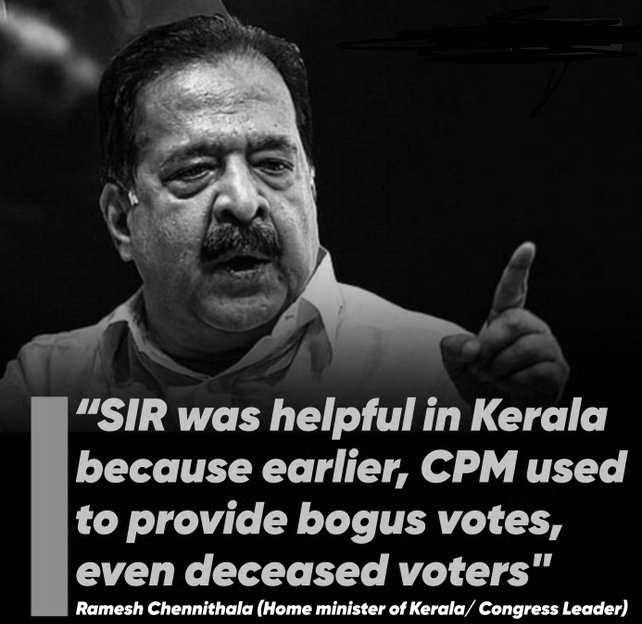
After the Kerala result, Congress leaders Ramesh Chennithala and MLA Mathew Kuzhalnadan made remarks that have now become politically significant. BJP leader C R Kesavan on Friday cited Chennithala’s reported appreciation of SIR, claiming that the Congress leader had credited the exercise with helping remove bogus votes from the rolls. Kesavan also pointed to Kuzhalnadan’s remarks about alleged fake voters.
Kesavan is using those comments to challenge Rahul Gandhi’s current position. On Thursday, Gandhi accused the Election Commission of allowing elections to be “rigged”, demanded the resignation of Chief Election Commissioner Gyanesh Kumar, and alleged that the electoral process had been compromised. His remarks came amid a controversy over reports that Election Commissioners Sukhbir Singh Sandhu and Vivek Joshi had raised objections 14 times over 10 months on matters linked to SIR.
The BJP argues that the Kerala episode exposes an inconsistency: a process Congress leaders appeared to welcome after winning an election is now being attacked by the party’s national leadership as “vote theft”. Kesavan went further, asking whether Gandhi now considers the Kerala election compromised.
The Election Commission, however, has rejected the suggestion that the reported objections represented institutional dissent. It said such queries and feedback were part of the drafting and operational process and maintained that the final decisions of the three-member Commission were unanimous, including those relating to SIR.
The dispute therefore goes beyond Kerala. At its core is a growing political clash over how electoral rolls should be revised, who should be removed from them and how the Election Commission’s decisions are scrutinised. Congress says the current exercise risks disenfranchising legitimate voters, while the EC maintains that SIR is part of the electoral-roll verification process.
With Congress planning to discuss the issue at its September 29 Working Committee meeting, the contrasting statements from Kerala are likely to remain part of the political argument over SIR and the credibility of the electoral process.