
Singapore moves to upgrade living and healthcare standards for Migrant workers
Singapore has announced a series of measures to improve healthcare access, housing standards and social support for migrant workers, recognising their contribution to the city-state’s multi-billion-dollar development, as it marked International Migrants Day on Monday.
Speaking at the event, Manpower Minister Tan See Leng said migrant workers including domestic helpers have played a vital role in building the nation and caring for its people, and deserved stronger institutional support and public appreciation. Singapore relies heavily on over one million migrant workers from South Asia, including India; China; and Southeast Asia, particularly in labour-intensive sectors such as construction, marine shipyards and process industries.
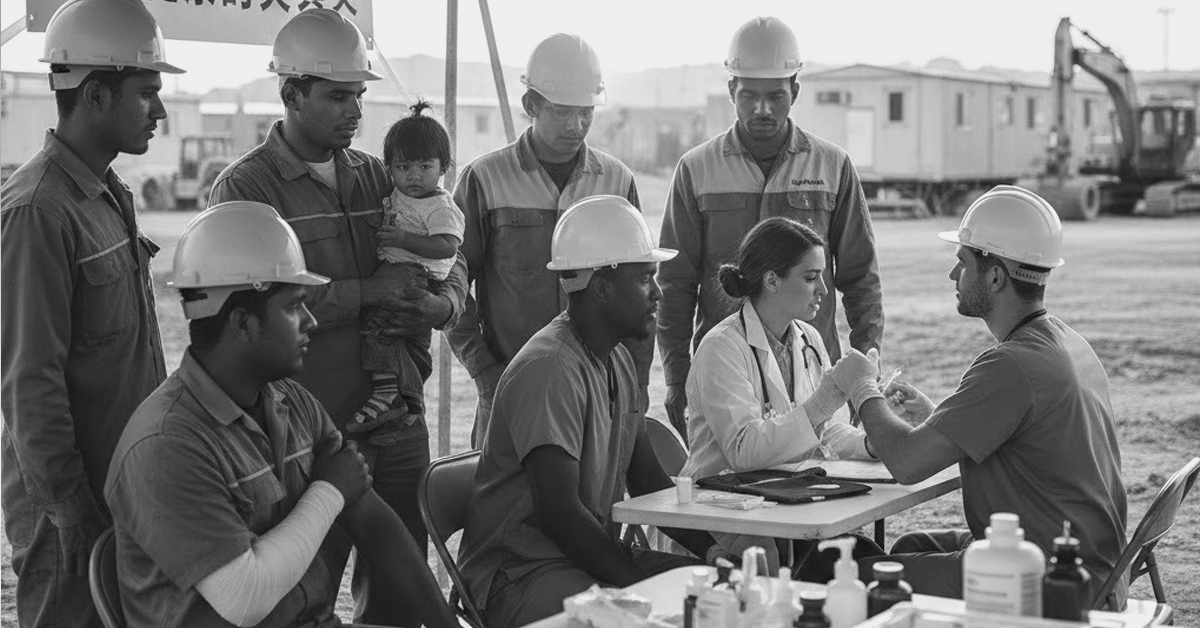
Currently, migrant workers in Singapore are covered under employer-provided medical insurance and the Primary Care Plan (PCP) , introduced in 2022. The scheme provides access to medical consultations, treatment for acute and chronic conditions, annual health screenings, telemedicine and medication delivery, primarily for workers living in dormitories or employed in higher-risk manual sectors.
Tan announced that more clinics will be added under the PCP to reduce travel time and improve access to care. A centralised online portal will also be created to streamline employer enrolment of workers. These changes will take effect when new PCP anchor operators are appointed from April 2027 , signalling a structured policy expansion rather than a one-off announcement.
Housing conditions for migrant workers have been under scrutiny since the COVID-19 pandemic exposed overcrowding and health risks in dormitories. Singapore currently regulates dormitories through strict accommodation standards, largely enforced on private operators.
The minister announced that Singapore’s first government-built migrant worker dormitory, NESST Tukang, has begun housing residents ahead of its official opening in January 2026. Located in the Jurong industrial estate, the facility can house up to 2,400 workers and features improved ventilation, privacy corners and round-the-clock food access. Tan described the project as “a new benchmark for safety, comfort and dignity”.
In addition, the government plans to build six more dormitories providing 45,000 beds over the next few years, reflecting a long-term shift towards higher housing standards rather than temporary corrective measures.
To strengthen social engagement, the Ministry of Manpower (MOM) and the Migrant Workers’ Centre (MWC) will merge two existing volunteer programmes into a single unified scheme in 2026 . The move aims to improve outreach, deploy volunteers more effectively and expand recreational, cultural and educational activities.
Migrant workers can also expect sports, entertainment and cultural performances, along with training programmes such as English and digital literacy classes, designed to improve both daily life and long-term employability.
Most migrant workers from India and Asia are employed on Work Permits , which are sector-specific and employer-linked. While the International Migrants Day statement did not announce new visa reforms, recent policy trends indicate greater flexibility in employment duration and age limits , allowing experienced workers to remain in Singapore longer, provided they meet regulatory requirements.
While the statement was delivered on a symbolic occasion, the measures outlined build on policies already introduced since 2021 and include clear timelines, infrastructure projects and administrative reforms. The rollout of new clinics, government-built dormitories and integrated support programmes suggests that the announcements represent continuing policy implementation rather than ceremonial rhetoric.
As Singapore balances economic competitiveness with social responsibility, the latest measures underscore a broader effort to institutionalise dignity, health and stability for the migrant workforce that underpins the city-state’s growth.