
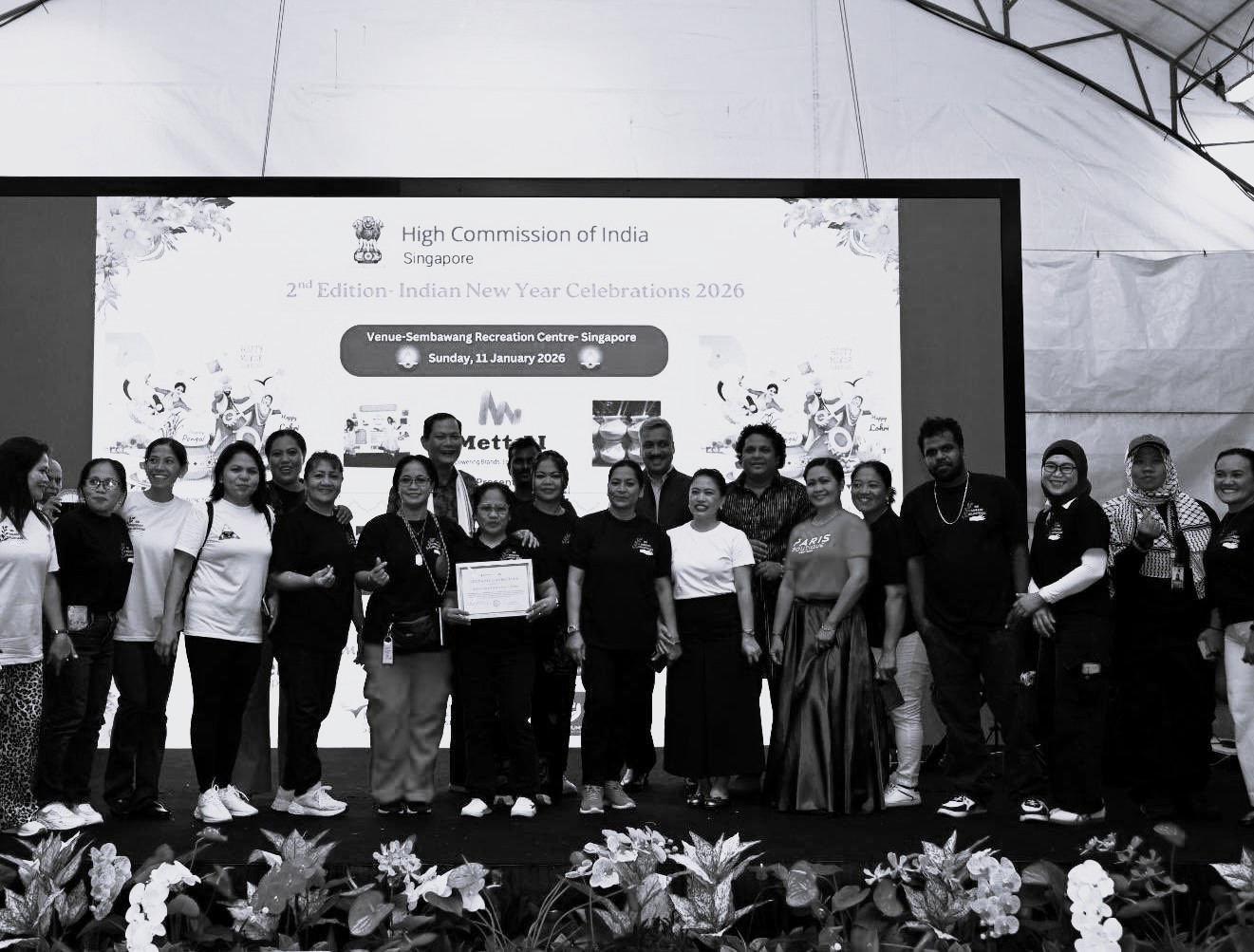
Singapore hosts colorful Pongal celebration for Indian workers
The Indian High Commission in Singapore hosted a vibrant Pongal celebration for nearly 1,500 Indian migrant workers, marking the traditional harvest festival and the beginning of the Tamil calendar’s harvest season , a time considered auspicious for new beginnings and prosperity. The day-long event in the Sembawang industrial district brought together workers, community partners, volunteers, and dignitaries in a colorful showcase of culture and camaraderie.
High Commissioner Dr Shilpak Ambule and Tung Yui Fai, Chief of the Assurance, Care and Engagement Group at Singapore’s Ministry of Manpower, extended warm greetings and best wishes to the workers, acknowledging their contributions to Singapore’s development. Over 50 local artists performed alongside migrant workers, delivering energetic music and dance performances, yoga and meditation sessions, and a fashion showcase celebrating India’s rich textile heritage and festive traditions.
More than 110 volunteers, primarily Indian professionals based in Singapore, helped make the event memorable for workers employed in the construction, marine, and domestic sectors, organisers said. Dr Ambule also highlighted upcoming consular outreach activities, including passport renewal camps , and encouraged the workers to participate. He expressed gratitude to the Ministry of Manpower for their continued support and collaboration in promoting the welfare of the Indian migrant community.
This year marked the second edition of the High Commission’s Pongal celebrations in Singapore, following its inaugural event last year. The festivities, held with the Singapore Indian Heritage Centre, included Tanjore art workshops where participants could create their own masterpieces. Last year’s edition focused on traditional rituals and cultural performances, while this year added interactive art sessions for a more hands-on experience.
Pongal is a major four-day harvest festival, celebrated in mid-January to thank the Sun God , nature, and farm animals for a bountiful harvest. The festival also marks the start of the auspicious Tamil month of Thai. The name “Pongal” comes from the Tamil word pongu , meaning “to boil over,” symbolising abundance and prosperity when rice cooks and overflows the pot, a traditional ritual of gratitude and hope for good fortune.
The festival unfolds over several days: Bhogi Pongal, a day of renewal by discarding the old and welcoming the new; Surya Pongal, dedicated to worshipping the Sun; Mattu Pongal, honouring cattle for their role in farming; and Kaanum Pongal, a day of community gatherings and thanksgiving.
While Pongal has its origins in Tamil Nadu , it is widely celebrated wherever the Tamil diaspora resides, including in Sri Lanka, Malaysia, Mauritius, South Africa, the United States, the United Kingdom, Canada, Australia, and Singapore, with cultural programmes, traditional rituals, and public fairs.
In Malaysia, Tamil associations host colorful events featuring music, dance, and communal cooking of pongal rice, attracting participants from diverse backgrounds. In Mauritius and South Africa, Pongal brings together local Tamil communities for thanksgiving ceremonies and cultural gatherings. In parts of Europe and North America, diaspora organisations hold festivals, food fairs, and cultural shows to share Tamil heritage with younger generations and the wider public.
Across India, Pongal coincides with harvest celebrations like Makar Sankranti in the northern and western states and Magh Bihu in Assam, each reflecting regional customs but sharing the central theme of gratitude for nature’s bounty.