
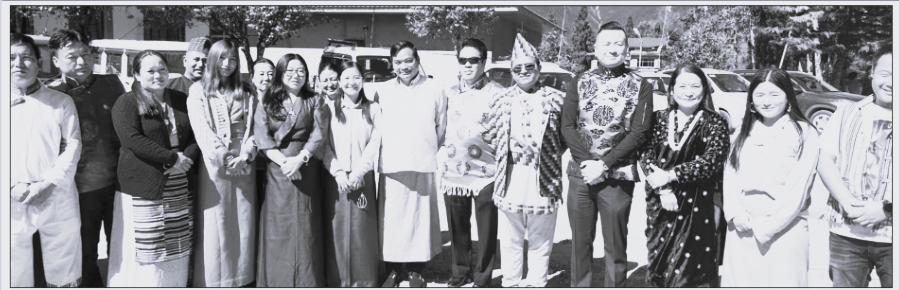
Sikkim mandates traditional dress code for Govt employees. A precedent for rest of the nation?
T he Government of Sikkim has announced that all state government employees including those working in public sector undertakings and banks must wear traditional attire every Thursday. The directive, aptly named "Traditional Wear Work Day," is now effective and has been lauded as an innovative step to foster pride in Sikkim's distinct heritage.
Celebrating diversity in the workplace
Sikkim’s directive is a vivid reflection of the state’s multicultural identity, where Bhutia, Lepcha, and Nepali communities contribute unique traditional forms of dress such as the bakhu, dumdyam, and daura-suruwal. By dedicating one day each week to traditional dress, the government hopes to encourage employees to reconnect with their roots and promote the values embedded in Sikkimese culture.
The Home Department’s circular emphasizes that the initiative goes beyond aesthetics it is about instilling a sense of belonging and pride among staff members while providing younger generations an opportunity to experience and cherish their unique heritage. In today's era of rapid globalization and Western influence, such policies help strike a balance between modernity and tradition.
Echoes across India
Sikkim’s policy is not isolated: other Indian states are experimenting with similar ideas. For instance, Mizoram has encouraged government employees to don traditional attire every Wednesday, drawing enthusiastic public participation and positive media commentary. Assam has issued voluntary calls to wear ethnic dress; meanwhile, several universities nationwide including the prestigious IITs and IIMs have replaced colonial graduation gowns with Indian sarees and angavastrams, spotlighting a widespread push for cultural revival.
These trends reveal a growing consensus on the value of cultural preservation as a counterbalance to homogenizing global influences. Experts argue that such mandates boost not only local pride but also support handloom industries and traditional artisans, fostering sustainable economic growth rooted in community values.
A model for the nation
The spirit behind Sikkim’s initiative resonates with calls for inclusivity and diversity in institutional settings. While some states have adopted a voluntary or symbolic approach, Sikkim’s weekly observance institutionalizes tradition as part of the official workplace culture. Policy experts believe this move could inspire similar measures elsewhere offering a model for integrating cultural celebration into the professional sphere.
Critically, the success of such mandates depends on ensuring participation remains inclusive and respectful of individual choice, so that employees feel empowered rather than compelled. Sikkim’s strategy, which blends official encouragement with community pride, is widely seen as sensitive and inspirational.
Socio-Economic and Cultural Implications
Beyond fostering pride, policies like Sikkim’s have tangible socio-economic benefits. Reviving interest in handwoven and traditional garments can help sustain local craftspeople and artisans who often struggle in the face of mass-produced modern fashion. By celebrating heritage in everyday life, states like Sikkim demonstrate that tradition is not outdated but a vital source of identity and resilience. Furthermore, these initiatives send a powerful message to younger generations. In a time when global fashion and contemporary trends may overshadow local customs, institutionalizing traditional attire helps reconnect youth with their roots, ensuring that the rich tapestry of Indian culture remains vibrant and relevant.
Conclusion
Sikkim’s mandate for traditional dress in government offices is more than a workplace rule it is a declaration of cultural pride, unity, and the commitment to preserving the state’s heritage. As other regions contemplate similar policies, Sikkim stands at the forefront of a movement that could redefine the role of tradition in modern India. The policy illustrates that honoring one’s roots need not conflict with embracing change. Instead, it is possible and perhaps essential to carry forward tradition as a living, inspirational force within contemporary society. Will other states follow Sikkim’s path and reserve a day to celebrate their traditional attires? If so, India’s diverse heritage can become an even greater source of strength and unity in the years ahead.