
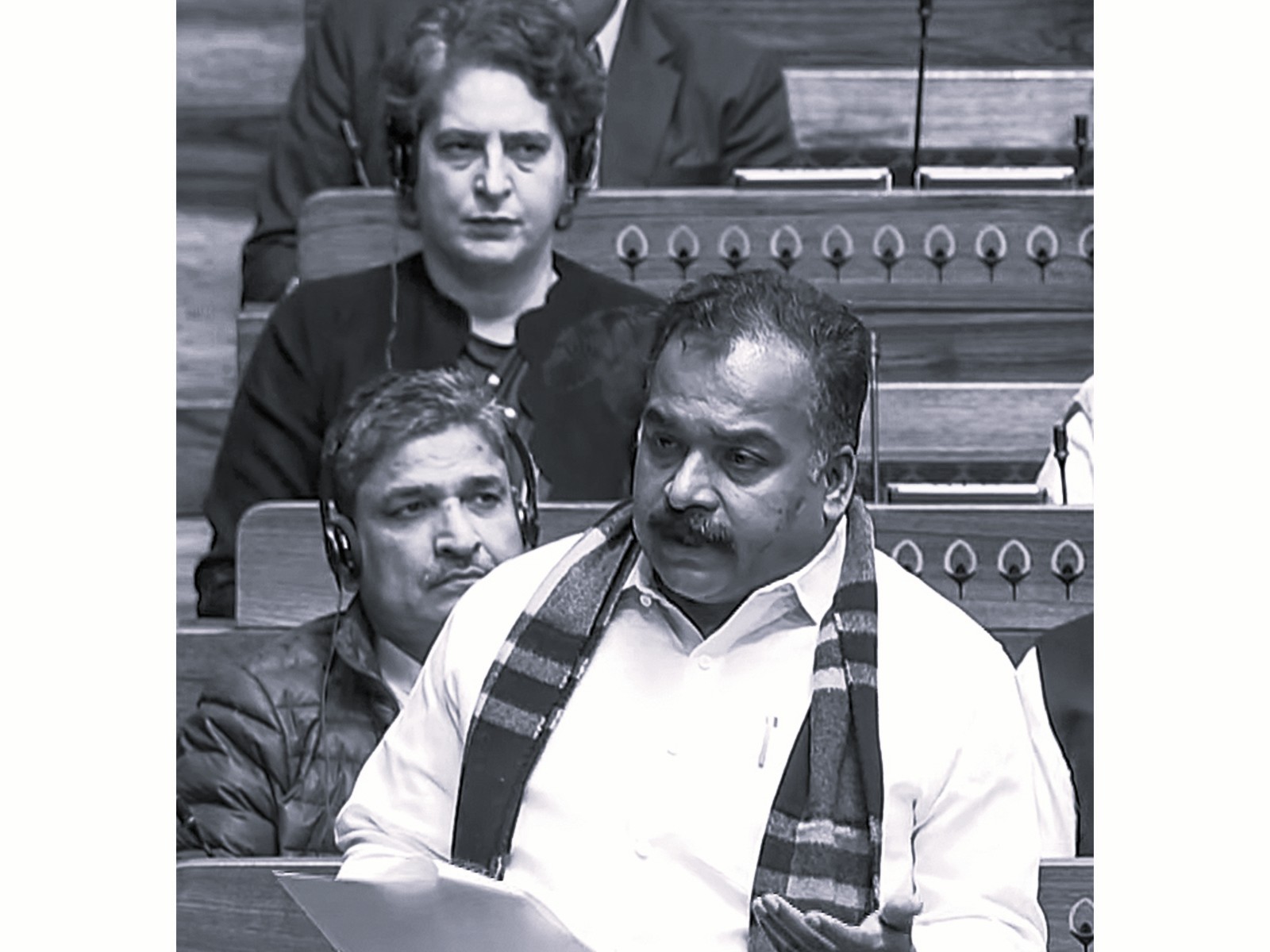
Shift Focus to Employment and Skills, Not Birth Rates: Manickam Tagore
A proposed population management policy by the Andhra Pradesh government has sparked a fresh political debate. The proposal to provide ₹25,000 financial assistance to families having a third child or more has drawn sharp criticism from Congress MP Manickam Tagore , who questioned the rationale behind encouraging higher birth rates.
Tagore argued that at a time when the global economy is rapidly transforming, governments should focus on equipping young people with modern skills rather than promoting population growth. Simply increasing numbers will not solve economic challenges, he said, warning that it could create greater pressures on resources and employment in the future.
Reacting on social media, the MP questioned the vision behind the policy, noting that emerging technologies such as artificial intelligence , robotics and automation are likely to replace many traditional jobs. In such circumstances, he said, governments must prioritize preparing citizens for technological change through better education and skill development.
He also pointed out that India already has the world’s largest population and is unlikely to face a population shortage in the coming decades. The real crisis, he said, lies in the inability to provide quality education, skill training and adequate employment opportunities to millions of young people.
According to Tagore, offering cash incentives to encourage childbirth appears to be a short-term political idea rather than a well-thought-out policy for the future. Public policies, he stressed, should be based on economic realities rather than political or ideological considerations.
Meanwhile, the government led by Chief Minister Chandrababu Naidu has expressed concern over the declining fertility rate in the state. Addressing the Assembly earlier, the Chief Minister noted that the total fertility rate in Andhra Pradesh has fallen to 1.5, whereas a level of 2.1 is considered necessary to maintain population balance.
Official data indicates that about 58 percent of families in the state currently have only one child. To address this trend and maintain demographic balance, the government is considering ₹25,000 assistance to mothers during childbirth for a second or third child.
The proposal, however, has triggered diverse reactions across the state, turning the population policy into a subject of wider debate.