
Shia body condemns attacks on Hindus in Bangladesh
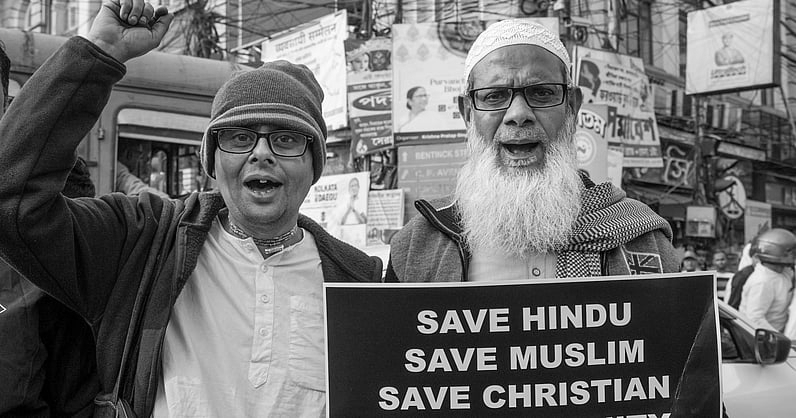
The All India Shia Personal Law Board (AISPLB) on Sunday condemned the atrocities against Hindu minorities in Bangladesh, asserting that Islam strictly prohibits the killing of innocent people and that violence committed in the name of religion is unacceptable.
The condemnation was voiced at the AISPLB’s annual convention held at the Bara Imambara here, which was attended by Ulema and Muslim scholars from various parts of India, as well as from Bangladesh and Nepal.
AISPLB general secretary Maulana Yasoob Abbas said the meeting strongly denounced the violence against Hindus in Bangladesh and reiterated that Islam does not permit inhumane acts against any individual. He said those indulging in violence under the garb of religion should refrain from such actions.
Referring to recent incidents, Abbas cited the lynching of 27-year-old Dipu Chandra Das in Bangladesh’s Mymensingh district earlier this month over alleged blasphemy, in which his body was set on fire. He also mentioned the killing of another Hindu man, Amrit Mondal alias Samrat, in Rajbari Town on December 24. The Bangladesh government, however, has maintained that Mondal was accused in several serious criminal cases and that the incident was not communal in nature.
The convention also strongly condemned terrorism in all its forms, stating that those who perpetrate, support or facilitate terrorist acts are enemies of humanity. Abbas said a powerful movement should be launched against terrorism to ensure that extremist elements are decisively deterred.
While the AISPLB’s statement signals solidarity with victims and rejects religious justification for violence — a stance seen as significant in shaping broader social and religious narratives — it does not directly alter conditions for minorities in Bangladesh, nor does it trigger any official bilateral process. Observers note that any meaningful impact on the ground depends on government-to-government diplomacy, the functioning of domestic institutions in Bangladesh, and effective legal enforcement, rather than statements by foreign religious organisations.
The AISPLB’s condemnation also reflects the Shia community’s own experiences of persecution in some countries by extremist Sunni groups, including targeted attacks and discrimination. This history makes Shias particularly sensitive to the plight of other religious minorities, adding a layer of moral empathy to their statement.
According to Abbas, the convention unanimously adopted a 23-point resolution. The resolution demanded the withdrawal of the Waqf Amendment Act, reconsideration of the implementation of the Uniform Civil Code and the National Register of Citizens, and the creation of a Waqf Protection Commission on the lines of the Minority Commission. It also sought adequate representation for Shias in the Central Haj Committee and reservation of seats for Shia Muslims in Parliament and state assemblies.
The resolution further urged the government to enact strict laws against mob lynching, expressing concern over such incidents in the country.
Abbas said the convention acknowledged that the image of Islam and Muslims had suffered globally due to the wrong policies of some Muslim rulers in the past and the activities of extremist elements in the present. Taking advantage of this, he said, anti-Islam forces spread hatred against the religion and its followers. The AISPLB, he added, would reach out to individuals and organisations in India and abroad to counter misconceptions and present what it described as the true picture of Islam and Muslims.