
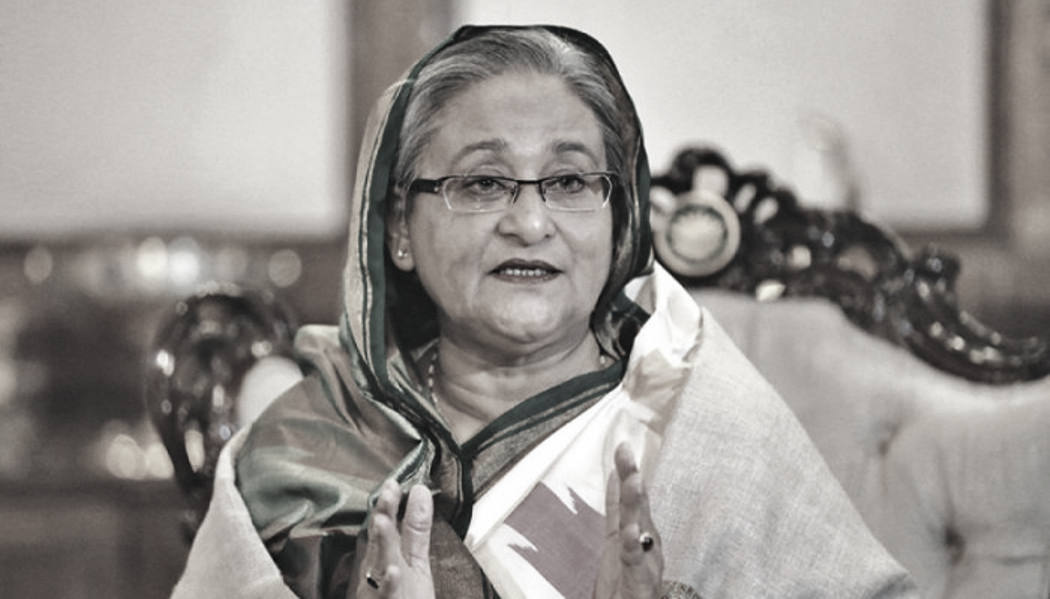
Sheikh Hasina slams Awami League ban ahead of Bangladesh’s February 2026 elections
As Bangladesh prepares to hold national elections in February 2026, nearly a year after Sheikh Hasina was ousted following a student-led uprising in July 2024, the former prime minister, who is currently staying in India after fleeing Bangladesh amid unrest, has strongly criticised the exclusion of her Awami League from the polls, calling such an exercise illegitimate. The developments are being closely watched in New Delhi, even as Hasina’s remarks from Indian soil have sparked unease and resentment among sections of the Bangladeshi public.
“An election without the Awami League is not an election, but a coronation. Yunus governs without a single vote from the Bangladeshi people, and now he seeks to ban the party that has been elected nine times by popular mandate,” Hasina said. She warned that barring her party would disenfranchise millions of voters and strip any future government of moral authority. “At a time when Bangladesh badly needs genuine national reconciliation, this would be a terrible missed opportunity,” she added.
However, Hasina’s statements, made while she remains in India, have become politically sensitive inside Bangladesh. Many protesters and student groups who led the uprising view her presence in India as evidence that New Delhi is sheltering a former leader they blame for years of alleged repression and flawed elections. Analysts note that while India has not formally described her stay as asylum, public perception in Bangladesh has fuelled anger, particularly among younger voters, who see her continued political commentary from India as external interference.
While Hasina has officially led governments elected nine times , the fairness of several of those electoral victories has long been contested. Multiple polls during her tenure were marred by allegations of vote rigging, voter intimidation, opposition boycotts, and restrictions on campaigning . Human rights groups and opposition parties have argued that elections conducted without full participation or under heavy state influence failed to meet international standards of free and fair democratic practice, a key grievance that ultimately fed into the 2024 uprising.
Political tensions have escalated further in recent weeks, with reports of violent protests and attacks on Hindu minorities across Bangladesh. The unrest intensified following the killing of Inqilab Moncho leader Osman Hadi, which Hasina blamed entirely on the interim administration led by Nobel laureate Muhammad Yunus.
“This tragic killing reflects the lawlessness that uprooted my government and has multiplied under Yunus. Violence has become the norm while the interim government either denies it or is powerless to stop it,” Hasina said. She warned that the continuing instability was destabilising Bangladesh internally and straining ties with neighbouring countries. Referring to India, Hasina said New Delhi was witnessing chaos, persecution of minorities, and the erosion of bilateral achievements built over decades.
India, which shares deep historical, cultural, and strategic ties with Bangladesh, has expressed concern over the growing instability in its neighbourhood. With Bangladesh witnessing violence, political uncertainty, and rising public anger, New Delhi hopes the upcoming elections will lead to a stable and representative government. Indian officials have consistently maintained that India respects the sovereignty of its neighbours and supports democratic processes, not individual leaders. Nevertheless, the surge in anti India sentiment during recent unrest has emerged as a worrying trend for bilateral relations.
The February 2026 polls will be the first national elections since Hasina was removed from power in August 2024 after weeks of unrest triggered by the student-led movement. Since then, Bangladesh has been governed by an interim administration headed by Muhammad Yunus.
Alongside the parliamentary elections, a national referendum on the proposed “July Charter” will be held on the same day. The charter seeks major reforms to state institutions, including curbing executive authority and strengthening judicial independence. Voting will take place simultaneously for all 300 parliamentary seats.
The main electoral contest is expected to be between former Prime Minister Begum Khaleda Zia’s Bangladesh Nationalist Party and Jamaat-e-Islami. The newly formed National Citizens Party, which emerged from the student movement that played a key role in toppling Hasina’s government, is also expected to participate in the elections.