
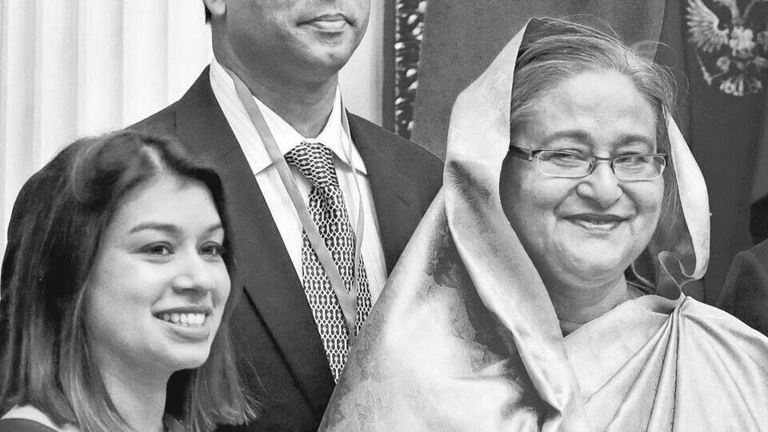
Sheikh Hasina named in murder and corruption cases, Interpol notice sought for niece Tulip Siddiq
Bangladesh’s political and judicial turbulence intensified as authorities pursued multiple criminal charges and international legal measures against former prime minister Sheikh Hasina , while Prime Minister Tarique Rahman stressed political stability.
The Anti-Terrorism Unit (ATU) of Bangladesh Police filed a chargesheet on February 18 against 25 people, including Hasina, in connection with the fatal shooting of 24-year-old Abuzar Sheikh during the July Uprising protests in Dhaka’s Pragati Sarani area. Police allege local leaders and activists of the Awami League and Jubo League opened fire on a student-public procession, resulting in Sheikh’s death after eight days of treatment. Arrest warrants have been sought for 22 accused, including Hasina, who remain absconding.
On February 26, a Dhaka court ordered authorities to seek an Interpol Red Notice for Tulip Siddiq , Hasina’s niece, in a corruption case tied to a Gulshan property. Siddiq denies wrongdoing, and because Bangladesh and the UK lack an extradition treaty, enforcement remains uncertain. Sheikh Hasina remains in India , and no Interpol notice has yet been issued requiring her extradition. Authorities may pursue further international legal steps, which could create diplomatic sensitivities.
Hasina has not publicly responded to the latest charges, but she has previously dismissed allegations as politically motivated. Rahman, leading the government after the February 2026 elections , has urged calm and emphasized accountability . His administration has implemented major reshuffles in the military and intelligence services , consolidating authority and signaling a firm approach to governance.
Observers say these prosecutions, potential international legal actions, and institutional reforms highlight Bangladesh’s complex political transition . While Hasina currently remains beyond the reach of enforcement in India, further measures could escalate diplomatic tensions as the Rahman government strengthens control and navigates the post-uprising landscape.