
Seven arrested in Chandigarh BJP blast, ISI-backed module dismantled
Punjab Police have arrested seven individuals in connection with the April 1 grenade blast outside the BJP headquarters in Chandigarh, uncovering a Pakistan-backed terror module .
Punjab Director General of Police Gaurav Yadav said the two main perpetrators, Gurtej Singh and Amanpreet Singh , were arrested in Rewari, Haryana , on Saturday night. Both are residents of Ratangarh village, Rupnagar . Amanpreet has a prior criminal record, including theft and snatching cases, while Gurtej reportedly coordinated with Portugal-based Baljot Singh alias Jot through social media to collect a consignment of grenades and other weapons on March 28 from Balachaur, Punjab .
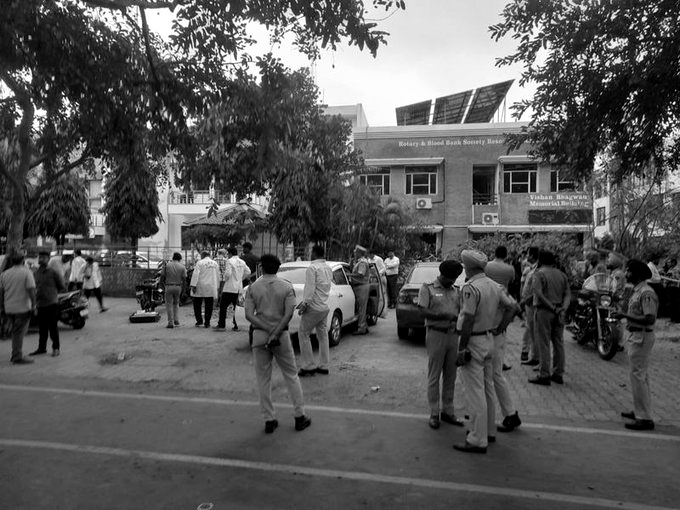
The blast occurred around 5 pm on April 1 outside the BJP office in Sector 37, Chandigarh , damaging vehicles and a scooter. Initial reports described the device as crude, later confirmed to be a hand grenade .
Earlier, five suspects Balwinder Lal alias Shami, Jasvir Singh alias Jassi, Charanjit Singh alias Channi, Rubal Chauhan, and Mandeep alias Abhijot Sharma were arrested. Police recovered one hand grenade, a .30 bore Zigana pistol, and ammunition from their possession. Investigations revealed the module was backed by Pakistan’s ISI and directed by foreign handlers in Portugal and Germany .
Assistant Inspector General, SSOC, SAS Nagar, Deepak Pareek , said the consignment of arms and grenades passed through multiple operatives before reaching the final perpetrators. Police are tracking absconding members and the full network.
The accused have been booked under the Arms Act and Bharatiya Nyaya Sanhita (BNS) . CCTV footage captured suspects fleeing, and a 10-second viral video shows a man throwing the grenade. Separately, the banned outfit Babbar Khalsa International claimed responsibility via social media.
The case highlights the growing threat of cross-border terror networks operating through social media and foreign-based handlers, and underscores the efficiency of coordinated police operations in dismantling ISI-backed modules .