
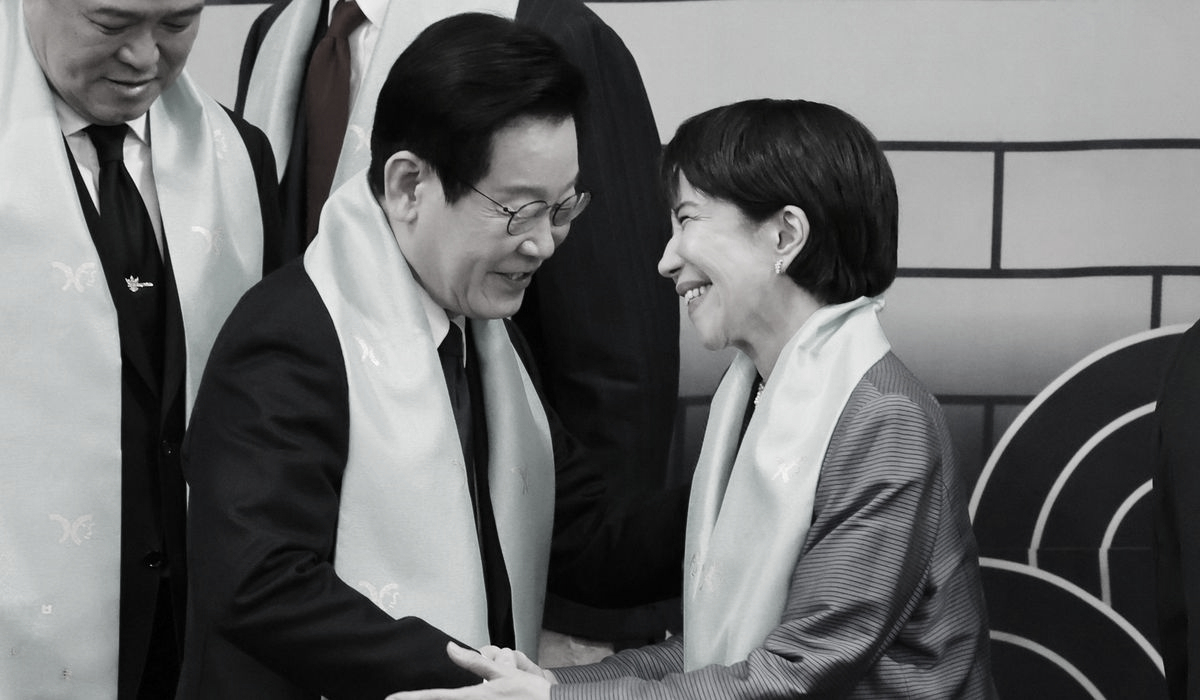
Seoul–Tokyo Summit signals push to reset ties amid China tensions
South Korean President Lee Jae Myung on Tuesday held talks with Japanese Prime Minister Sanae Takaichi in the ancient city of Nara , as the two leaders sought to further stabilise and improve bilateral relations against the backdrop of rising regional tensions, particularly between Japan and China.
Japan–South Korea relations have long been strained by unresolved issues linked to Japan’s colonial rule of Korea from 1910 to 1945 , including disputes over forced labour, “comfort women,” compensation, and differing views on wartime history . Periodic political statements, textbook controversies and trade restrictions have repeatedly eroded trust between the two neighbours. In recent years, however, shared security concerns especially North Korea’s nuclear programme and China’s growing regional assertiveness have pushed Tokyo and Seoul closer. As key US allies facing pressure to strengthen trilateral cooperation, both countries are prioritising security coordination, stable trade ties and regional stability, setting aside historical differences to address common challenges.
The summit comes at a politically significant moment for Prime Minister Takaichi, who is a few months into office and enjoys strong approval ratings but whose party holds a majority in only one chamber of parliament. With speculation mounting over a possible snap election to consolidate her power, the meeting with the South Korean leader is seen as an opportunity to project diplomatic leadership.
Takaichi hosted Lee in her hometown of Nara, a former Japanese capital renowned for its free-roaming deer and centuries-old Buddhist temples. On Wednesday, the Japanese prime minister is scheduled to accompany the South Korean president to Horyu Temple , home to some of the world’s oldest surviving wooden structures dating back to the late 7th or early 8th century . The site reflects Japan’s early adoption of Buddhism through cultural exchanges with the Korean Peninsula. Lee will also meet members of the South Korean community living in Japan before returning home later in the day.
In a post on X ahead of the summit, Takaichi said she hoped to “ further push forward Japan’s relations with South Korea in a forward-looking way ” during the meeting in Nara, highlighting the city’s 1,300-year history of cultural ties with the Korean Peninsula.
Tuesday’s talks focused on trade, regional security and the challenges posed by China and North Korea, as well as ways to build deeper mutual trust. Both Japan and South Korea are key allies of the United States and face pressure from Washington to increase defence spending, while also navigating the unpredictability of US President Donald Trump’s diplomacy.
The meeting also took place as Japan faces worsening relations with China following remarks by Takaichi shortly after taking office. Her comments that potential Chinese military action against Taiwan could justify Japanese intervention drew sharp criticism from Beijing, escalating political and trade tensions.
Lee arrived in Japan after visiting Beijing last week for talks with Chinese President Xi Jinping, amid China’s growing economic and political pressure on Japan and efforts to strengthen ties with Seoul. Lee has said that while relations with Japan are as important to South Korea as those with China, Seoul’s ability to mediate between its two neighbours is limited.
In an interview with Japan’s NHK television on Monday, Lee expressed interest in securing Japanese support for South Korea’s bid to join the 12-member Comprehensive and Progressive Agreement for Trans-Pacific Partnership (CPTPP). He acknowledged that the move would require South Korea to lift its ban on imports from Fukushima and nearby prefectures affected by the 2011 Fukushima Daiichi nuclear disaster, a step that could take time due to domestic health concerns.
Lee also reiterated South Korea’s desire to cooperate closely with Japan on security matters under a trilateral framework with the United States, stressing that “what’s really important is the issue of deep mutual trust.”
While the leaders were expected to avoid contentious historical issues during the summit, media reports indicated they may discuss humanitarian cooperation related to efforts to recover remains from a former undersea mining site in western Japan, where about 180 workers—most of them Korean forced labourers—were killed in an accident in 1942.
The Nara summit underscores a cautious but steady effort by both governments to set aside past differences and work together on shared regional and global challenges.