
Senior Maoist Leader Pasunuri Narahari Surrenders Before Telangana Police
In a significant development in the ongoing crackdown on Left-Wing Extremism, senior CPI (Maoist) leader Pasunuri Narahari alias Santosh surrendered before the Telangana Police on Tuesday along with his wife, marking another major setback for the banned insurgent outfit.
Narahari, a native of Somidi village in Hanamkonda district , was serving as a Central Committee member , one of the highest decision-making bodies within the Maoist organisation. His wife was also associated with the group as a cadre member. Officials said the surrender reflects the increasing pressure being mounted on Maoist networks through intensified security operations and sustained rehabilitation efforts.
According to police sources, Narahari had spent nearly three decades underground and was considered one of the most influential Maoist leaders from Telangana still active outside the state. He reportedly carried a reward of around ₹20 lakh and had played a key organisational role in the Maoists’ East Regional Bureau operating in Jharkhand.
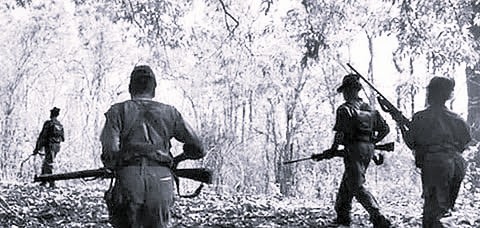
Investigators believe continuous anti-Maoist operations in forest regions across Jharkhand , Chhattisgarh , and adjoining states have severely weakened the movement’s operational capabilities. Security agencies said senior leaders have been facing mounting logistical challenges, declining cadre strength and increasing surveillance pressure in recent years.
Police had earlier identified only four top Maoist leaders from Telangana who were still active in the underground movement. Besides Narahari, the list included veteran Maoist leader Muppala Laxman Rao alias Ganapathi , along with Jade Ratnabai and Vartha Shekhar . With Narahari now surrendering, officials believe the Telangana link within the Maoist leadership structure has weakened further.
Authorities said the state government’s surrender and rehabilitation policy has encouraged several cadres to return to mainstream life. Since March 2024, hundreds of Maoists have reportedly laid down arms before police in different states.
Senior police officials described Narahari’s surrender as both a strategic and symbolic setback for the Maoist movement. They urged remaining underground cadres to abandon violence and utilise rehabilitation opportunities offered by the government instead of continuing armed struggle.
Security agencies now view the development as part of a broader decline in Maoist influence across several regions once considered strongholds of the insurgency.