
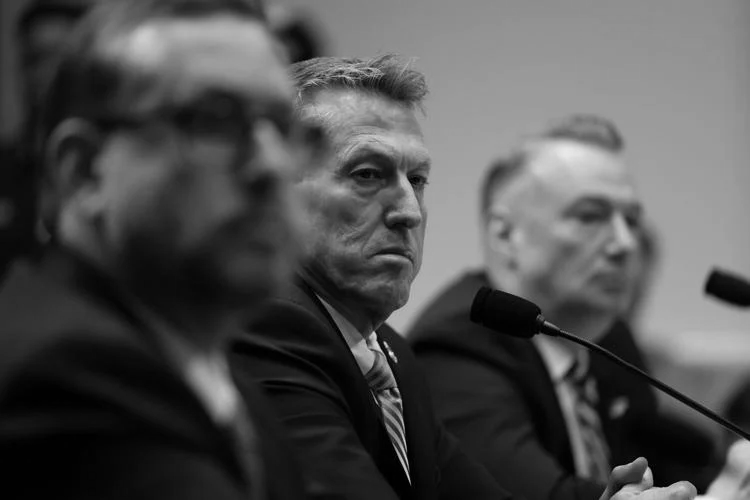
Senate panel grills ICE and border patrol on Minneapolis protester’s death
A US Senate hearing held on Thursday to scrutinise immigration enforcement under President Donald Trump turned confrontational when Senator Rand Paul challenged federal officials over the fatal shooting of Alex Pretti , an ICU nurse killed during an immigration operation in Minneapolis on January 24.
Paul played video footage of the incident frame by frame, arguing that Pretti posed no threat and was retreating when officers used pepper spray and ultimately shot him. He warned that public trust in ICE and Border Patrol had eroded and called on the agencies to admit mistakes and reform their rules of engagement. Paul was the only Republican to openly criticise the officers’ conduct, while Democrats also condemned the use of force.
Witnesses included ICE acting director Todd Lyons and CBP chief Rodney Scott. Scott disputed Paul’s interpretation, saying Pretti had failed to comply and resisted officers. Lyons said ICE had launched 37 excessive-force investigations since Trump returned to office, with most either closed or still under review. The deaths of Pretti and another protester, Renee Good, sparked public outrage and led to changes in the Minnesota operation, which at its peak involved nearly 3,000 federal officers . Trump’s border czar Tom Homan announced the operation was being wound down.
Lawmakers also clashed over ICE’s use of administrative warrants — signed by agency officers rather than judges — to enter homes. Senator Richard Blumenthal said the practice violated constitutional protections, while Lyons defended it citing Minnesota case law. Other Republicans, including Ron Johnson , focused on threats faced by immigration officers rather than the shooting itself.
The hearing produced no clear legal outcome . Multiple investigations remain ongoing, and no disciplinary action has yet been announced. Lawmakers remain divided over whether the killing reflected justified force or a failure of enforcement standards, underscoring broader tensions between civil liberties and the administration’s aggressive immigration crackdown .