
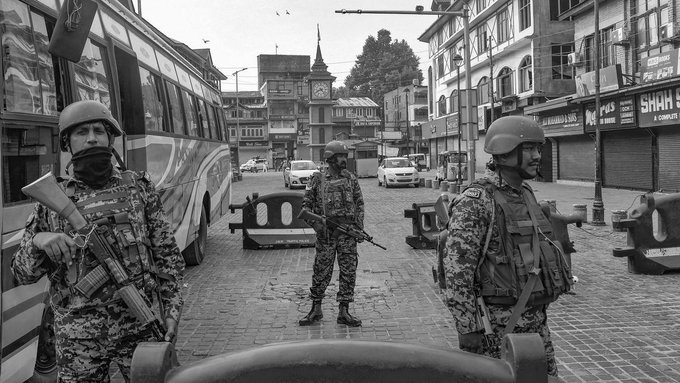
Security Tightened in Srinagar as Leaders Observe 1931 Kashmir Martyrs' Day
Heavy security and restrictions marked 1931 Kashmir Martyrs' Day in Srinagar on Monday as political leaders paid tributes to those killed during protests against Dogra ruler Maharaja Hari Singh in 1931, while the occasion reignited debate over the day's official recognition.
The Lieutenant Governor's administration sealed areas around the Martyrs' Graveyard (Mazar-e-Shuhada) in Naqshband Sahib, deploying police and paramilitary forces to prevent large gatherings. Officials said the restrictions were imposed to maintain law and order and avoid a repeat of last year's incident, when Chief Minister Omar Abdullah climbed over the locked gates to offer prayers.
Omar Abdullah, National Conference president Farooq Abdullah , and People's Conference chief Sajad Gani Lone paid tribute to the martyrs. Omar described their sacrifice as a symbol of the struggle for justice, dignity and democratic rights , while Farooq said their legacy continues to inspire generations in the pursuit of peace and justice.
Education Minister Sakina Ittoo claimed she was prevented by security forces from entering the graveyard despite arriving early to pay her respects, alleging extensive barricading around the site.
Lone criticised the National Conference government for failing to restore July 13 as a public holiday, arguing that commemorating the martyrs requires concrete action rather than symbolic statements. He maintained that restoring the holiday is a matter of historical justice .
July 13 commemorates the 22 protesters killed outside Srinagar Central Jail in 1931 , an event widely regarded by many in Kashmir as the beginning of an organised movement against autocratic rule in the erstwhile princely state. The day remained an official public holiday until 2020 , when it was removed from the gazetted holiday list following the 2019 reorganisation of Jammu and Kashmir into two Union Territories. Since then, its observance has remained a politically contentious issue, reflecting competing narratives over the region's history and identity.