
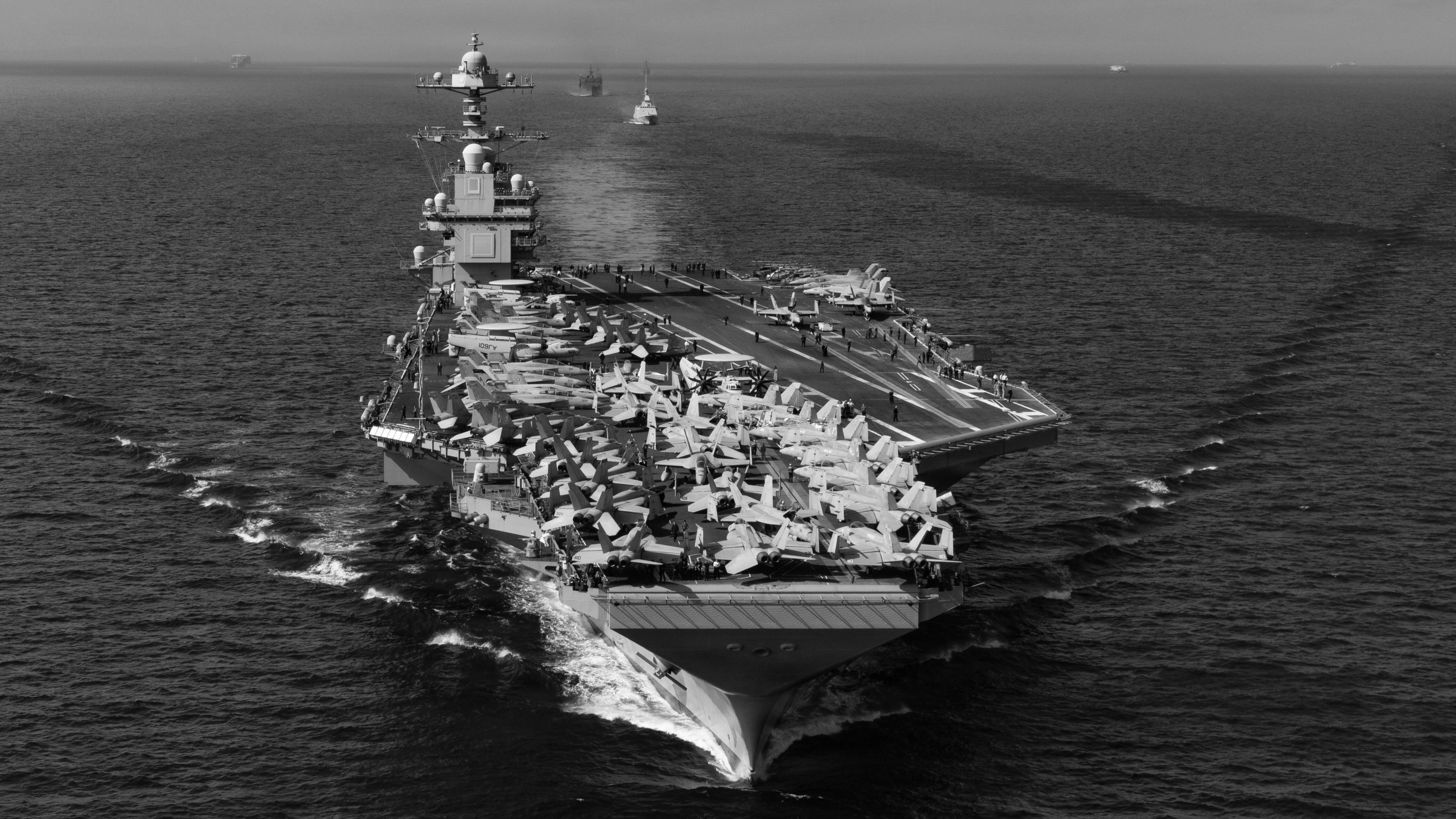
Second US Aircraft Carrier Deployed to Middle East Amid Iran Tensions
The United States has ordered the world’s largest aircraft carrier, the USS Gerald R. Ford , to sail from the Caribbean Sea to the Middle East , marking a significant escalation in Washington’s military presence in the region. The move comes as President Donald Trump considers possible military and diplomatic actions against Iran over its nuclear programme.
This deployment will place two US aircraft carriers , the Gerald R. Ford and the USS Abraham Lincoln , along with their accompanying warships , in the region, a rare concentration of American naval power. The Abraham Lincoln and three guided-missile destroyers arrived in the Middle East over two weeks ago, already reinforcing the US presence.
The USS Gerald R. Ford has been at sea since June 2025 and was diverted last year from the Mediterranean to the Caribbean during operations leading to the capture of former Venezuelan President Nicolas Maduro . Its redeployment to the Middle East will extend the crew’s time at sea and is seen as a strategic signal to Tehran while simultaneously demonstrating the US’s global military reach.
Analysts say the move serves as deterrence against Iran , aiming to pressure Tehran into negotiations, while also reassuring Gulf states and Israel of American commitment to regional security. At the same time, the presence of two carriers raises the risk of miscalculation, especially in contested waters like the Strait of Hormuz , a key global oil passage.
The deployment also carries global implications . Energy markets could see price volatility due to heightened tensions, while allies and rivals alike will monitor the US stance. Europe and Asia may support a cautious approach, whereas Russia and China could view the move as an assertion of US influence in West Asia.
While it is unclear how long the USS Gerald R. Ford will remain in the Middle East, the deployment highlights how closely regional security, diplomacy, and global energy stability are intertwined, underlining the wider geopolitical stakes of US–Iran tensions.