
Scraps instead of Plates: What the Maihar Mid-Day Meal shocker says about the state of govt school education
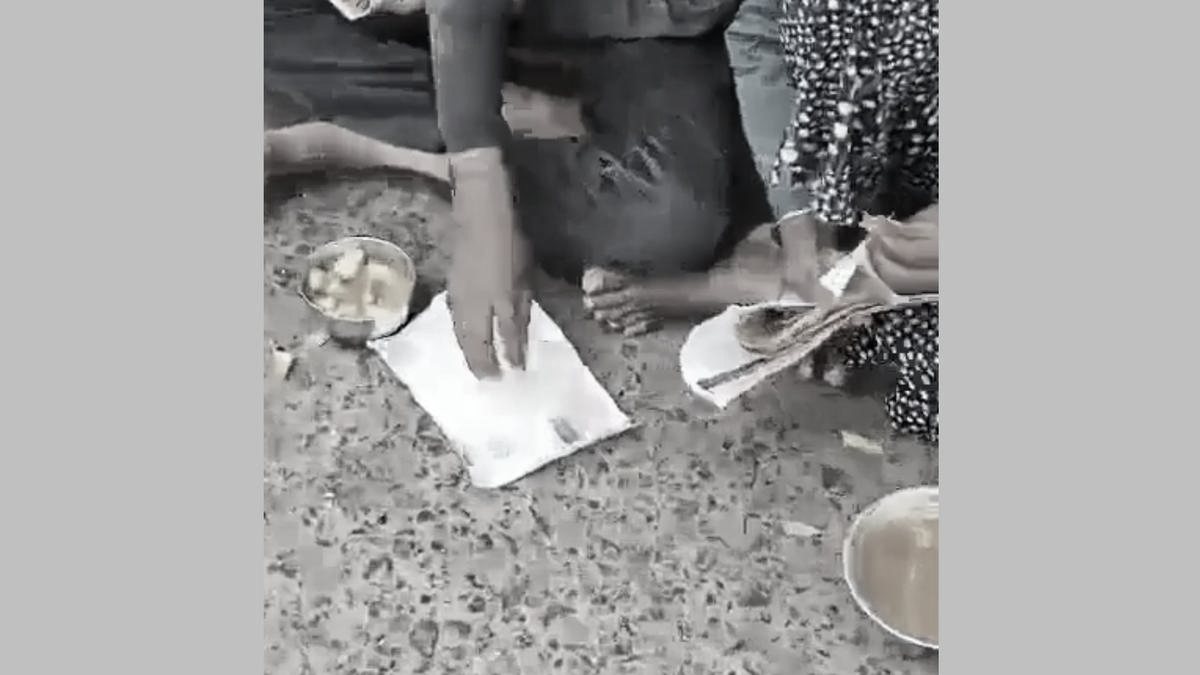
The disturbing visuals from a government school in Madhya Pradesh’s Maihar district have once again exposed the harsh reality of India’s government school system. On Republic Day, a day meant to celebrate dignity, equality and constitutional values, children at the Government High School in Bhatigwan were served their special mid-day meal of halwa-puri on scraps of waste paper and torn pages from old notebooks instead of plates.
The video clips, which quickly went viral on social media, show students sitting on the floor, eating food placed on pages ripped from textbooks and notebooks an image that has sparked widespread outrage and shame. The incident is not just an administrative lapse; it is a reflection of how casually the dignity of children studying in government schools continues to be compromised.
Following the backlash, the district administration ordered action. Based on an inquiry report submitted by District Project Coordinator (DPC) Vishnu Tripathi, a proposal has been sent to suspend the in-charge principal of the school, Sunil Kumar Tripathi. In addition, one month’s salary of a contract employee, BRC Pradeep Singh, has been deducted. The Maihar Collector has also issued show-cause notices to the in-charge of the District Panchayat’s Mid-Day Meal Branch and the DPC for negligence.
While these actions may appear swift on paper, they raise a larger and more uncomfortable question: Is this what education in government schools has been reduced to?
For millions of children across India, especially in rural and economically weaker regions, the mid-day meal scheme is not just a nutrition programme it is the primary reason they attend school . Parents send their children with the assurance that at least one meal a day will be provided with dignity and hygiene. When even that basic promise is broken, what incentive remains for children to continue schooling?
If food is served on scraps of waste paper, without plates or basic hygiene, what message does it send to young minds? That their lives matter less? That government schools are places where standards can be compromised without consequence?
The opposition Congress party strongly criticised the BJP-led Madhya Pradesh government. Congress spokesperson and former Women’s Commission member Sangeeta Sharma called the incident “the bitter truth” of the mid-day meal scheme in the state and questioned Chief Minister Mohan Yadav’s claims of good governance and sensitivity. “Is this good governance?” she asked in a post on X.
Notably, there has been no public statement from the state Education Minister so far , even as the incident has drawn national attention. The silence of the Education Ministry is as striking as the visuals themselves. When such incidents surface, accountability should not stop at school principals or district officials alone. It is the responsibility of the Education Department to ensure infrastructure, hygiene, monitoring and dignity in government schools.
This is not an isolated incident but a symptom of a deeper problem— systemic neglect of government education . Classrooms without resources, teachers overburdened with non-academic duties, poor monitoring of welfare schemes, and an attitude that treats government school students as second-class citizens.
If children are coming to school mainly for the mid-day meal, and even that is served without basic respect, then the question must be asked plainly:
What is the Education Ministry doing to restore faith in government schools?
Until dignity, hygiene and accountability are treated as non-negotiable, such “shocking incidents” will continue to surface and apologies and suspensions will do little to fix a system that has long been allowed to decay.