
SC to hear PIL on pre-poll freebies in March: could shake upcoming state elections
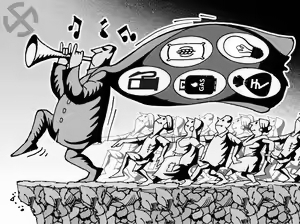
The Supreme Court is set to hear a landmark PIL in March 2026 challenging the practice of political parties promising or distributing “irrational freebies” before elections. Filed by BJP leader Ashwini Upadhyay , the petition argues that such promises distort electoral fairness, unduly influence voters, and undermine democratic values, amounting to corrupt practice . “Five assembly elections are coming. Only the sun and the moon are left to promise,” Upadhyay said, highlighting the scale of pre-poll giveaways. The plea urges the court to direct the Election Commission of India ( ECI ) to bar parties from indulging in such practices or amend rules on party recognition.
The court has acknowledged the importance of the issue. Chief Justice of India Surya Kant remarked, “It is of paramount importance and is in public interest. This has to be heard by a three-judge bench. Wait for March.” The PIL, filed in 2022, seeks a declaration that distributing or promising private goods and services from public funds before elections violates constitutional principles, including equality before the law. As an alternative, the petition also requests that Parliament enact legislation to regulate or prohibit such inducements.
If the Supreme Court sets legal limits on pre-poll freebies, parties across several states holding elections in 2026 may have to rethink their manifestos and campaign strategies. In Tamil Nadu , where the Assembly election is due by April–May 2026 , the AIADMK and DMK, historically reliant on benefits for women, seniors, students, and urban families, may need to focus on long-term welfare schemes and structural policy commitments. In Assam , also going to polls in April–May 2026 , the BJP and Congress, who often offer cash transfers and subsidies for farmers, women, and youth, could be forced to emphasise inclusive public services rather than headline-grabbing handouts. In West Bengal , with Assembly elections scheduled on or before May 7, 2026 , the Trinamool Congress and BJP, traditionally dependent on pensions, subsidised essentials, and targeted cash transfers, may have to frame promises as ongoing welfare rather than new inducements. Smaller regions like Puducherry , whose elections are likely in April–May 2026 , may also see parties highlight governance records and policy clarity instead of promising fresh freebies .
The prevalence of pre-poll giveaways is already clear across India. In Delhi , the Aam Aadmi Party (AAP) provides free or heavily subsidised electricity and water, free bus travel for women, and other direct benefits. In Punjab , AAP promised free electricity up to 300 units per household and allowances for women. In Uttar Pradesh , parties offered 20 million smartphones for poor students, two free LPG cylinders annually, and cash sums for marriage expenses. In Karnataka , Congress announced 200 free electricity units per month, monthly cash for women and unemployed youth, free bus travel for women, and subsidised rice. In Madhya Pradesh , BJP expanded its Ladli Behna cash transfer programme for women. In Maharashtra , alliances proposed monthly cash benefits of up to ₹3,000 for women, farm loan waivers, unemployment payouts, and insurance coverage for the poor.
Experts say that while the Supreme Court cannot immediately deregister parties or seize election symbols without legislative backing, a clear ruling declaring such promises as corrupt practice would empower the ECI to frame stricter guidelines and hold parties accountable. Section 123 of the Representation of the People Act already defines offering gifts or gratification to influence voters as a form of corrupt practice, and a judicial clarification could strengthen enforcement.
As March approaches, parties and strategists will be closely watching the Supreme Court’s actions. A decisive ruling could shift campaigns toward sustainable welfare , transparent fiscal planning, and governance -oriented policy promises rather than short-term inducements, potentially reshaping the dynamics of upcoming state elections across India.