
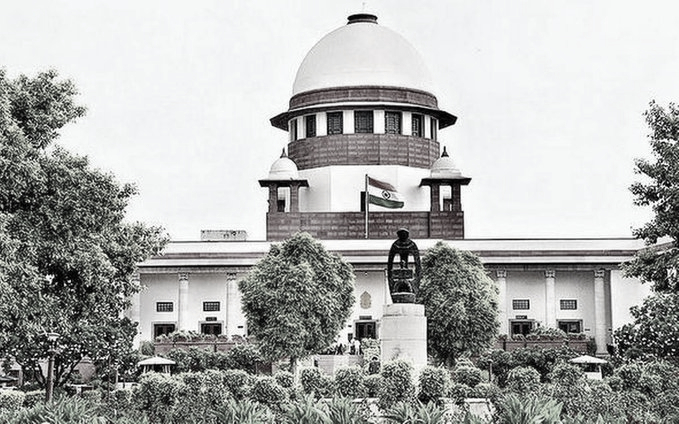
SC to examine plea challenging immunity to CEC, Election Commissioners
The Supreme Court on Monday agreed to examine a petition challenging the legal immunity granted to the Chief Election Commissioner (CEC) and Election Commissioners (ECs) under the Chief Election Commissioner and Other Election Commissioners (Appointment, Conditions of Service and Term of Office) Act, 2023, but declined to stay the provision for the time being.
A Bench comprising Chief Justice of India Surya Kant and Justice Joymalya Bagchi issued notice to the Centre and the Election Commission of India on a public interest litigation (PIL) filed by NGO Lok Prahari, questioning the constitutional validity of Section 16 of the Act.
Section 16 provides that, notwithstanding anything contained in any other law, no court shall entertain or continue any civil or criminal proceedings against a serving or former CEC or EC for any act, word or decision made in the course of discharging official duties. The immunity extends even after the official demits office.
Challenging the provision, the petitioner argued that Section 16 grants complete, blanket and lifelong immunity , effectively placing election commissioners beyond judicial scrutiny. The plea claimed that the provision gives “unprecedented and unbridled power” to the CEC and ECs by shielding them from accountability even in cases of serious misconduct, abuse of power or gross misuse of office .
The petition contended that such absolute immunity violates core constitutional principles, including equality before law under Article 14 , access to justice under Article 21 , and the basic structure of the Constitution , which includes rule of law, judicial review and democracy. It also argued that lack of accountability undermines public confidence in free and fair elections.
Drawing comparisons, the plea pointed out that even judges and senior public officials do not enjoy such absolute protection. Judges are granted functional immunity only for acts done in good faith and remain subject to impeachment and criminal prosecution with safeguards. Civil servants, too, require prior sanction for prosecution, but courts retain the power of judicial review. In contrast, Section 16 completely bars courts from examining any case against election commissioners, without even a “good faith” limitation.
The petition relied on past Supreme Court rulings emphasising that while the Election Commission must be independent and insulated from executive interference, independence does not translate into immunity from the law or judicial oversight . Constitutional authorities, it argued, are ultimately subject to the Constitution and the courts.
Opposing interim relief, the Centre is expected to defend the provision on the grounds that election commissioners take sensitive decisions under intense political pressure and require protection from vexatious and motivated litigation , which could otherwise hamper their independence and functioning.
The Supreme Court, while agreeing to hear the matter, refused to stay the operation of Section 16 at this stage, allowing the provision to continue until final adjudication. No date has yet been fixed for the next hearing.
The case is expected to have significant implications for the balance between institutional independence and constitutional accountability of the Election Commission of India.