
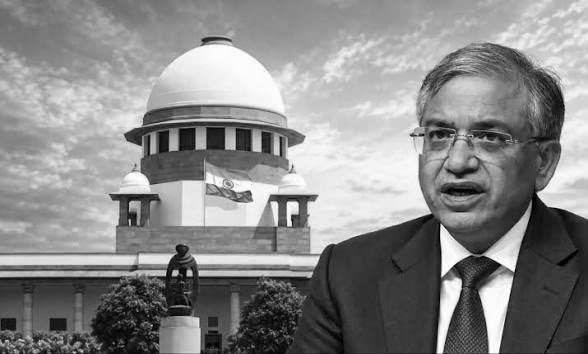
SC To EC: Show Us How Decisions Were Taken, Warns It Can Annul Those Without Unanimity Or Majority
The Supreme Court on Monday issued notices to the Election Commission (EC) and the Centre on pleas alleging that several decisions of the poll panel were taken without the approval of its two other Election Commissioners, saying it can annul decisions that are found to have been taken contrary to law.
A bench headed by Chief Justice of India Surya Kant, along with Justices Joymalya Bagchi and V Mohana, however, refused to immediately suspend Chief Election Commissioner Gyanesh Kumar or restrain him from taking further decisions. The court said it could not pass an ex parte order without hearing the respondents and examining the relevant records.
"If there is no unanimity or majority as mandated under the law, then the court can very well annul those decisions," the CJI said. Justice Bagchi said that if the records establish that a decision was not taken through the required process, the court could declare it ultra vires, or beyond the EC's legal authority.
The petitions cite reports that Election Commissioners Sukhbir Singh Sandhu and Vivek Joshi had recorded objections at least 14 times over 10 months to decisions concerning the Special Intensive Revision (SIR) of electoral rolls. The EC has maintained that differences of opinion are normal during institutional deliberations and that its orders have full legal sanction.
The CJI said the court could not rely solely on newspaper reports, which could be completely correct, partly correct or incorrect, and sought the EC's response and relevant records to establish how the disputed decisions were actually taken.
Petitioner Rakesh Kumar Singh, represented by senior advocate Vikas Singh, sought Kumar's suspension and argued that the two other Election Commissioners could run the Commission. The bench, however, asked, "Who will conduct the elections?" if the CEC were suspended, stressing that the EC must continue functioning under its constitutional mandate. The court said it first needed to hear the respondents.
The bench also indicated that it may examine the immunity granted to the CEC under the 2023 law, including protection from legal proceedings for official acts even after leaving office. The CJI observed that such immunity was something even judges do not have.
Another major issue was the modified Form 6 used for inclusion in electoral rolls. The CJI clarified that the Supreme Court had not approved the modified Form 6 and said it would examine the records to determine who modified it and under what authority. The issue relates to an additional declaration introduced during the SIR exercise.
A connected petition by advocate Shailendra Mani Tripathi was also tagged with the case, though the bench asked senior advocate Menaka Guruswamy to amend its prayers, saying they were "all jumbled up".
The court has sought responses from the Centre, EC, Gyanesh Kumar, Sukhbir Singh Sandhu, Vivek Joshi, Senior Deputy Election Commissioner Maneesh Garg and ECI Director General (IT) Seema Khanna.
The matter will be heard next on October 13. For now, Gyanesh Kumar remains CEC, and the court has not held that he or the EC acted illegally. But it has made clear that if the records show decisions requiring unanimity or majority were taken without following the law, it can undo or annul them.