
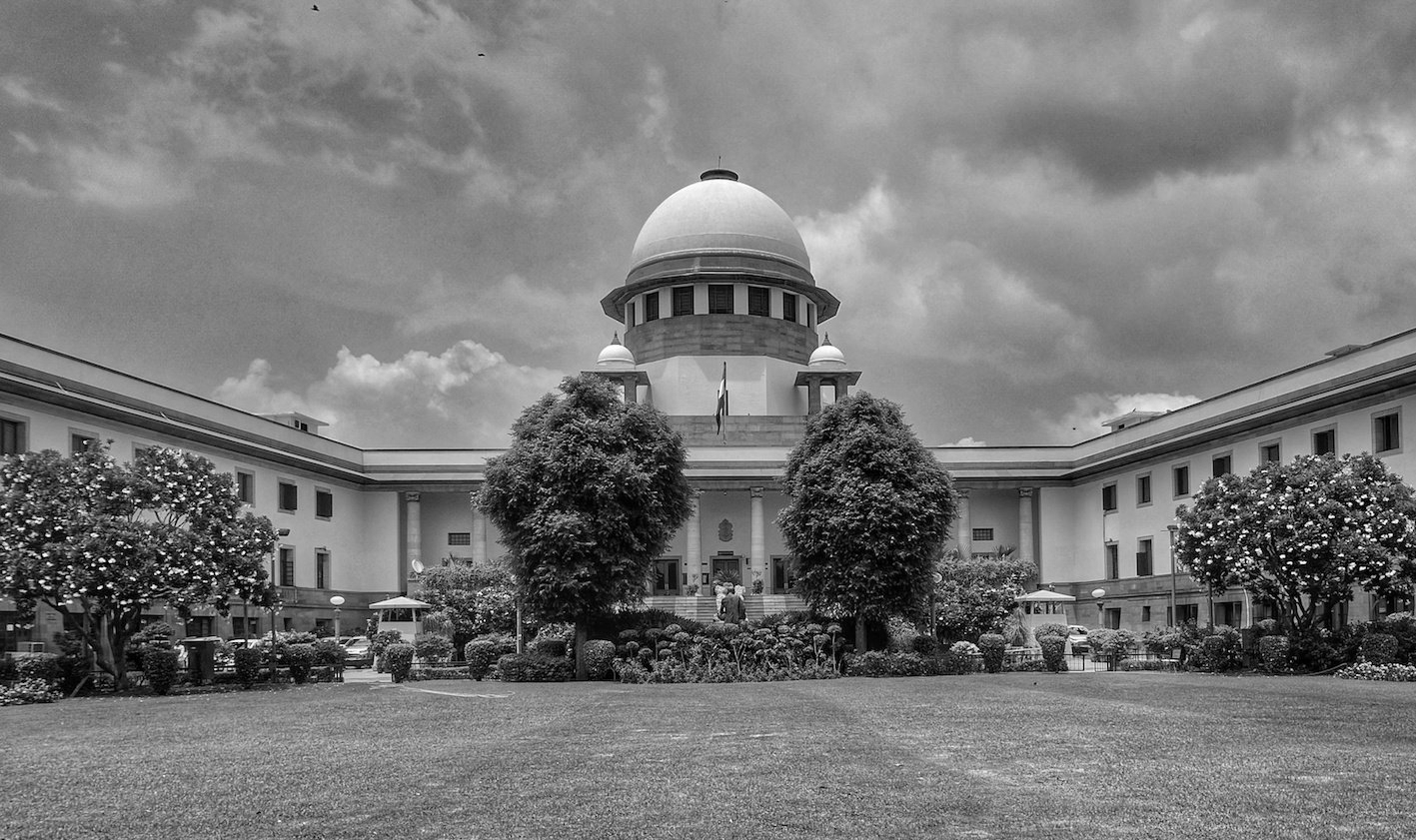
SC reserves verdict on fixing bill assent deadlines
After a 10-day marathon hearing, the Supreme Court’s five-judge Constitution Bench, led by Chief Justice of India B.R. Gavai reserved its verdict on Thursday in a significant Presidential Reference case. The reference, initiated by President Droupadi Murmu, seeks the court’s opinion on whether judicially imposed timelines can be set for Governors and the President to grant assent to state bills under Articles 200 and 201 of the Constitution of India.
The Constitution Bench, comprising Justices Surya Kant, Vikram Nath, P.S. Narasimha, and A.S. Chandurkar, heard extensive arguments from the Centre, several state governments, political leaders, and other stakeholders. The case stems from a landmark Supreme Court verdict on April 8, 2025, in “State of Tamil Nadu v. Governor of Tamil Nadu”, which set specific timelines for Governors and the President to act on state bills, prompting the Presidential Reference to clarify the constitutional boundaries of such judicial interventions.
Background of the case
The April 8 ruling, delivered by Justices J.B. Pardiwala and R. Mahadevan, addressed a dispute between the Tamil Nadu government and Governor R.N. Ravi, who had delayed assent to 10 bills for periods ranging from two to five years. The court ruled that such delays were “illegal and arbitrary” and introduced structured timelines: one month for Governors to act on bills (withhold assent or reserve for the President’s consideration) if acting on the advice of the Council of Ministers, three months if acting contrary to such advice, and one month for re-enacted bills. Additionally, the court mandated that the President decide on bills reserved by Governors within three months, with reasons recorded for any delays beyond this period. The court invoked its powers under Article 142 to deem the withheld Tamil Nadu bills as assented, emphasizing that neither Governors nor the President can exercise an “absolute” or “pocket veto” by indefinitely delaying action.
This verdict sparked a constitutional debate, leading President Murmu to invoke her advisory powers under Article 143(1) on May 13, 2025, posing 14 questions to the Supreme Court. These questions address the scope of gubernatorial and presidential powers under Articles 200 and 201, the justiciability of their actions, and whether courts can impose timelines where the Constitution is silent.
Key questions in the Presidential reference
The Presidential Reference raises critical issues, including:
1. Constitutional options for governors: What options are available to a Governor under Article 200 when a bill is presented as assent, withhold assent, return for reconsideration, or reserve for the President’s consideration? The Centre argued that Governors have four options, while the April 8 verdict recognized three, asserting that a Governor must assent to a re-enacted bill.
2. Binding nature of council advice: Is the Governor bound by the aid and advice of the Council of Ministers under Article 200, or do they have discretionary powers?
3. Justiciability of actions: Are the Governor’s and President’s decisions under Articles 200 and 201 subject to judicial review, particularly before a bill becomes law?
4. Article 361 and judicial review: Does the immunity under Article 361 shield Governors from judicial scrutiny of their actions under Article 200? The April 8 verdict clarified that such immunity does not preclude review.
5. Judicially imposed timelines: In the absence of constitutional timelines, can courts prescribe deadlines for Governors and the President to act on bills? This question lies at the heart of the debate, with the Centre arguing that such judicial directions encroach on constitutional discretion.
6. Scope of Article 142: Can the Supreme Court’s powers under Article 142, used to deem assent in the Tamil Nadu case, override constitutional or statutory provisions?
Arguments during the hearing
The hearings saw robust arguments from both sides. Solicitor General Tushar Mehta, representing the Centre, urged the court to modify the April 8 verdict, arguing that imposing timelines on constitutional functionaries like Governors and the President violates the separation of powers. He emphasized that Articles 200 and 201 do not prescribe timelines, a deliberate choice by the Constituent Assembly, and that Governors have discretion to withhold assent in cases of constitutional doubt. Mehta warned that judicially imposed timelines could reduce Governors to “postmen” and disrupt the federal balance.
In contrast, states like Tamil Nadu, Kerala, Karnataka, Andhra Pradesh, Telangana, West Bengal, and Himachal Pradesh opposed the Presidential Reference. Senior advocates, including Kapil Sibal, Abhishek Manu Singhvi, Gopal Subramanium, and Arvind Datar, argued that Governors are titular heads with no legislative role and must act on the advice of the Council of Ministers. They defended the April 8 verdict, asserting that indefinite delays by Governors undermine the will of elected state legislatures and the federal structure. Sibal emphasized that Governors cannot exercise an “absolute veto” over money bills or other legislation, while Datar urged the court to maintain clear timelines to ensure certainty across states.
The bench, while clarifying that it was not reviewing the Tamil Nadu verdict but providing an advisory opinion, raised pointed questions. Chief Justice Gavai asked whether Governors could hold state governments “at the mercy of their whims and fancies” by indefinitely withholding assent, while Justice Narasimha questioned whether the Constitution envisioned a scenario where bills could be stalled indefinitely.
Constitutional context and implications
Article 200 outlines a Governor’s options: grant assent, withhold assent, return a bill (if not a money bill) for reconsideration, or reserve it for the President. If a bill is re-passed by the state legislature, the Governor must assent unless it affects High Court powers, in which case it must be reserved for the President. Article 201 governs the President’s role, allowing assent or withholding without a specified timeline. The absence of timelines has historically led to delays, prompting the Supreme Court’s intervention to prevent governance paralysis.
The Tamil Nadu case highlighted tensions in India’s federal structure, with states accusing Governors of acting as agents of the Centre. The Supreme Court’s April ruling drew on precedents like “Rameshwar Prasad v. Union of India” (2006), which established that gubernatorial actions are subject to judicial review if arbitrary, and reinforced recommendations from the Sarkaria and Punchhi Commissions for timely decision-making.
What’s at stake?
The Supreme Court’s advisory opinion, expected in the coming weeks, will clarify whether judicially imposed timelines align with the Constitution’s framework or encroach on executive discretion. The verdict could redefine the roles of Governors and the President in the legislative process, impacting Centre-state relations and the balance of power in India’s federal system. Critics of the April 8 verdict argue that it risks judicial overreach, while supporters see it as a necessary check on executive inaction that stalls the will of elected legislatures.
As the nation awaits the court’s opinion, the debate underscores the delicate interplay between constitutional functionaries, the judiciary, and the democratic process, with far-reaching implications for governance and federalism in India.