
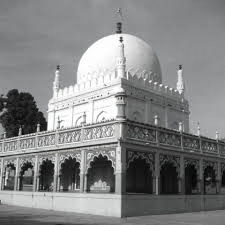
SC refuses to entertain plea against Mahashivaratri puja at Ladle Mashak Dargah
The Ladle Mashak Dargah in Karnataka’s Aland town has emerged as a newly contested religious site after the Supreme Court on Thursday refused to entertain a plea seeking to restrain the performance of Hindu rituals at the shrine during Mahashivaratri.
Located in Kalaburagi district, the shrine is historically associated with both a 14th-century Sufi saint, Ladle Mashak, and the samadhi and Shivaling of 15th-century Hindu saint Raghava Chaitanya. For centuries, the site has been regarded as a shared place of worship, reflecting the syncretic religious traditions of north Karnataka.
However, this shared character has come under strain in recent years, with disputes over religious rights and ownership intensifying since 2022, resulting in litigation, administrative intervention and heightened security arrangements during festival periods .
The Supreme Court bench of Justices Dipankar Datta and Satish Chandra Sharma declined to entertain the petition filed by Khaleel Ansari, who sought directions to restrain puja and other religious activities within the dargah premises during Mahashivaratri. The petitioner had also sought protection against what he described as “unlawful entry, mobilisation and congregation” by private respondents at the site.
The court made it clear that Article 32 of the Constitution, which provides a direct remedy before the Supreme Court for enforcement of fundamental rights, could not be invoked in the present case, particularly when related issues were already pending before appropriate forums. The bench observed that the apex court could not be converted into a forum for deciding disputed questions of fact, especially when alternative remedies were available.
Senior advocate Vibha Datta Makhija, appearing for the petitioner, argued that the property was a duly notified waqf property and submitted that the dispute also involved issues under the Places of Worship (Special Provisions) Act, 1991. She urged the court to tag the matter with similar pending cases. The bench, however, pointed out that questions relating to waqf status fall within the jurisdiction of the Waqf Tribunal, and not the Supreme Court. Following these observations, the plea was dismissed as withdrawn, with the apex court declining to intervene.
The Supreme Court’s refusal leaves undisturbed an earlier order passed by the Karnataka High Court, which in February 2025 had permitted 15 Hindu devotees to perform Mahashivaratri rituals at the Raghava Chaitanya Shivaling located within the complex, under regulated conditions and subject to maintenance of law and order.
For generations, Ladle Mashak Dargah was viewed locally as a symbol of communal harmony, with overlapping traditions of worship. The dispute gained prominence in 2022 when competing claims were raised over exclusive religious control, triggering tensions and increased police deployment during religious events.
Legal observers note that the controversy mirrors a broader pattern seen in several religious disputes across the country. High-profile cases such as the Ayodhya Ram Janmabhoomi–Babri Masjid dispute, the Gyanvapi mosque matter in Varanasi, the Krishna Janmabhoomi–Shahi Idgah dispute in Mathura, and Karnataka’s own Bababudangiri/Dattatreya Peetha case have similarly involved competing claims over worship rights at historically sensitive or shared religious sites. Courts have repeatedly emphasised procedural discipline, maintenance of public order and adherence to statutory remedies in such matters.
By declining to entertain the plea, the Supreme Court signalled a continued approach of judicial restraint, reiterating that sensitive disputes involving religious practices, historical claims and property status must first be resolved by competent statutory forums and High Courts.
For now, Ladle Mashak Dargah joins the growing list of religiously sensitive locations under legal scrutiny, with future developments likely to depend on proceedings before the Karnataka High Court and the Waqf Tribunal.