
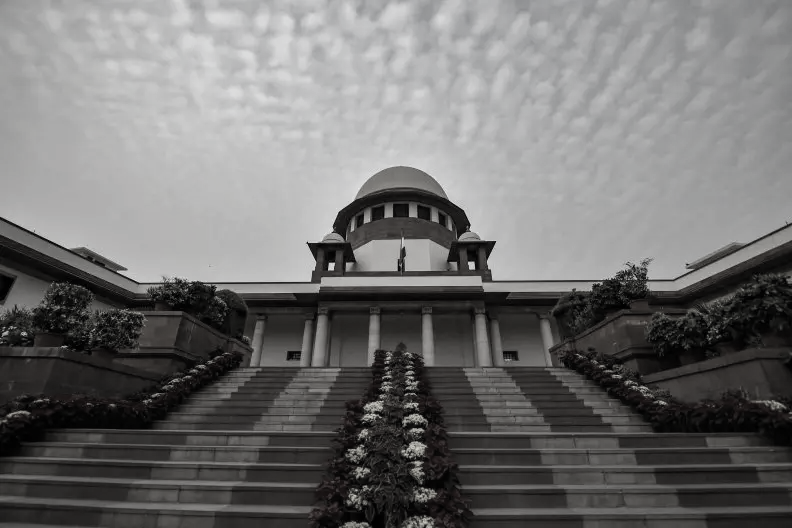
SC questions locus of Non-Devotees in Sabarimala dispute, revisits scope of PILs
The Supreme Court of India on Wednesday raised critical questions over whether individuals who are not devotees of Lord Ayyappa can challenge longstanding religious customs at the Sabarimala Temple, as it examined broader issues concerning public interest litigation (PIL) and religious freedom.
A nine-judge Constitution bench, led by Chief Justice of India Surya Kant, is currently hearing a batch of petitions concerning alleged discrimination against women in places of worship across religions. During the proceedings, Justice B V Nagarathna questioned the maintainability of petitions filed by non-devotees, noting that the original challenge to the Sabarimala practice was filed by the Indian Young Lawyers Association.
The bench deliberated on whether a person lacking a direct connection to a religious denomination can invoke the court’s jurisdiction to question its practices. Drawing from procedural law, Justice Nagarathna observed that cases without a clear cause of action or direct nexus are liable to be dismissed at the threshold.
Solicitor General Tushar Mehta argued that the evolution of judicial access mechanisms, including e-filing and legal aid services, has reduced the need for representative PILs. He described such litigations as a contest between a “silent majority and vocal minority,” cautioning against misuse of PIL jurisdiction.
The Chief Justice, however, underscored that courts have developed safeguards over time to filter out motivated petitions, noting that only cases with substantive merit are entertained. He acknowledged that the PIL framework has evolved significantly over the past two decades, necessitating greater judicial scrutiny.
The ongoing proceedings revisit the landmark 2018 verdict that struck down the ban on entry of women aged 10 to 50 at Sabarimala, and a subsequent 2019 reference that expanded the scope of the issue to include similar practices across faiths. The present bench has framed seven key questions to define the contours of religious freedom and judicial intervention in matters of faith.
The case is expected to have far-reaching implications for the balance between constitutional rights and religious autonomy in India.