
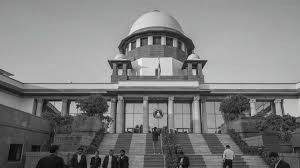
SC orders public display of voters flagged for ‘logical discrepancies’ in WB
The Supreme Court on Monday directed the Election Commission (EC) to publicly display the names of voters flagged for “logical discrepancies” during the ongoing Special Intensive Revision (SIR) of electoral rolls in West Bengal, noting that around 1.25 crore voters in the state fall under this category.
A three-judge Bench headed by Chief Justice Surya Kant , along with Justices Dipankar Datta and Joymalya Bagchi , ordered that the list be displayed at gram panchayat bhavans, block (taluka) offices and ward offices , enabling affected voters to verify their details and submit objections or supporting documents.
The court explained that “logical discrepancies” arise from inconsistencies detected while linking present electoral rolls with the 2002 voter list , which serves as a reference database. These include mismatches in parental names and cases where the age gap between a voter and their parent is less than 15 years or more than 50 years , raising algorithmic red flags.
Clarifying that such discrepancies do not automatically render a voter ineligible, the Bench stressed the need to provide individuals a fair opportunity to correct errors before any adverse action is taken. It directed that dedicated counters be set up at panchayat bhavans and block offices to receive documents and objections from affected voters.
The court also instructed the West Bengal government to deploy adequate manpower to assist the State Election Commission in carrying out the exercise smoothly. Additionally, the Director General of Police (DGP) was directed to ensure that law and order is maintained throughout the process.
The apex court was hearing petitions alleging arbitrariness and procedural irregularities in the SIR exercise, with concerns raised that large-scale errors in legacy voter data could lead to the wrongful exclusion of genuine voters.
The court said the measures were necessary to ensure transparency, procedural fairness and protection of voting rights during the revision of electoral rolls.