
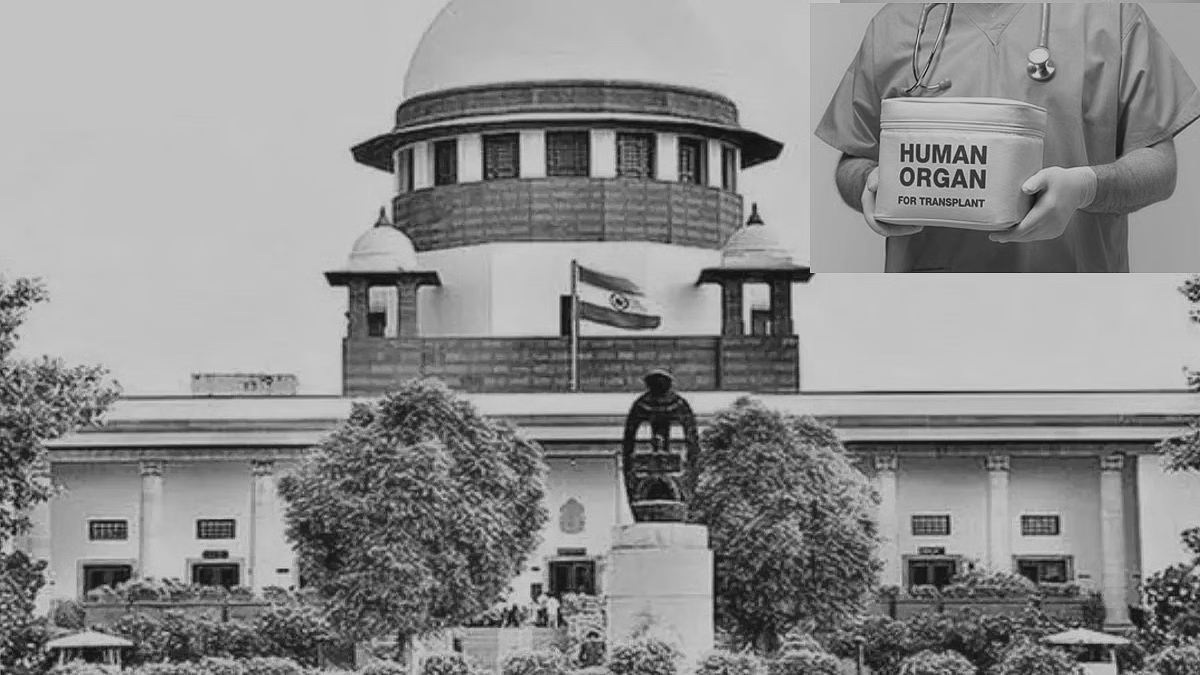
SC orders centre to frame national policy for uniform organ donation and allocation system
In a significant move to streamline India’s organ donation framework, the Supreme Court on Wednesday issued a series of directions to the Centre to create a national policy and uniform rules after consultations with all States to ensure a transparent and efficient system for organ donation and allocation.
The directions were passed by a Bench comprising Chief Justice BR Gavai and Justice K Vinod Chandran while hearing a PIL filed by the Indian Society of Organ Transplantation. The court was informed that wide disparities continued across States in the implementation of the Transplantation of Human Organs Act, 1994, its 2011 amendments, and the Transplantation of Human Organs and Tissues Rules, 2014.
In its order, the Bench requested that Andhra Pradesh be persuaded by the Centre to adopt the 2011 amendments to the 1994 Act. It was also directed that States such as Karnataka, Tamil Nadu, and Manipur where the 2014 Rules have not yet been notified should adopt them expeditiously, with the court emphasising the “importance of the issue.”
The Centre was asked to frame a national policy with “model allocation criteria” for organ transplants. It was stressed by the Bench that the policy must eliminate gender and caste-based disparities, address state-wise inconsistencies, and ensure “uniform criteria for donors across the country.”
Noting that Manipur, Nagaland, Andaman & Nicobar Islands, and Lakshadweep do not have a State Organ and Tissue Transplant Organisation (SOTO), the court directed that these bodies be constituted under the National Organ Transplantation Programme after consultations with the respective State administrations.
Guidelines for the welfare of live donors were also sought to be evolved by the Centre, with the court stating that donors must be protected from exploitation, commercialisation, and post-donation neglect.
Further, the government was asked after consultations with the National Organ and Tissue Transplant Organisation (NOTTO)to amend birth and death registration forms (Forms 4 and 4A) to record whether a death was certified as “brain death” and whether the option to donate organs was offered to the family.
A day earlier, arguments had been commenced by the petitioner, who had highlighted the absence of uniformity in the implementation of the 2014 Rules. It had been submitted by senior advocate K. Parmeswar that the lack of a consolidated national database of donors and recipients was slowing down the transplant process, resulting in inequalities between States.
It had also been argued that organ transplants remained largely accessible only to certain social groups, with class and gender disparities continuing to persist. The court was told that nearly 90% of transplants were being conducted in private hospitals, while public hospitals had minimal presence on donor registries.
On April 21, the Supreme Court had earlier directed that a meeting of Chief Secretaries and public health secretaries of all States and Union Territories be convened by the Centre. Detailed information was sought on the adoption and implementation of the 1994 Act, its 2011 amendments, the 2014 Rules, and compliance with NOTTO guidelines. Data on cadaver versus live donor ratios, gender disparities, awareness efforts, financial support, swap transplant policies, organ allocation procedures, and the availability of transplant-capable hospitals was also required to be furnished.
A consolidated report has been directed to be submitted by July 18, 2025.