
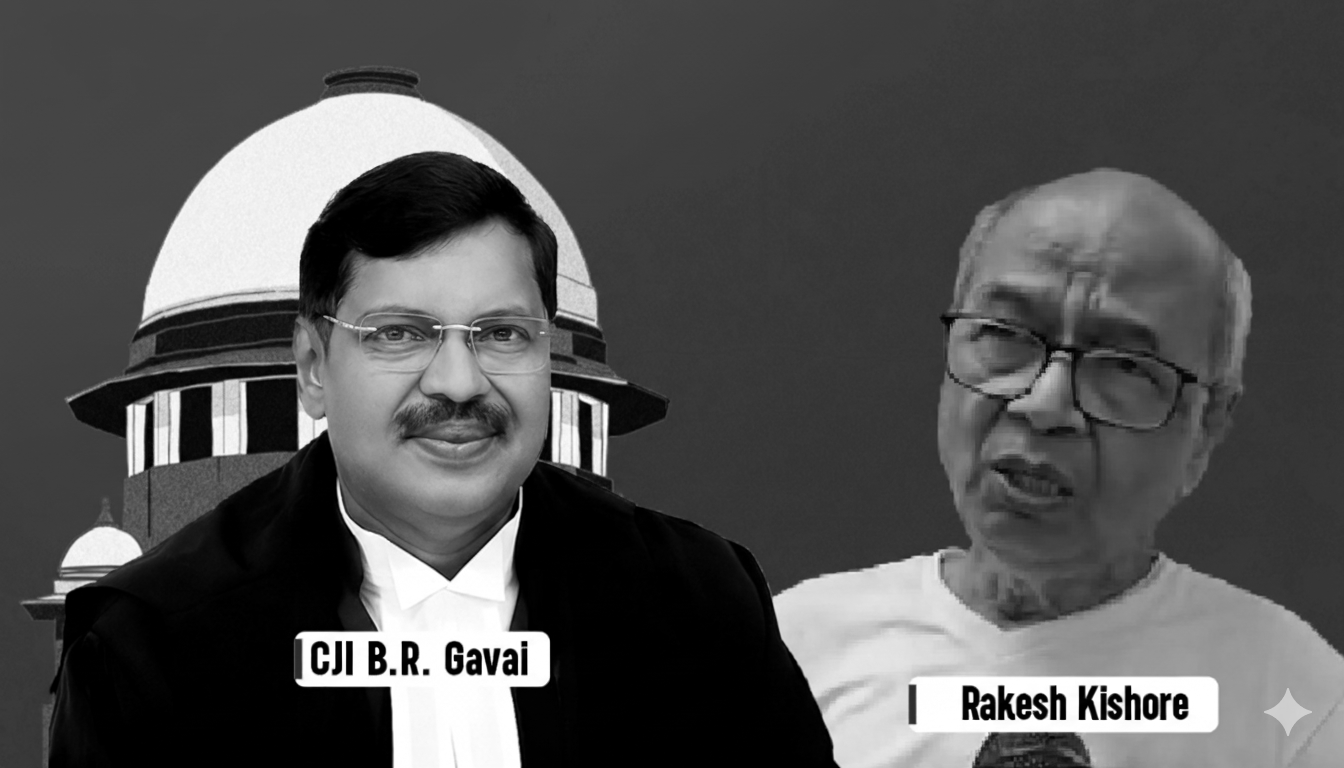
SC opts for restraint, drops contempt move in CJI shoe-hurling case
In a moment that tested the very spirit of the judiciary, the Supreme Court on Monday refused to pursue contempt charges against the lawyer who hurled a shoe at Chief Justice of India (CJI) BR Gavai, turning provocation into a lesson in dignity.
A bench of Justices Surya Kant and Joymalya Bagchi held that while throwing a shoe or shouting slogans in court clearly constitutes contempt, the law leaves it to the presiding judge’s discretion to decide whether to act. “Issuing a contempt notice will only give undue importance to the man and extend the life of an incident that deserves to die its natural death,” the bench remarked.
The case involved 71-year-old advocate Rakesh Kishore, who on October 6 hurled a shoe toward the Chief Justice during court proceedings, an act of open defiance that drew nationwide outrage. Yet, in that moment, CJI Gavai chose calm over anger, instructing the staff to “just ignore” the incident and let the lawyer go with a warning.
The Supreme Court’s decision is being seen by many as an example of grace, maturity, and moral restraint, a reminder that the dignity of the institution lies not in retaliation but in composure. However, it has also sparked a deeper debate: can the highest court of the land afford to forgive an act that insults the very seat of justice?
Critics argue that such leniency, though noble in intent, might encourage others with disruptive intent to repeat similar acts, emboldened by the belief that the court will respond with silence. The incident, they say, is not just a personal affront to one judge but an insult to the symbol of justice itself, witnessed by an entire nation.
Supporters of the court’s stance, however, believe that dignity is best preserved through restraint, not revenge. By ignoring the provocation, the CJI may have turned a potential scandal into a moral lesson, proving that true authority does not need to shout to be heard.
Meanwhile, the Supreme Court Bar Association (SCBA) had urged the court to pursue contempt charges, while the Bar Council of India suspended Kishore’s licence immediately, calling his act “a shame on the profession.” The apex court has now asked Solicitor General Tushar Mehta to gather details of similar disruptions in other courts to frame preventive measures.
In the end, the Supreme Court’s choice to rise above the insult reflects rare institutional grace. Yet it leaves behind an uneasy question, in protecting its dignity through silence, has the court risked encouraging disrespect for the very sanctity it stands to defend?