
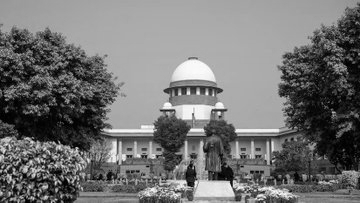
SC Issues Notices to Centre, States Over SHRC Vacancies and Functioning
The Supreme Court on Monday sought responses from the Centre, the National Human Rights Commission (NHRC) and all state governments on a plea alleging that several State Human Rights Commissions (SHRCs) are understaffed, defunct or functioning with vacant leadership positions.
A bench comprising Chief Justice Surya Kant and Justices Joymalya Bagchi and V Mohana issued notices after hearing a PIL filed by the Association of Retired Judges of the Supreme Court and High Courts of India through advocate Srishti Agnihotri.
The petition, filed on September 21, seeks time-bound filling of vacancies in the posts of chairpersons and members of SHRCs in accordance with Section 21 of the Protection of Human Rights Act, 1993, and directions issued by the apex court in the DK Basu vs State of West Bengal case.
The plea specifically alleged that the SHRCs in Andhra Pradesh, Arunachal Pradesh and Jharkhand are defunct and sought their immediate reconstitution, including appointment of chairpersons, members and secretaries.
It also highlighted prolonged arrangements involving acting chairpersons in the commissions of Chhattisgarh, Madhya Pradesh and Meghalaya, seeking substantive appointments within a fixed timeframe. The petitioner has sought directions to states to provide SHRCs with adequate administrative, investigative and technical infrastructure, including secretarial and police staff.
It also sought that complaints transferred under Section 13(6) of the Act should not be sent to commissions that do not have functioning chairpersons and members. The plea further seeks details of cases allegedly transferred by the NHRC to the defunct commissions in Andhra Pradesh, Arunachal Pradesh and Jharkhand.
The association has sought a continuing mandamus, requiring states and the NHRC to periodically submit status reports until compliance is achieved.
It has also sought functional and updated websites for SHRCs, particularly in Andhra Pradesh, Arunachal Pradesh, Jharkhand, Manipur, Meghalaya, Telangana and Mizoram, along with publication of annual reports and their placement before state legislatures as mandated under Section 28 of the Act.