
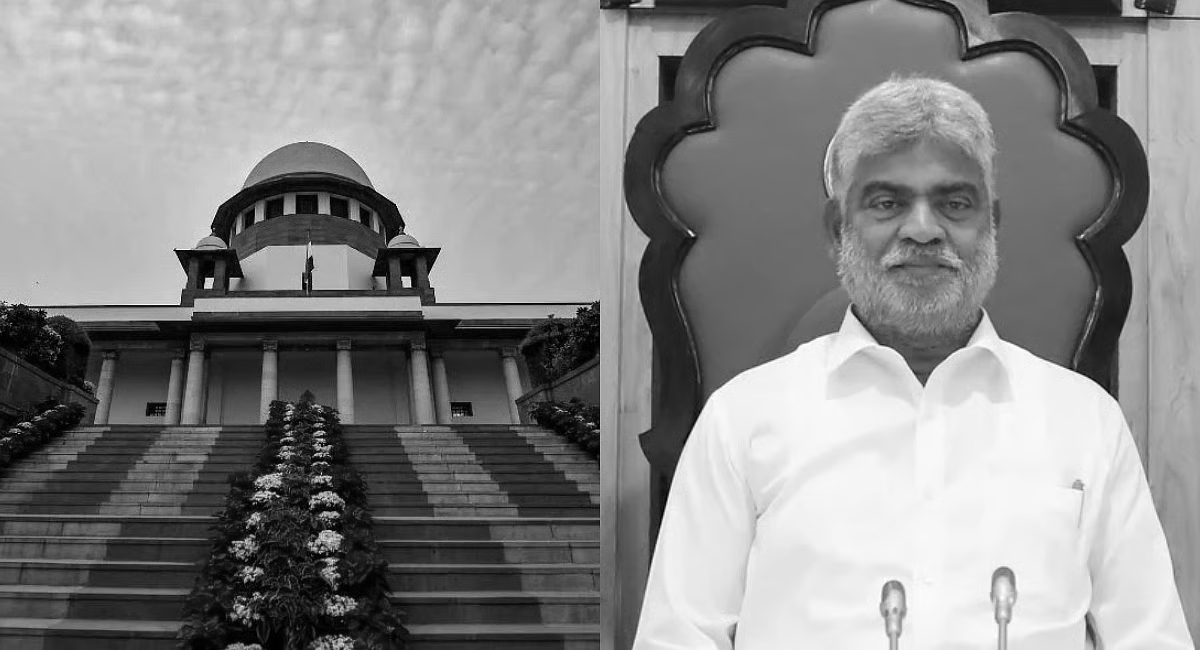
SC gives Telangana Speaker yet another ‘last warning’
For what appears to be the latest instalment in a long-running series of final finales, the Supreme Court of India on Friday ( February 6, 2026 ) issued yet another “last warning” to Telangana Assembly Speaker Gaddam Prasad Kumar , directing him to decide the remaining disqualification petitions against defecting BRS MLAs within three weeks—or face contempt proceedings.
The phrase “last opportunity” has, by now, acquired a certain elasticity . The cycle began on July 31, 2025 , when the Supreme Court first directed the Speaker to conclude the disqualification proceedings within three months. And after that first deadline passed, the top court has repeatedly warned, cautioned, reminded, nudged, and sternly advised the Speaker to conclude the proceedings arising from the defection of 10 BRS legislators to the ruling Indian National Congress . Each warning has been firm, each deadline definitive, and each extension inevitable.
So far, eight of the 10 cases have been disposed of, with the Speaker dismissing the disqualification petitions on grounds that hinge largely on technical interpretation rather than political reality. That leaves two MLAs, Danam Nagender and Kadiyam Srihari and, with them, the most inconvenient facts.
Danam Nagender ’s case is particularly awkward. Contesting the Lok Sabha election on a Congress ticket tends to complicate arguments about “continuing allegiance.” Kadiyam Srihari ’s case, built on sustained political conduct and public alignment with the ruling party, is only marginally less uncomfortable. Deciding against them risks political consequences; deciding in their favour risks judicial disbelief.
This is the tightrope the Speaker is now walking, part constitutional adjudicator, part party functionary. On paper, he acts as a neutral tribunal under the Tenth Schedule. In practice, he must also ensure that the ruling party’s arithmetic remains intact. Extending timelines, seeking procedural cover, or narrowly interpreting evidence are among the few remaining options available to reconcile these competing roles.
What lends the episode a measure of irony is its selective urgency. When defections flowed in the opposite direction during the BRS era, delays in adjudication were rarely portrayed as constitutional crises. The anti-defection law appeared patient then; its current impatience seems situational.
The Supreme Court, for its part, continues to express displeasure without quite acting on it. Despite repeatedly warning first in July 2025 , then on November 17 , and again on January 16 and February 6 , that the delay is bordering on contempt, it has so far confined itself to cautions, each one apparently more final than the last. The restraint reflects judicial reluctance to step into the Speaker’s domain unless absolutely necessary, even if that restraint now risks being mistaken for tolerance.
Whether this “last warning” finally proves to be the last remains to be seen. For now, the countdown resets once again, and the Speaker is left balancing law, loyalty, and the court’s increasingly familiar displeasure—under the watchful gaze of a judiciary that keeps threatening the whistle, but hasn’t quite blown it yet.